Strategic Intelligence Report | By Wish, Analyst
The Intelligence Brief
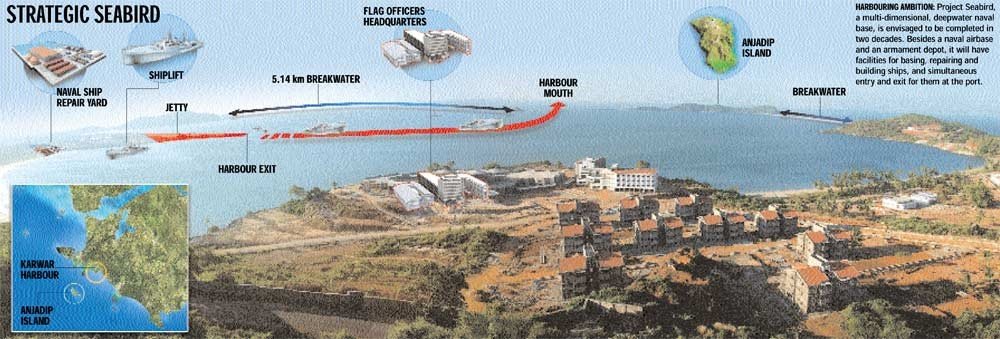
As of December 24, 2025, the geopolitical equilibrium of the Indo-Pacific is shifting from surface posturing to hardened infrastructure. While much of the global focus remains on the South China Sea, the real pivot of power is being constructed on India’s western seaboard. Project Seabird Phase IIA 2026, located at Karwar, Karnataka, is reaching its critical operational milestone. This is not merely an expansion of an existing facility; it is the creation of the largest naval base in the Eastern Hemisphere, designed specifically to provide the Indian Navy with “Strategic Depth” and “Operational Flexibility” that can counter any extra-regional power.
By early 2026, the strategic base at Karwar will act as the primary launchpad for India’s Western Fleet, shifting the focus away from the congested Mumbai harbor. Under Project Seabird Phase IIA 2026, the facility is being optimized to house over 30 frontline warships, including the INS Vikrant and India’s elite subsurface assets. This “Fortress Karwar” is the ultimate answer to the increasing presence of the People’s Liberation Army Navy (PLAN) in the Arabian Sea and the Persian Gulf.
1. The Strategic Necessity: Why Karwar?
To understand the magnitude of Project Seabird Phase IIA 2026, one must analyze the limitations of legacy naval ports. Historically, the Western Naval Command was centered in Mumbai, a commercial hub with a narrow channel and high civilian traffic.
Strategic Depth: Karwar offers a deep-water natural harbor protected by hilly terrain, providing natural cover against long-range aerial and satellite surveillance.
Unobstructed Access: Unlike Mumbai, where ships must wait for tidal windows, Project Seabird Phase IIA 2026 ensures that India’s nuclear submarines and aircraft carriers can deploy into the deep waters of the Arabian Sea within minutes.
Proximity to the ‘Hormuz Lock’: Positioned strategically on the western coast, Karwar allows the Indian Navy to dominate the maritime trade routes coming from the Gulf of Aden and the Strait of Hormuz.
2. Technical Specifications: Engineering a Super-Base
Project Seabird Phase IIA 2026 is a $3 billion engineering marvel. The technical upgrades being completed by 2026 include:
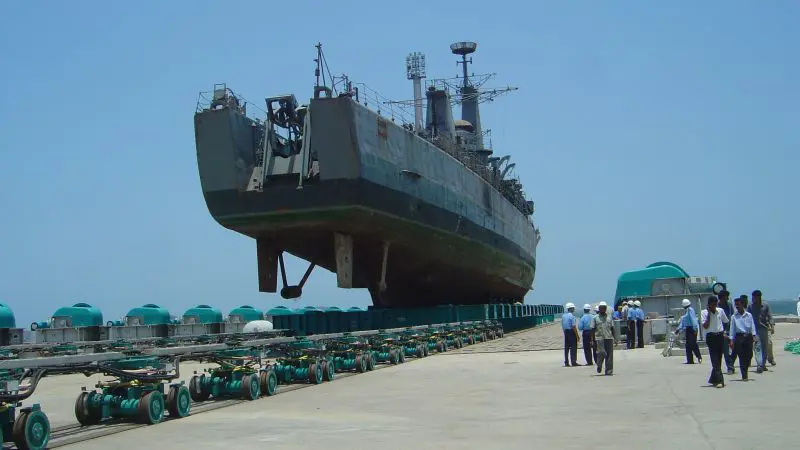
The Ship Lift System: One of the world’s largest Syncrolift systems, capable of lifting ships up to 10,000 tonnes for maintenance. This ensures that Project 15B destroyers and Project 17A stealth frigates can be serviced domestically without delay.
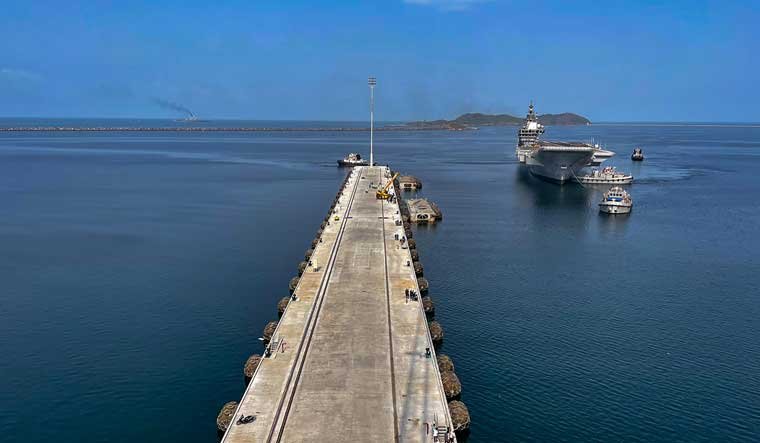
The Aircraft Carrier Pier: A dedicated 400-meter-long pier specifically reinforced for the 45,000-tonne INS Vikrant and future 65,000-tonne carriers.
Underground Armory: Following the logic of INS Varsha Underground Base, Karwar features hardened, climate-controlled underground bunkers for the storage of BrahMos missiles and Varunastra torpedoes.
3. The ‘Necklace of Diamonds’ Integration
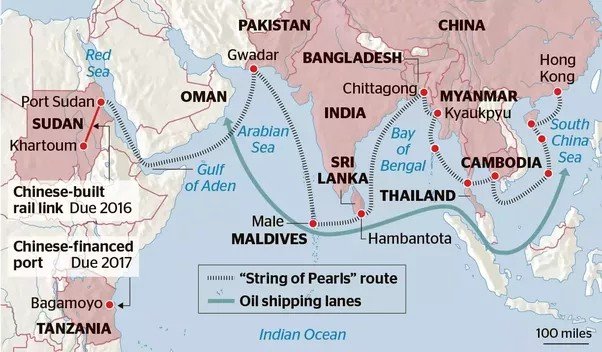
Project Seabird Phase IIA 2026 does not function in isolation. It is the western anchor of India’s Necklace of Diamonds Strategy.
Countering Gwadar: Karwar is India’s direct counter-weight to the Chinese-controlled Gwadar port in Pakistan. In a conflict scenario, assets from Karwar can blockade the CPEC (China-Pakistan Economic Corridor) maritime lifeline within 48 hours.
Synergy with Agalega and Jatayu: The base will serve as the logistics hub for India’s outlying bases. Supplies and reinforcements for the Agalega Island India Base and INS Jatayu in Lakshadweep will originate from Karwar, creating a seamless chain of defense across the Arabian Sea.
4. Subsurface Superiority: The Silent Hunters
A critical, though often classified, component of Project Seabird Phase IIA 2026 is its subsurface support infrastructure. As India commissions more nuclear-powered attack submarines under India’s Project 77 Nuclear Submarine program, Karwar will provide the specialized berths required for nuclear safety and acoustic management.
Acoustic Signature Management: Karwar’s quiet environment and deep-water access allow submarines to perform “Acoustic Ranging” trials, ensuring that Indian hunters remain quieter than their Chinese Type 093 counterparts.
Maintenance of the Triad: By providing high-level maintenance for India Nuclear Triad assets, Karwar ensures that India’s second-strike capability is always at a high state of readiness.
5. Geopolitical Outlook: China’s Strategic Nightmare
Beijing’s “Two-Ocean Strategy” relies on having safe passage through the Indian Ocean. However, Project Seabird Phase IIA 2026 creates a permanent roadblock.
Monitoring the PLA Navy: Equipped with advanced ELINT (Electronic Intelligence) and SIGINT (Signals Intelligence) arrays on the surrounding hills, Karwar will monitor every Chinese hull that enters the Northern Arabian Sea.
Alliance Integration: Under agreements like RELOS Agreement India, Karwar could potentially serve as a logistics node for friendly navies (like Russia or France), further complicating China’s naval calculations.
6. Economic Impact: The Blue Economy Engine
Beyond defense, Project Seabird Phase IIA 2026 is driving the regional economy. The massive dredging and breakwater construction have created thousands of specialized jobs in metallurgy and marine engineering. This “Dual-Use” philosophy ensures that while the base protects the nation, it also fuels India’s maritime industry, aligning with the “Make in India” initiative.
Conclusion: Asia’s New Pivot of Power
The completion of Project Seabird Phase IIA 2026 marks the end of India’s era as a “Coastal Navy.” By 2026, Karwar will stand as a global symbol of India’s blue-water aspirations. It is the fortress from which India will protect its sovereign interests, secure its energy lifelines, and maintain a rules-based order in the Indo-Pacific. For any revisionist power looking to challenge India’s maritime hegemony, the silent hills of Karwar now hold a devastating answer.
Recommended Reading: India’s Strategic Maritime Shield
To fully grasp the naval chess move India is making, we recommend reading our related intelligence reports on India’s island bases and subsurface dominance:
Read about the Southern Shield: INS Jatayu: India’s ‘Unsinkable Aircraft Carrier’ Near the Maldives
Understand the Subsurface Edge: India’s Project 77 Nuclear Submarine: The Silent Hegemon
The Global Strategy: String of Pearls vs. Necklace of Diamonds: The Naval Chessboard