Strategic Intelligence Report | By Wish, Analyst
The Intelligence Brief
As of January 2026, Project Kusha has moved from the development phase to Critical User Trials. Following the successful validation of the Long-Range Multi-Mission Radar (LR-MMR) in the first week of January, the Indian Air Force (IAF) has fast-tracked the induction timeline. While the Putin-Modi summit of late 2025 set the stage, rather than expanding reliance on foreign systems, the IAF has doubled down on Project Kusha India Sky Shield 2026, the country’s most ambitious indigenous long-range surface-to-air missile (LRSAM) program to date.
Formally integrated under the broader Mission Sudarshan Chakra (MSC), Project Kusha is not merely India’s answer to the Israeli Iron Dome or the Russian S-400. It is a multi-layered, AI-integrated defensive umbrella designed to neutralize everything from stealth fighters and cruise missiles to high-speed ballistic threats. As of January 9, 2026, Project Kusha has moved from the development phase to Critical User Trials.
This report decodes the technical lethality, the geopolitical ripples, and why Project Kusha is the ultimate guarantor of India’s sovereign airspace.
1. The Strategic Pivot: Why Project Kusha Surpasses the S-400
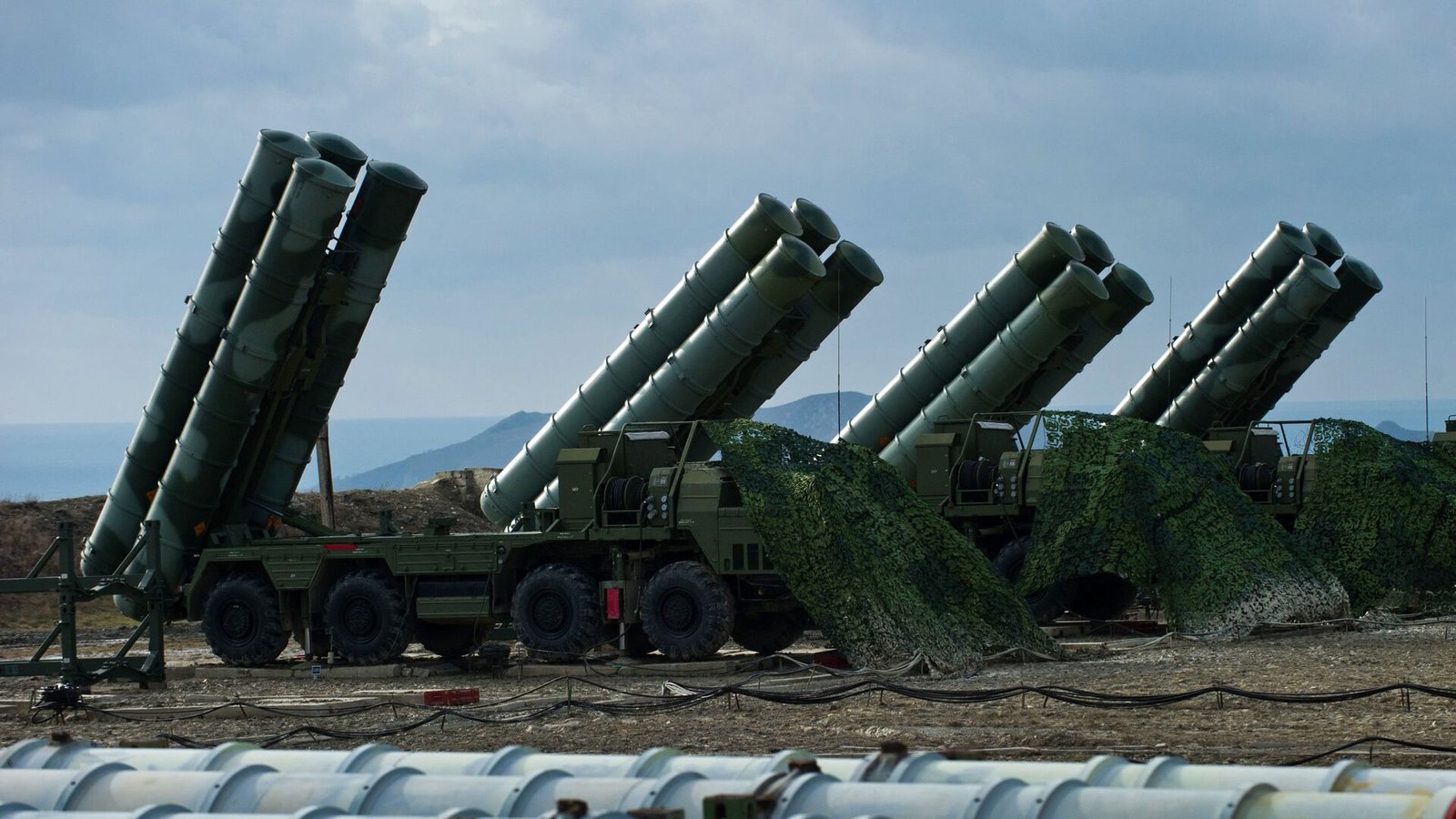
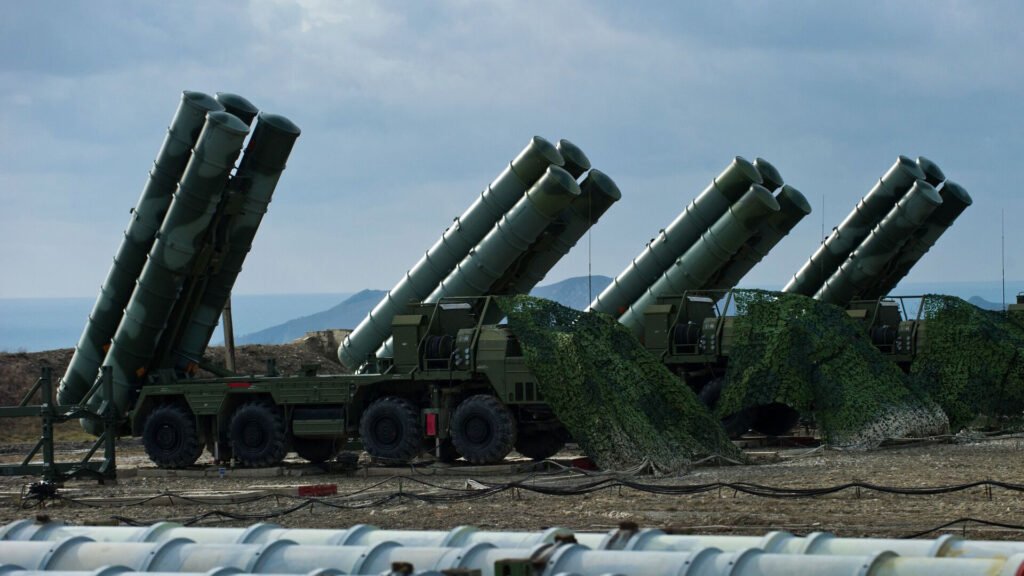
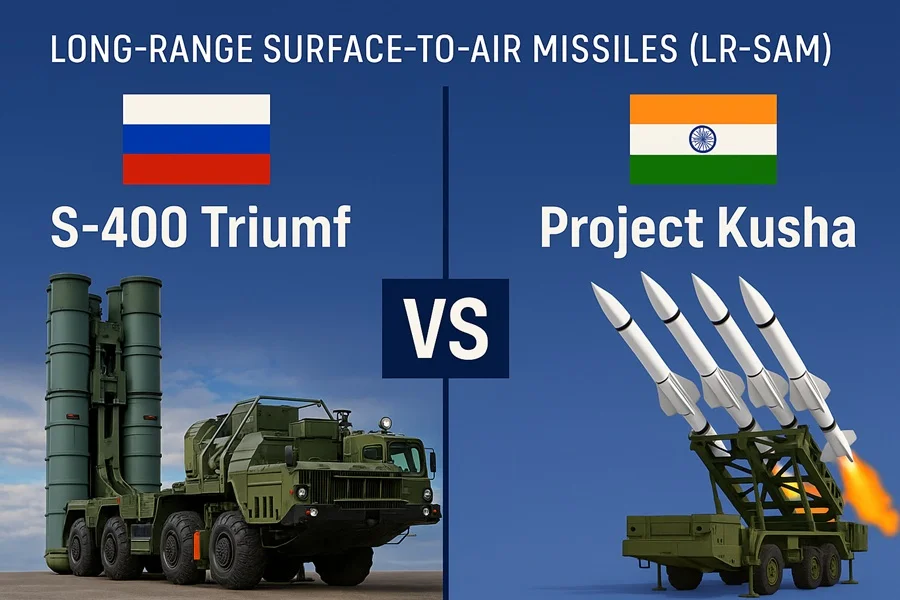
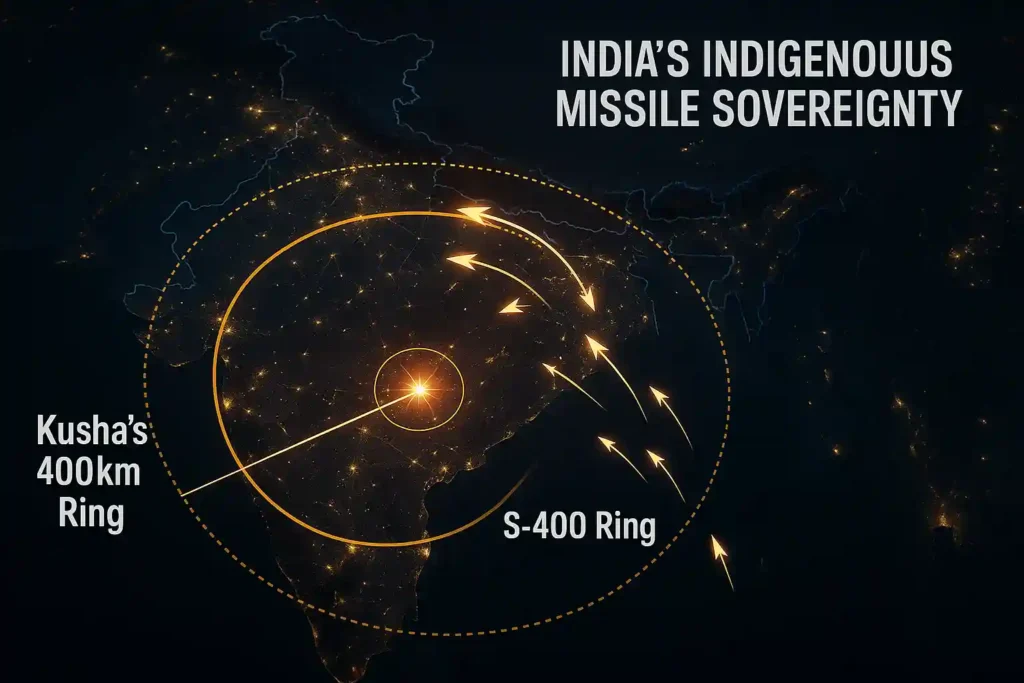
The global defense narrative often compares Project Kusha to the S-400, but the December 2025 intelligence suggests that the Indian system is being designed to exceed the Russian benchmark in specific operational parameters. While the S-400 is a formidable deterrent, it remains a “Black Box” technology for India. Project Kusha India Sky Shield 2026, on the other hand, offers full “Sovereign Control” over the source code and software.
The Mach 7+ Advantage
One of the most classified yet discussed features of Project Kusha is its terminal velocity. According to internal DRDO reports, the M3 interceptor is being optimized to engage targets at speeds exceeding Mach 7. This is significantly higher than the standard S-400 interceptors (which range between Mach 4.5 and Mach 6), making Project Kusha potentially capable of intercepting certain classes of hypersonic glide vehicles (HGVs) that are currently proliferating in the PLAAF’s arsenal.
2. The Three-Tiered Architecture of Lethality
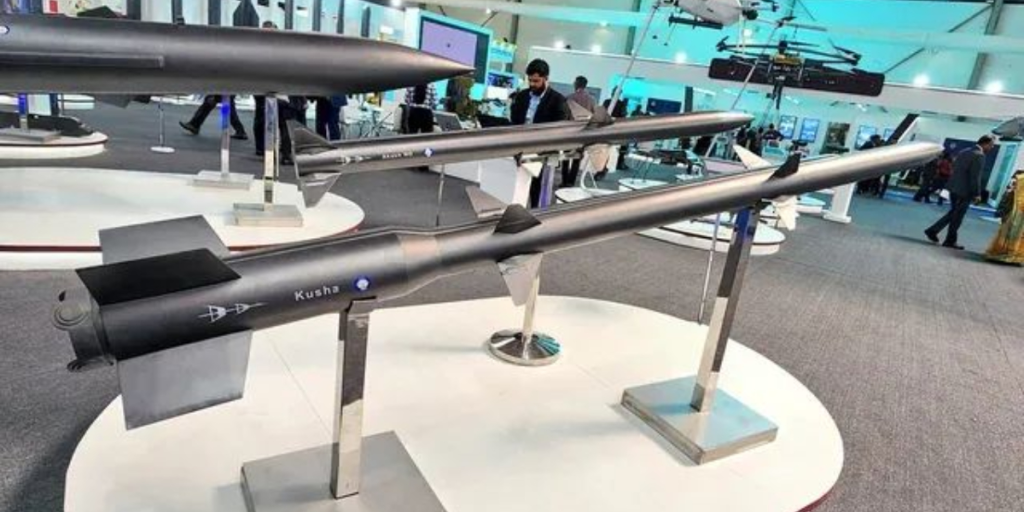
The “Iron Dome” comparison comes from the system’s ability to create a layered defensive net. Project Kusha India Sky Shield 2026 utilizes a unique three-tiered interceptor approach, ensuring that no threat enters Indian airspace undetected or unchallenged.
Tier 1: The M1 Interceptor (150 km)
Designed for tactical threats, the M1 focuses on high-maneuverability targets like suicide drones, loitering munitions, and low-flying cruise missiles. Its primary role is to protect forward military bases and critical industrial hubs.
Tier 2: The M2 Interceptor (250 km)
The M2 variant is the “Stealth Hunter.” It is specifically tuned to detect and engage assets with a Low Radar Cross-Section (RCS), such as the Chinese J-20 or the Pakistani-Turkish stealth platforms. Using a dual-seeker (Infrared + Active Radar) technology, the M2 ensures that “Ghost Aircraft” cannot bypass the shield.
Tier 3: The M3 Interceptor (350 km)
The crown jewel of the project, the M3, provides the strategic reach. It is designed to take down high-value targets like Airborne Early Warning and Control (AWACS) aircraft and mid-air refuelers deep within enemy territory, effectively “blinding” the adversary’s air campaign before it reaches the Indian border.
3. The Technology: AI-C4I and the ‘Uttam’ Multi-Mission Radar
The brain of Project Kusha India Sky Shield 2026 is its indigenously developed Command, Control, Communications, Computers, and Intelligence (C4I) network. Following the lessons of Operation Sindoor (2025), the IAF has insisted on a fully automated, AI-driven decision support system.
Sensor Fusion at Scale
The system integrates data from ISRO’s GSAT-7 series satellites, the Netra AWACS, and a ground-based network of GaN-based (Gallium Nitride) radars. This “Sensor Fusion” allows the system to track up to 100 targets simultaneously and prioritize the most lethal threats without human intervention.
The GaN Advantage: Unlike traditional silicon-based radars, the GaN radars of Project Kusha generate less heat and provide 30% more range, allowing the system to operate continuously in the extreme heat of the Thar Desert or the freezing altitudes of the Himalayas.
- 2026 Production Update: In January 2026, Bharat Dynamics Limited (BDL) and DRDO confirmed that the Gallium Nitride (GaN) radar modules have entered the Pre-production phase. This is a massive breakthrough because it means the supply chain for Project Kusha is now 90% indigenous, insulating the system from global semiconductor shortages.
4. Geopolitical Impact: The “Iron Dome” of the East
The global perception of India as a “Defense Buyer” is rapidly shifting to that of a “Defense Innovator.” The development of Project Kusha India Sky Shield 2026 has significant implications for regional power dynamics.
Neutralizing the “Malacca Dilemma” and “McMahon Friction”
By deploying Project Kusha along the LAC and the coastline near Project Seabird Karwar, India is creating a “No-Fly Zone” for adversaries. For China, this means their numerical advantage in aircraft is neutralized by India’s qualitative advantage in ground-based denial. This strategic “Sky Shield” acts as a force multiplier for India’s AMCA 5th Gen Fighter, allowing the stealth jets to focus on offensive missions while Kusha guards the home base.
5. Technical Comparison: The Global Air Defense Elite
| Feature | Project Kusha (India) | S-400 Triumf (Russia) | Patriot PAC-3 (USA) | Iron Dome (Israel) |
| Max Range | 350 km (Layered) | 400 km | 160 km | 70 km |
| Max Target Speed | Mach 7.0+ | Mach 6.0 | Mach 5.0 | Subsonic/Supersonic |
| Target Type | Multi-Domain (Stealth, Ballistic) | Strategic Aircraft | Tactical Ballistic | Short-range Rockets |
| Brain/C2 | AI-Driven Open Arch | Proprietary Closed | Integrated NATO | Battle Management |
| Indigenous % | 80% – 90% | N/A | N/A | N/A |
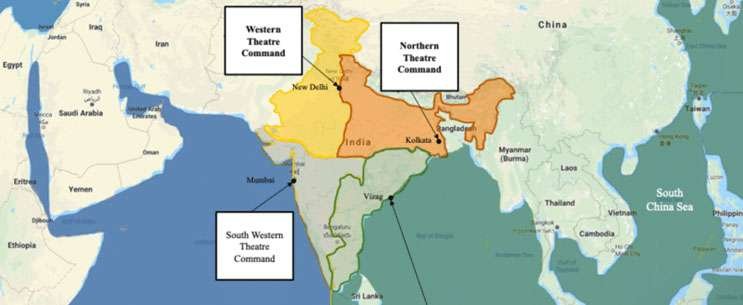
6. Integration with the Integrated Theatre Commands (ITC) 2026
As India moves toward the Integrated Theatre Commands India 2026 model, Project Kusha will serve as the glue for joint air defense.
Maritime Integration: The naval variant of Kusha will be deployed on future stealth destroyers to protect India’s Project 77 Nuclear Submarines when they are at port or on the surface.
Border Synergy: The Northern Theatre Command in Lucknow will have direct operational control over Kusha batteries, ensuring that the Army and Air Force operate under a single, unified “Sky Shield.”
7. The 2026 Timeline: From Trials to Induction
The roadmap for Project Kusha India Sky Shield 2026 is aggressive yet calculated:
- Early 2026 (Ongoing): Final integration of the Sudarshan Chakra AI with the Integrated Theatre Commands (ITC).
- Late 2026: Final guided flight tests of the M3 (350 km) interceptor against simulated hypersonic targets.
- 2027: Extreme climate validation in the Tawang and Ladakh sectors.
- 2028: Induction of the first ‘Kusha’ Squadron into the IAF’s Western Command.
Conclusion: The Shield of a Resurgent Power
Project Kusha India Sky Shield 2026 is the final piece of India’s strategic autonomy puzzle. In a world where airspace is the first line of conflict, having a sovereign, un-hackable, and lethal air defense system is the only way to guarantee peace.
By choosing to build its own “Iron Dome” rather than buying more from abroad, New Delhi has sent a clear message: India is no longer just a participant in the global defense order; it is a leader. As the first M3 interceptor takes to the skies in 2026, it will carry with it the weight of a nation that has finally learned to protect its own heavens.
Recommended Reading: Securing the Republic
To understand how Project Kusha fits into the larger 2026 defense transformation, explore our exclusive intelligence reports:
- The Ground Reform: Integrated Theatre Commands India 2026: The $20 Billion Revolution
- Nuclear Link: India’s Nuclear Renaissance 2026: The Thorium & SMR Roadmap
Naval Link: Indo-Pacific Ghost Fleet 2026: The Autonomous Naval Doctrine
Energy War Link: Global Energy War 2026: Venezuela Strike and Trump’s 500% Tariff