Strategic Intelligence Report | By Wish, Geopolitics Analyst
The Intelligence Brief
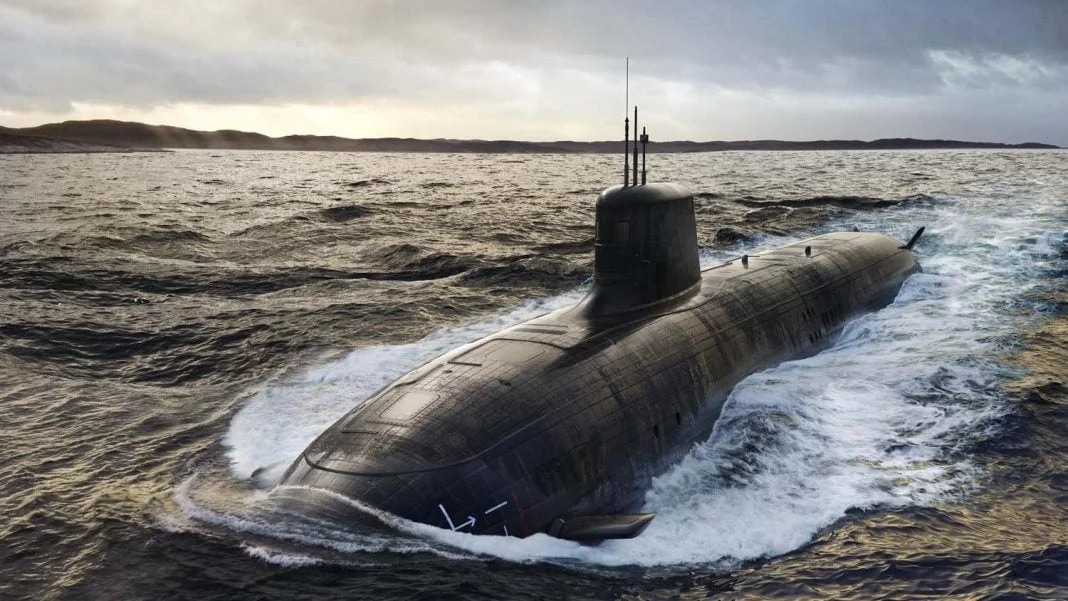
As we stand in late December 2025, the global maritime order is witnessing a shift that occurs once in a century. While mainstream media focuses on surface skirmishes and carrier deck operations, the real war for dominance is being fought in the “Silent Domain”—the subsurface depths of the Indian Ocean. The Cabinet Committee on Security (CCS) recently cleared a massive ₹40,000 crore (approx. $4.7 billion) for the first phase of India’s Project 77 Nuclear Submarine, signaling New Delhi’s intent to move beyond defensive posturing into the realm of absolute sea denial.
By 2026, the operationalization of India’s strategic subsurface infrastructure will coincide with the final design freeze of these 10,000-tonne “Hunter-Killers.” This project follows the monumental success of India’s Nuclear Submarine Program 2026 which saw the successful sea trials of the INS Aridaman (S4). This isn’t just a naval project; it is the most expensive and technologically complex endeavor in India’s sovereign history. India’s Project 77 Nuclear Submarine is designed to achieve one specific goal: the total neutralization of any hostile Carrier Strike Group (CSG) entering the Indian Ocean Region (IOR).
Jan 11, 2026 Update:
While Project 77 focuses on nuclear deterrence, the $8 billion German Type 214NG deal finalized in Jan 2026 provides the critical Conventional Shield for the Indian Ocean. The integration of German AIP technology ensures that India’s undersea fleet maintains a tactical edge over regional rivals. See the complete roadmap: India-Germany Defense Deal 2026: The New Undersea Frontier.
1. The 190 MWt Reactor: The Heart of the Predator
The defining characteristic of India’s Project 77 Nuclear Submarine is its propulsion system, which marks a radical departure from the Soviet-influenced designs of the past. Unlike the older Arihant-class submarines that operate on an 83 MW reactor, the Project 77 SSNs are powered by a cutting-edge 190 MWt pressurized light-water reactor (CLWR-B2) developed by the Bhabha Atomic Research Centre (BARC) in Trombay.
The Physics of Power and Speed
In subsurface warfare, speed and endurance are the only currencies that matter. This massive power bank allows a sustained submerged speed of over 30 knots (56 km/h). This means an Indian SSN can shadow China’s Fujian carrier or any modern US supercarrier without ever losing contact or needing to surface to recharge batteries.
Natural Circulation Stealth
The reactor is designed with “Natural Circulation” capabilities. At low power levels, the reactor does not need noisy mechanical pumps to circulate coolant. This makes India’s Project 77 Nuclear Submarine acoustically “dead” to enemy passive sonar arrays. According to the India submarine capabilities profile, this level of stealth is a feature only seen in the world’s most advanced SSNs like the US Virginia-class or French Suffren-class.
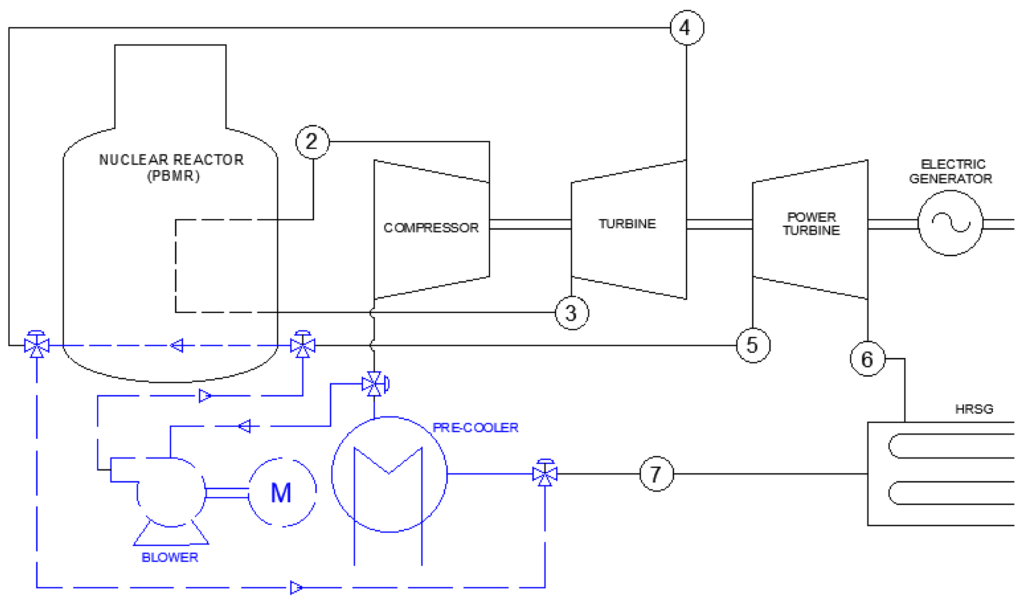
The indigenous 190MW reactor developed by BARC for high-speed endurance.
2. Advanced Metallurgy: The HY-130 Steel Revolution
Leveraging the lessons from the INS Aridaman (S4) trials, India’s Project 77 Nuclear Submarine utilizes a high-yield specialized steel—HY-130—developed indigenously by Mishra Dhatu Nigam (MIDHANI). This specific grade of steel allows for deeper diving depths, estimated at 550 to 600 meters, far exceeding the limits of conventional attack submarines and even many contemporary SSNs.
Stealth and Thermal Resilience in the IOR
The Indian Ocean is unique due to its high salinity and varying temperature gradients (thermoclines). The hull of India’s Project 77 Nuclear Submarine is encased in advanced indigenous anechoic tiles that are tested for these specific tropical conditions. These tiles absorb incoming sonar pulses from hostile destroyers and maritime patrol aircraft. In the complex thermal layers of the Indian Ocean, this submarine becomes a “Black Hole” impossible to pin down for a firing solution. The metallurgy also includes a non-magnetic hull signature, making it highly resistant to Magnetic Anomaly Detectors (MAD) used by aircraft like the Chinese Y-8Q.
3. Weaponry: The ‘Carrier-Killer’ Arsenal
India’s Project 77 Nuclear Submarine is built around a “Vertical Launch System (VLS)” architecture, making it a multi-role predator capable of land-attack, anti-ship, and anti-submarine missions with devastating precision.
Hypersonic and Precision Strike
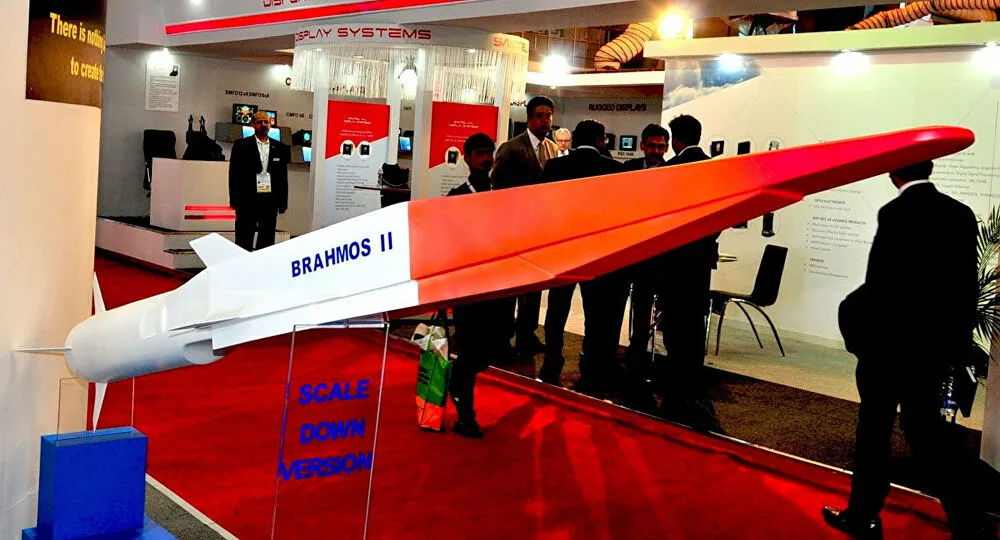
BrahMos-II Integration: By 2026, the integration of the BrahMos-II hypersonic cruise missile (Mach 7+) into the SSN’s VLS will be a reality. A hypersonic strike from a submerged, undetected position leaves an enemy carrier strike group with virtually zero reaction time, nullifying Aegis-like defense systems.
Varunastra and Takshak Torpedoes: Equipped with 533mm torpedo tubes, these submarines will carry the indigenous Varunastra heavyweight torpedoes. Furthermore, the upcoming Takshak electronic torpedoes will allow for precision strikes against submerged threats at ranges exceeding 40 km, using wire-guided and autonomous homing tech.
Manned-Unmanned Teaming (MUM-T): Perhaps the most futuristic aspect of India’s Project 77 Nuclear Submarine is its ability to launch and recover Jalkapi XLUUVs (Extra-Large Unmanned Underwater Vehicles). These 20-tonne robotic drones act as “Underwater Wingmen,” scouting for mines, laying sensors, or acting as acoustic decoys while the mother-sub remains safely hidden.
4. Strategic Basing: The Invisible Fortress of INS Varsha
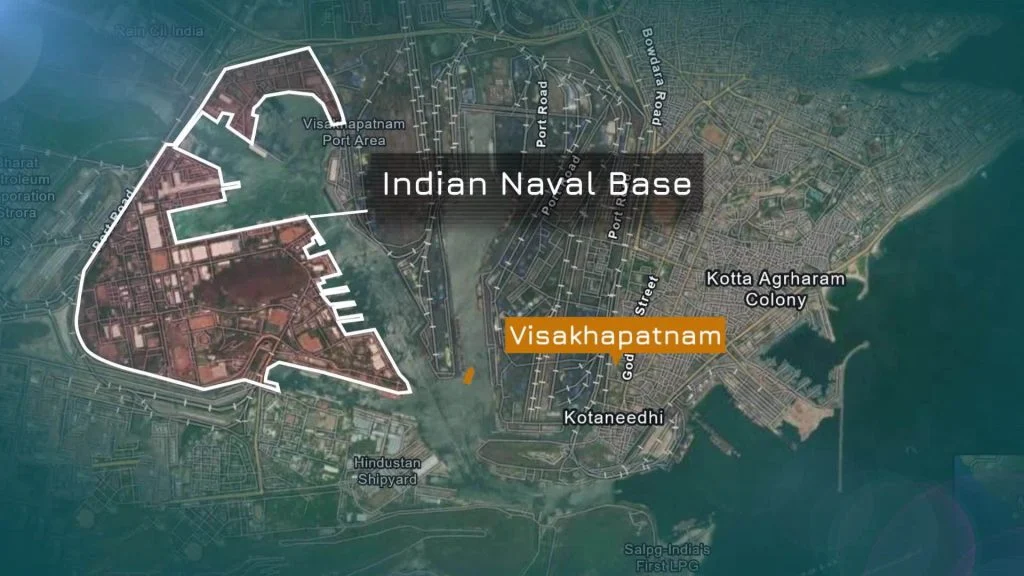
No submarine is effective without a hidden sanctuary. By mid-2026, the INS Varsha (Rambilli) facility will reach its Phase-1 operational capacity, serving as the primary hub for India’s Project 77 Nuclear Submarine.
Operational Ambiguity and Satellite Denial
Located 50 km from Visakhapatnam, INS Varsha is carved into the Eastern Ghats.
Underground Pens: These pens allow submarines to enter and exit directly into deep waters via submerged tunnels.
Satellite Avoidance: This infrastructure nullifies the surveillance capabilities of China’s Yaogan and Gaofen satellites. Within the framework of India’s Project 77 Nuclear Submarine, “Operational Ambiguity” is the ultimate weapon. An adversary will never know if the SSN is in the base or already patrolling the Malacca Strait. This basing strategy is India’s answer to China’s Yulin naval base in Hainan, but with superior geographic hardening.
5. Geopolitical Confrontation: India vs. China 2026
The commissioning of assets under India’s Project 77 Nuclear Submarine marks the final phase of India’s Necklace of Diamonds strategy. While China has established physical ports like Gwadar and Hambantota, India is countering with “Silent Killers” that can reach those ports undetected.
Over 80% of China’s oil supply passes through the Malacca Strait. By 2026, Project 77 SSNs can maintain a permanent, submerged blockade at this chokepoint. This “Silent Blockade” is the ultimate leverage—in any Himalayan conflict, India can theoretically paralyze the Chinese economy within weeks.
The Malacca Dilemma Weaponized
Over 80% of China’s oil supply passes through the Malacca Strait. By 2026, Project 77 SSNs can maintain a permanent, submerged blockade at this chokepoint. This “Silent Blockade” is the ultimate leverage—in any Himalayan conflict, India can theoretically paralyze the Chinese economy within weeks. The mere presence of an Indian SSN in the Malacca Strait forces the PLAN to divert significant ASW (Anti-Submarine Warfare) assets, thinning their presence elsewhere.
6. Technical Comparisons: Global Subsurface Standards
| Feature | India’s Project 77 (SSN) | PLA Navy Type 093B (SSN) | US Navy Virginia-Class |
| Reactor Power | 190-200 MW (BARC) | Estimated 150 MW | 190-210 MW (S9G) |
| Stealth Tech | Natural Circulation | Pump-Driven (Noisier) | Pump-Jet (Quiet) |
| Max Depth | 550m+ (HY-130 Steel) | Estimated 400m | 450m+ |
| Weaponry | BrahMos-II (Hypersonic) | YJ-18 (Supersonic) | Tomahawk (Subsonic) |
| Acoustic Signature | Ultra-Low (<100 dB) | Moderate (~110 dB) | Ultra-Low (<95 dB) |
7. Economic Viability: Why SSNs over Carriers?
A significant part of India’s Project 77 Nuclear Submarine strategy is the cost-benefit analysis. A modern aircraft carrier like the INS Vikrant requires a massive escort of destroyers, frigates, and supply ships (Carrier Strike Group), costing upwards of $15 billion for a single group. Furthermore, carriers are increasingly vulnerable to anti-ship ballistic missiles (ASBMs). In contrast, a fleet of six SSNs under Project 77 provides a more lethal “Sea Denial” capability at a similar cost. In the restricted and crowded waters of the IOR, a silent nuclear hunter-killer is a far more effective deterrent than a visible surface fleet.
8. Strategic Forces Command (SFC) Integration
Under the 2026 roadmap, India’s Project 77 Nuclear Submarine will be more tightly integrated with the Strategic Forces Command and the Navy’s Eastern Command. This ensures a unified command structure for underwater operations. The tactical shift includes using these SSNs as “Forward Listeners” for India’s SSBN fleet, providing an escort layer that was previously missing. By creating this multi-layered subsurface net, India ensures that its second-strike capability remains invulnerable while its offensive capability remains sharp.
Conclusion: A New Subsurface Maritime Order
India’s Project 77 Nuclear Submarine is not just an addition to the Indian Navy; it is a global statement of sovereign intent. By 2026, New Delhi will no longer be a regional observer but a decisive subsurface power capable of projecting force from the Horn of Africa to the South China Sea. Through Project 77, India has secured its destiny as the undisputed guardian of the Indian Ocean, ensuring that the global energy lifelines remain under the watchful eyes of the silent predators. The era of maritime revisionism in the Indian Ocean is coming to a silent, submerged end.
Recommended Reading: What’s Next for the Indo-Pacific?
If you found this intelligence report on India’s Project 77 Nuclear Submarine insightful, you must read our deep-dive into the strategic construction of the Great Nicobar base.
Read our next article here: INS Aridaman (S-4): Inside India’s Secret ‘Monster of the Deep’ vs China