Strategic Intelligence Report | By Wish, Analyst
The Intelligence Brief
As we stand on the threshold of January 2, 2026, the geopolitical landscape of the Indo-Pacific is no longer just about naval tonnage or missile ranges; it is about the nanometers of a silicon wafer. For decades, India’s strategic dependence on imported chips was its greatest “Digital Vulnerability.” However, as the world moves into 2026, the narrative has fundamentally shifted. The year 2025 was the “Year of Construction,” but 2026 is officially the Year of Commercial Output.
The landmark inauguration of the Micron Sanand facility and the rapid vertical rise of Tata Electronics’ Dholera Fab have moved India from a semiconductor ‘consumer’ to a critical ‘node’ in the global supply chain. This transition, backed by the expanded $20 billion India Semiconductor Mission 2.0 (ISM 2.0), is the bedrock of India’s technological independence. This report analyzes the 2026 roadmap, the “Silicon Diplomacy” with the West, and why semiconductor sovereignty is the ultimate shield for India’s military-industrial complex.
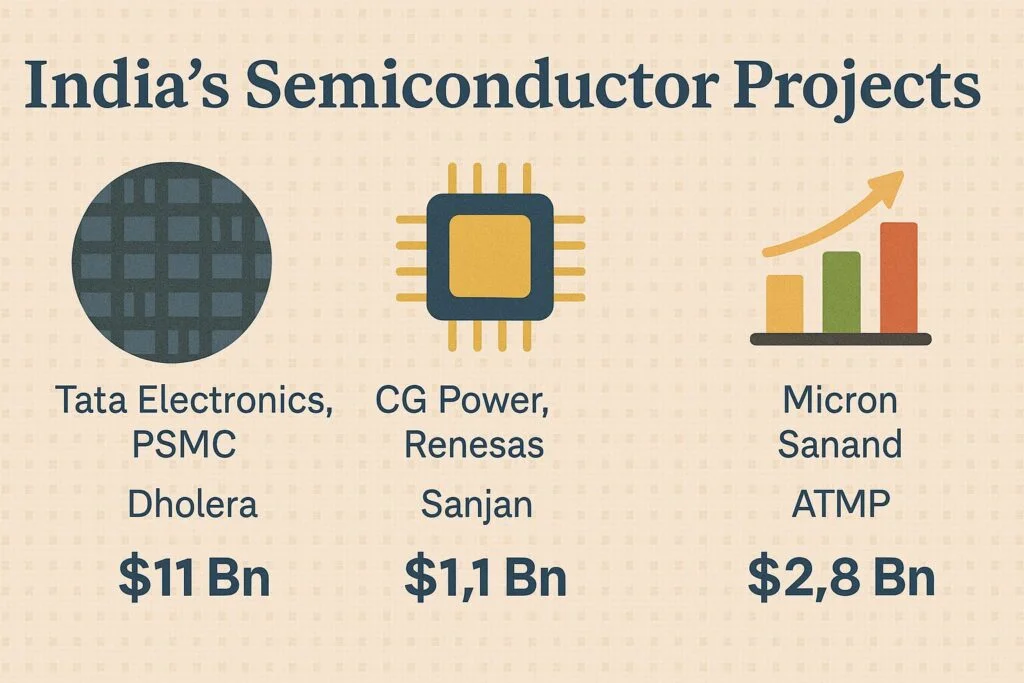
Quick Summary: The 2026 Reality
The Vision: Why chips are the “New Oil” of the 21st century and how India is securing its supply.
The Investment: Breaking down the ₹1.76 lakh crore (ISM 2.0) mega-projects.
The Export Leap: Micron’s first ‘Made in India’ commercial shipment for Q1 2026.
The Defense Shield: Providing “Trusted Hardware” for Project Kusha and the AMCA program.
1. Why the India Semiconductor Mission Matters: The Silicon Shield
To understand the urgency, one must look at the global supply chain. Semiconductors (chips) are the brain of modern civilization. They are in your smartphone, your car, your bank’s server, and, most importantly, in the BrahMos Missiles and Tejas Fighter Jets guarding the border.
Currently, the world relies dangerously on just two locations:
Taiwan: Produces 90% of the world’s advanced chips.
China: Dominates the legacy chip market and assembly.
If a conflict were to blockade the Malacca Strait or the Taiwan Strait tomorrow, the global economy would collapse. The India Semiconductor Sovereignty 2026 roadmap is the world’s insurance policy against that catastrophe. Western giants like Apple, Nvidia, and AMD are no longer just looking at India as a “market” but as a “China Plus One” manufacturing base.
2. The Micron Sanand Milestone: India’s First ‘Made in India’ Exports
The completion of Micron’s Assembly, Testing, Marking, and Packaging (ATMP) plant in Sanand, Gujarat, marks a watershed moment. Built with a total investment of $2.75 billion, this facility has officially transitioned from pilot runs to high-volume commercial production as of January 2026.
Ramping Up for Q1 2026
The Ministry of Electronics and IT (MeitY) has confirmed that the facility is now focusing on DRAM and NAND flash memory modules.
Commercial Export: The first major consignment of Indian-made memory modules is scheduled for dispatch in Q1 2026.
Global Supply Chain: By mid-2026, these chips will power domestic smartphones and be exported to over 100 countries, positioning India as a “Trusted Partner” in the global electronics ecosystem.

3. The Tata-PSMC Dholera Fab: The Jewel in India’s Silicon Crown
While Micron handles the “Back-end,” the real battle for sovereignty is at the “Front-end” fabrication. The Tata Electronics-PSMC joint venture in Dholera, Gujarat, is an ₹91,000 crore mega-project that has reached its structural completion phase as we enter 2026.
The 28nm Strategy and Equipment Phase
The Dholera Fab is focusing on 28nm (nanometer) chips, which are the “Workhorses” of the industry.
Current Status: As of early January 2026, the facility has entered the ‘Equipment Installation Phase’. High-precision lithography tools from partners in Taiwan and the Netherlands have arrived at the site.
Automotive Power Play: In a major strategic expansion, Tata Electronics has signed a pact with Japan’s ROHM Co. to assemble and test automotive-grade power semiconductors (Si MOSFETs) at this site, with production slated to begin by mid-2026.
Sovereign IP: These chips will be vital for Project Kusha Sky Shield, powering radar control units and electronic warfare suites.
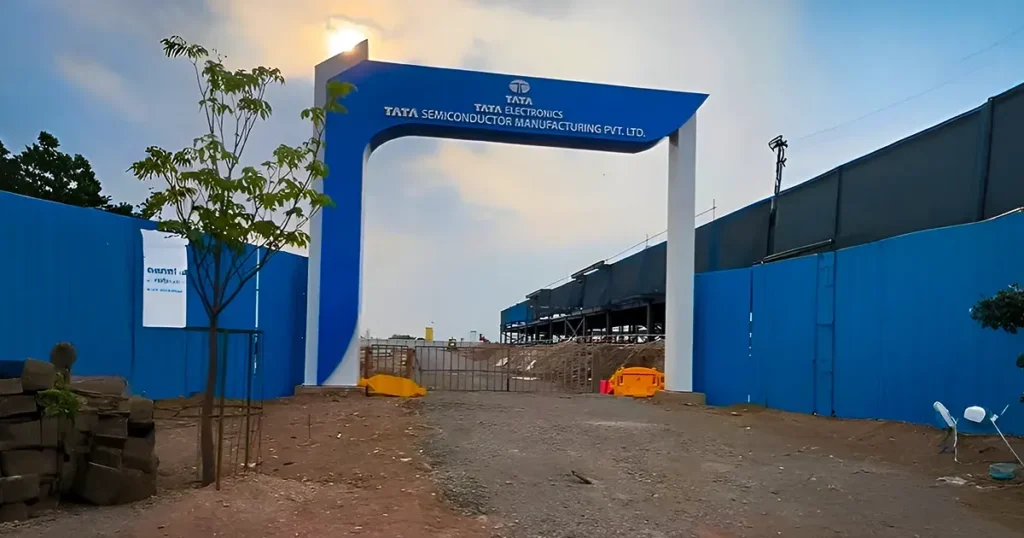
4. The Assam Pivot: Tata’s OSAT Facility
This project (₹27,000 crore) puts Northeast India on the global tech map. Located in Morigaon, Assam, it has reached a 75% construction milestone as of January 2026.
Focus: This OSAT facility will package and test chips for the automotive sector (Tata Motors, Tesla) and the telecommunications sector (5G/6G towers).
Strategic Deployment: The Morigaon unit will be responsible for the final packaging of the ‘Vikram 32-bit’ space-grade processors, ensuring India’s future satellite launches under the 2026 space roadmap are powered by homegrown silicon.
Target: The facility is targeted for commissioning by April 2026, creating 15,000 direct jobs in the region.
5. CG Power & Renesas (Sanand, Gujarat)
A partnership between India’s Murugappa Group and Japan’s chip giant Renesas, this unit involves an investment of ₹7,600 crore.
Specialization: It focuses on specialized chips for industrial power, railways, and space applications.
Full-Scale Production: Along with Tata and Micron, the CG Power plant is among the four units confirmed by Minister Ashwini Vaishnaw to begin regular, large-scale manufacturing in 2026.
6. Challenging China’s Monopoly: The India Advantage
Can the India Semiconductor Sovereignty 2026 mission really compete with China’s decades-long lead? The answer lies in three unique advantages:
The Talent Pool (Design Capital): India already owns 20% of the world’s chip design talent. The mission aims to bridge the gap between “designing abroad” and “manufacturing at home,” creating an end-to-end ecosystem.
Silicon Diplomacy: In a polarized world, technology is about trust. The US-led iCET (Initiative on Critical and Emerging Technology) has positioned India as a neutral, rule-based destination. India is projected to capture 10% of the global semiconductor market by 2030, a massive leap from its 2021 status.
Democratic Transparency: Unlike the “Black Box” nature of Chinese manufacturing, India’s fabs operate under international standards, ensuring that there are no “Kill Switches” or hardware backdoors in critical systems.

7. The Defense Link: Why Chips are the New Ammunition
The drive for semiconductor sovereignty is inextricably linked to the Integrated Theatre Commands India 2026 roadmap.
Trusted Hardware: Making chips domestically ensures that the electronic heartbeat of the Agni Missiles or the NavIC satellite system cannot be remotely disabled during a conflict.
Modernization 2026: The upcoming defense budget is reportedly earmarking significant funds for “Electronic Self-Reliance,” encouraging MSMEs to design chips for drones and the Mission Sudarshan Chakra air defense shield.
8. Comparative Analysis: India vs. Global Semiconductor Hubs 2026
| Feature | India’s Silicon Roadmap (2026) | China’s Semiconductor Status | Taiwan (TSMC Benchmark) |
| Primary Node | 28nm (Mature & Defense-grade) | Self-sufficiency in Mature Nodes | 2nm – 5nm (Global Leader) |
| Major Players | Tata, Micron, CG Power | SMIC, Huawei (HiSilicon) | TSMC, UMC |
| Output Status | Q1 2026 Commercial Export | Target of Global Export Controls | Technical Supremacy |
| Govt. Support | $20B ISM 2.0 Incentives | $140B Big Fund | Established Ecosystem |
| Geopolitics | Trusted Partner (iCET) | Focus on A2/AD Technology | Security Vulnerability |
9. The Challenges Ahead: Infrastructure & Talent
Semiconductor manufacturing is the most complex engineering feat known to mankind.
Water and Power: A fab requires millions of liters of ultra-pure water and 24/7 uninterrupted electricity. Dholera’s infrastructure is being built to military-grade standards to ensure a 0.1-second power cut does not ruin months of production.
Skilled Workforce: India needs to train one million skilled professionals by 2026 across fabrication, assembly, and testing (ATMP).
10. The 2026 Roadmap: What’s Next?
As the first commercial chips roll out of the Sanand pilot lines in early 2026:
Q1 2026: Official launch of first commercial exports from Micron Sanand.
April 2026: Commissioning of the Tata Assam OSAT facility.
Late 2026: First 28nm silicon wafer rollout from the Tata Dholera Fab.
December 2026: Final integration of indigenous chips into Indian Navy’s Project 77 Nuclear Submarines.
Conclusion: The Silicon Shield of a Resurgent India
India Semiconductor Sovereignty 2026 is the realization of a decades-long dream. It marks the transition of India from a “Back Office” of the world to a “Factory of the Future.” By building its own fabs and assembly units, New Delhi is ensuring that its military, its economy, and its people are no longer at the mercy of global supply shocks or geopolitical blackmail. The era of India as a “Silicon Consumer” is over; the era of the “Silicon Superpower” has begun.
Recommended Reading: The Pillars of Sovereignty
To see how semiconductor sovereignty powers India’s 2026 defense roadmap, explore these intelligence reports:
Sky Shield: Project Kusha India Sky Shield 2026: The Indigenous Iron Dome
Stealth Edge: India AMCA 5th Gen Stealth Fighter: The 2026 Roadmap
Border Infra: Frontier Highway India 2026: The Himalayan Fortress
Subsurface Hegemony: India’s Project 77 Nuclear Submarine: Decoding the $14 Billion Deal