By Wish | Defense Analysis
The Speed of War
The India Hypersonic Missile program represents the most critical technological leap for New Delhi in the 21st century. In the cold calculus of modern warfare, speed is the new stealth. While the world worries about nuclear warheads and aircraft carriers, a new and more immediate threat has emerged in our neighbourhood, weapons that fly at speeds greater than Mach 5 and cannot be tracked by traditional radar.
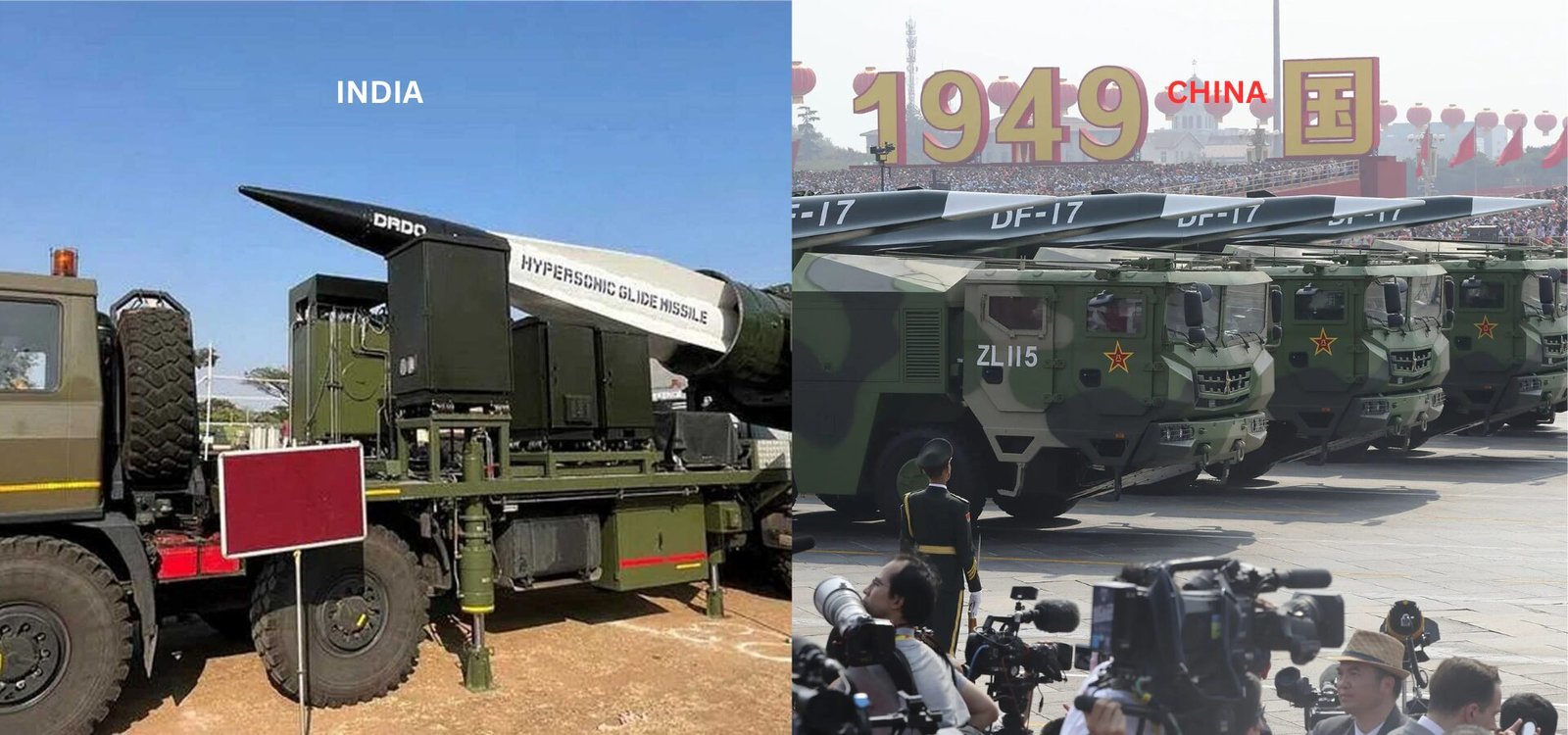
China has already shocked the world by deploying its DF-17 hypersonic glide vehicle. Russia has used the Kinzhal in combat in Ukraine. The question keeping Indian strategists awake is: Where does India stand in this race? The answer lies in a secretive project by the DRDO called the HSTDV (Hypersonic Technology Demonstrator Vehicle).
This analysis goes deep into the mechanics of this technology, explaining why Mach 6 is the magic number that changes the balance of power in the Himalayas.
Comparative Data: The Hypersonic Balance
| Feature | India (HSTDV / BrahMos-II) | China (DF-17) |
| Speed | Mach 6+ (Expected) | Mach 5-10 |
| Engine Tech | Scramjet (Air Breathing) | Glide Vehicle (Rocket Boost) |
| Status | Successful Tests (Development) | Operational (Deployed) |
| Role | Strategic Strike & Anti-Ship | Area Denial (A2/AD) |
1. The Threat: Why the DF-17 is a Nightmare
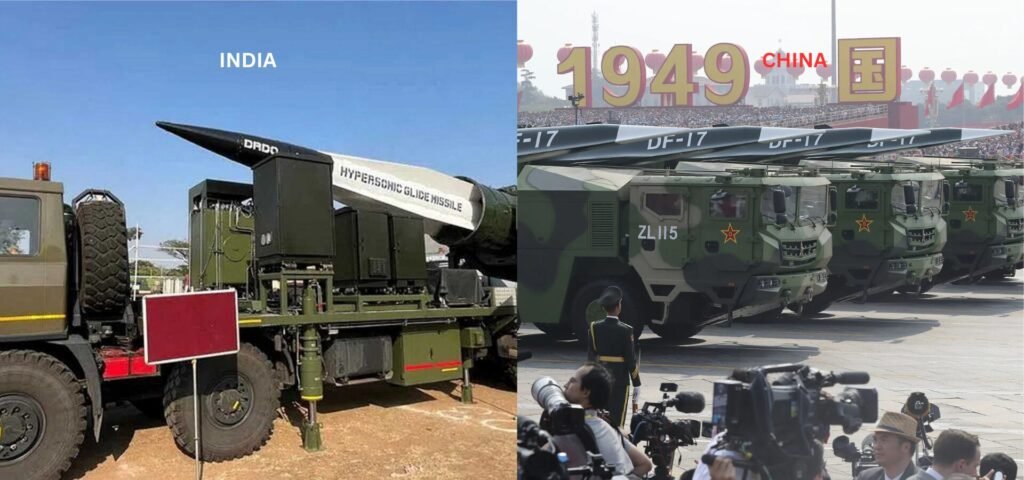
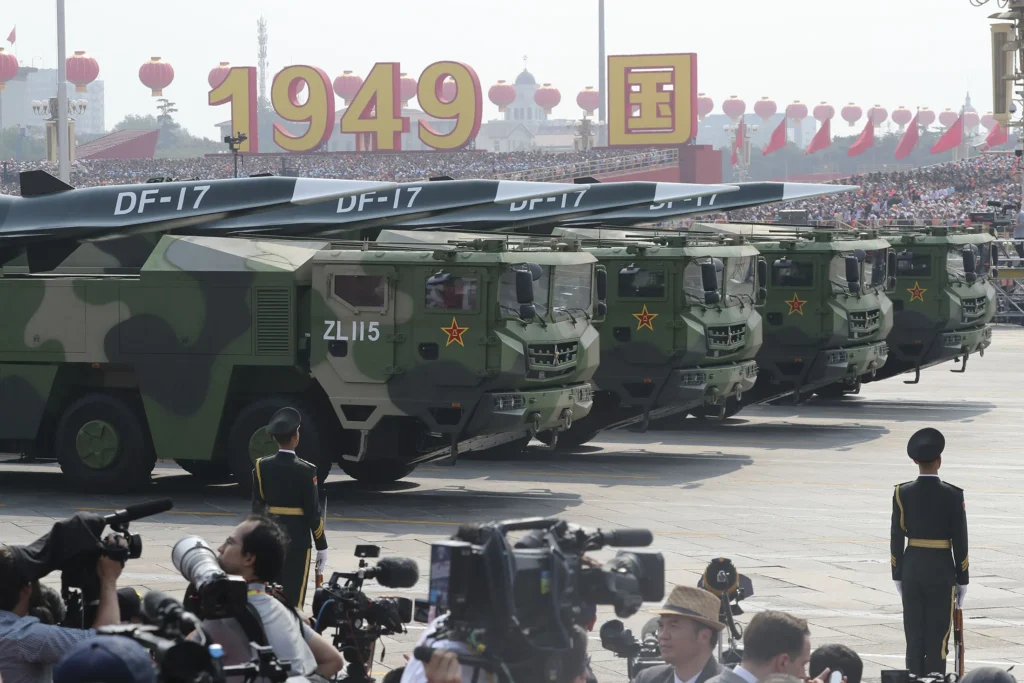
In 2019, Beijing paraded the [DF-17], and it wasn’t just for show. Unlike a ballistic missile that follows a predictable arc like a stone thrown in the air, where you can calculate where it will land—the DF-17 is a Hypersonic Glide Vehicle (HGV).
The mechanism is terrifyingly simple yet hard to stop. It launches on a rocket booster into space, detaches, and then glides down towards the target, skipping off the atmosphere like a flat stone on water. Because it can change direction mid-flight at Mach 5, Indian radars like the [S-400 Air Defense System] cannot calculate its trajectory until it is too late. It is designed specifically to sink aircraft carriers and hit static bases like our airfields in Tezpur or Ambala.
2. India’s Answer: HSTDV & The Scramjet Revolution
New Delhi is not sleeping. The India Hypersonic Missile program is built around the [HSTDV]. Unlike China’s glider, India is focusing on a Hypersonic Cruise Missile.
To understand the complexity, we must look at the engine. To fly at Mach 6, a normal jet engine would melt. A Ramjet engine works well up to Mach 3 (like in the current BrahMos). But for Hypersonic speeds, you need a Scramjet (Supersonic Combustion Ramjet).
The Breath of Fire
The Scramjet is an engineering marvel. It does not carry an oxidizer tank like a rocket. Instead, it sucks in oxygen from the atmosphere at supersonic speeds to burn fuel. This makes the missile lighter and faster. In recent tests off the Odisha coast, the vehicle achieved sustained flight at Mach 6 for over 20 seconds. This proved that India has mastered the ignition technology, which is like trying to light a matchstick in a hurricane.
3. BrahMos-II: The Future is Here
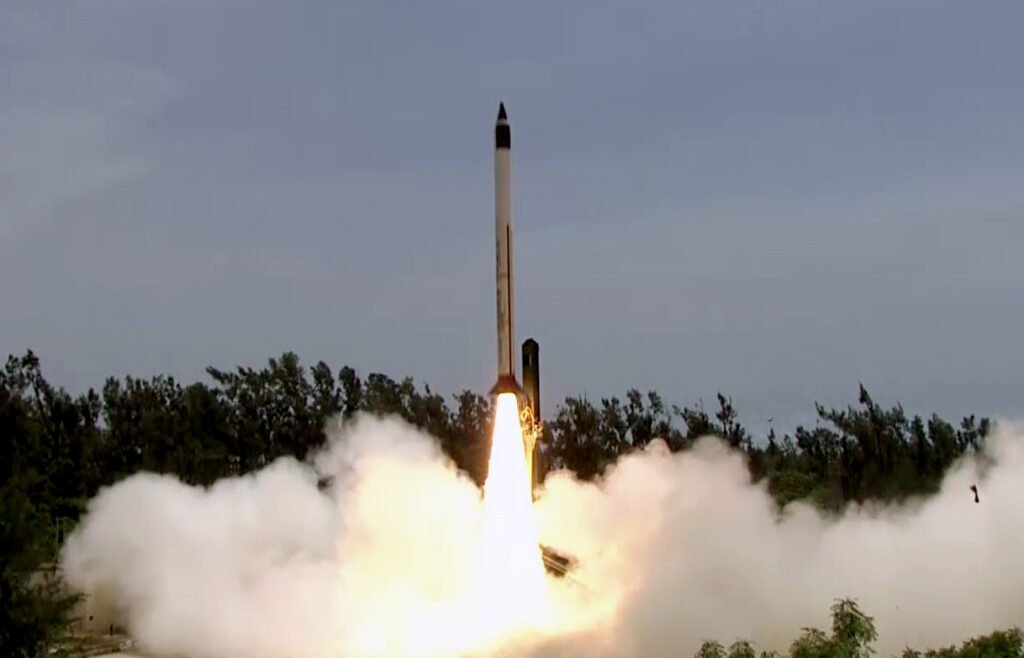
The technology from HSTDV will directly feed into the BrahMos-II (K). While the current BrahMos (Mach 2.8) is already the world’s fastest supersonic missile, the BrahMos-II is expected to be hypersonic, reaching speeds of Mach 7 or 8.
There is a strong Russian connection here. It is likely based on Russia’s Zircon missile technology, which has already been combat-tested. Armed with this, an Indian destroyer could hit a Chinese warship 600 kilometers away in less than four minutes. No defense system on earth, not even the US Aegis or Chinese HQ-9, can stop a projectile moving that fast.
4. Strategic Implications for the Himalayas
Why does this matter for the land borders? In the high-altitude friction of Ladakh or Arunachal Pradesh, air power is often limited by weather and terrain. Fighter jets cannot carry heavy loads, and they are vulnerable to surface-to-air missiles.
A ground-launched India Hypersonic Missile changes this game completely. It can hit Chinese bunkers, supply lines, or radar stations in Tibet within minutes of launch. It does not need air superiority to work. It simply needs coordinates. This capability acts as a massive deterrent, forcing the PLA to think twice before mobilizing large convoys near the Line of Actual Control (LAC).
5. The Challenges of Heat and Plasma
Developing a demonstrator is one thing; fielding a weapon is another. The road ahead for Indian scientists is difficult.
The biggest enemy of speed is heat. At Mach 6, the surface temperature of the missile reaches over 2,000 degrees Celsius. India needs to mass-produce advanced composite materials to ensure the electronics inside don’t melt before hitting the target.
Another issue is the “Plasma Blackout.” At hypersonic speeds, a sheath of plasma forms around the missile, blocking radio signals. DRDO is working on advanced blackout communication technology to ensure they can steer the missile during this critical phase.
Conclusion: Closing the Gap
India is currently behind China in the deployment of hypersonics, but the gap is closing fast. The successful tests of HSTDV prove that India has the key to the engine technology.
By 2028-2030, the induction of hypersonic cruise missiles will ensure that India’s deterrence is not just nuclear, but kinetic. In the future war, the winner won’t be the one with the biggest bomb, but the one who hits fastest. The India Hypersonic Missile program is the guarantee that New Delhi remains in the race.
What do you think?
Should India prioritize Hypersonic missiles over building more Aircraft Carriers?
Let us know in the comments below.
Read Next: [How India’s Nuclear Triad ensures 360-degree protection against China.]