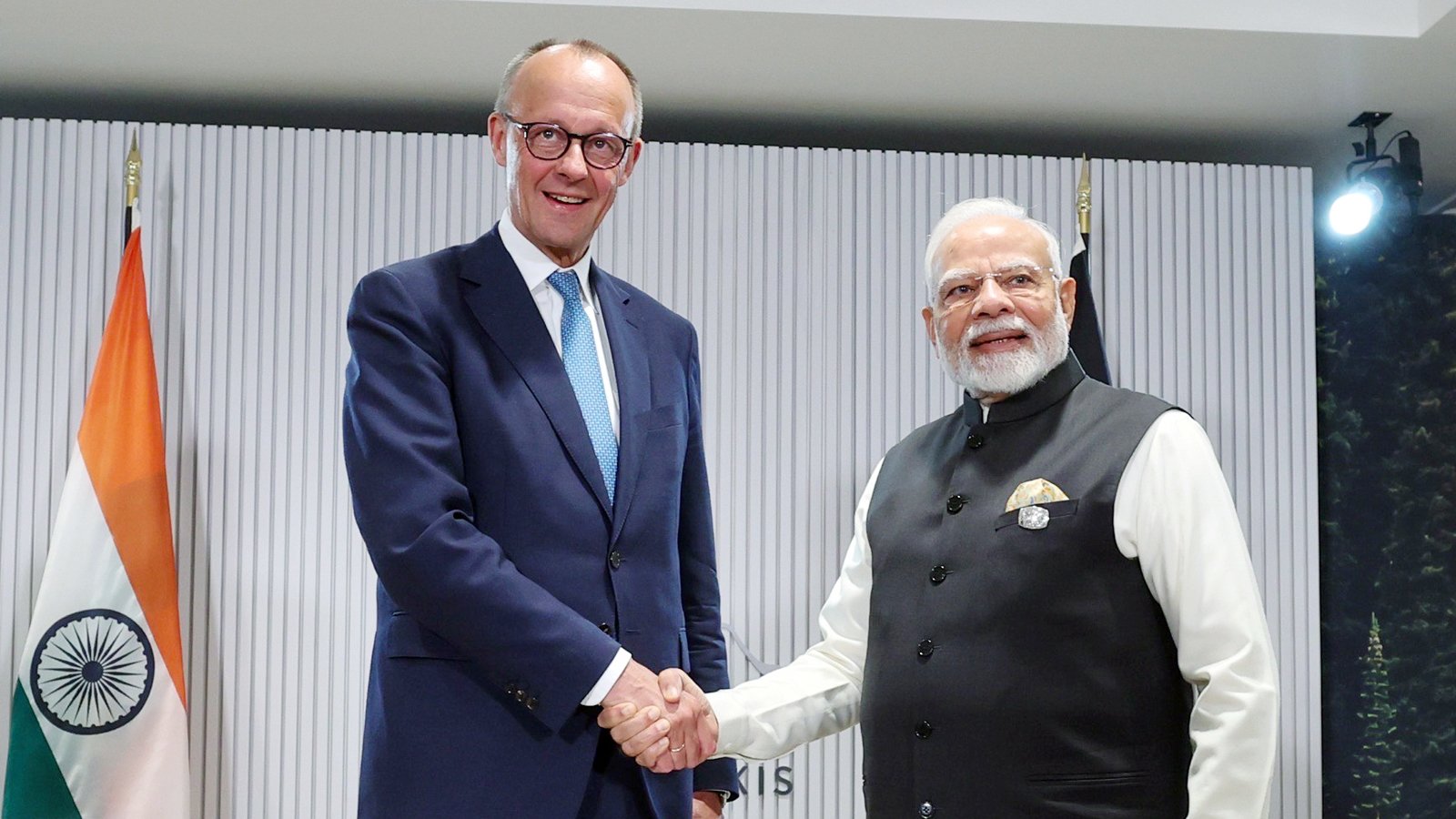
India-Germany Defense Deal 2026
Strategic Intelligence Report | By Wish, Geopolitical Analyst
The Intelligence Brief: January 11, 2026
As we approach the historic visit of German Chancellor Friedrich Merz to New Delhi on January 12, 2026, the geopolitical map of the Indo-Pacific is being redrawn. For decades, Germany maintained a policy of Strategic Caution when it came to exporting lethal military hardware to non-NATO countries. However, the world of 2026 is unrecognizable. The Russian invasion of Ukraine and the subsequent energy crisis have forced Berlin to undergo a Zeitenwende (Historical Turning Point).
Today, Germany no longer sees India merely as a trade partner for automobiles and chemicals, it sees India as the Security Provider of the Indo-Pacific. The center-piece of this new relationship is the long-awaited Project 75I (India), an $8 billion deal for six advanced conventional submarines. But the foresight of this deal goes far deeper than just hardware. It is about a fundamental shift in India’s sourcing strategy, where German precision is rapidly filling the vacuum left by aging Russian technology and the restrictive Black Box policies of Washington.
1. Project 75I: The $8 Billion Underwater Shield
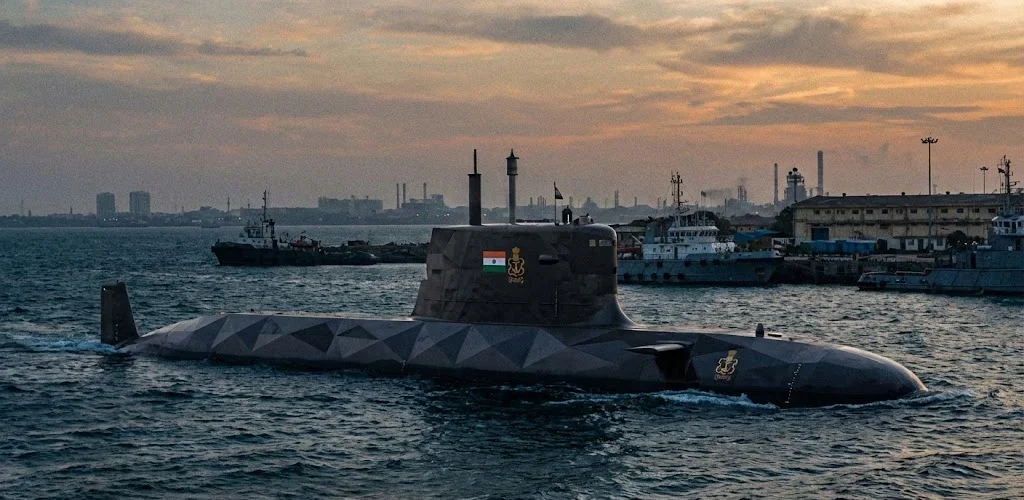
The most critical outcome of the Merz-Modi summit is the finalization of the Project 75I contract. After years of technical evaluation, the Indian Navy has chosen the German Type 214NG (Next Generation) submarine over its rivals.
[Jan 17, 2026 Update]: The German Type-214 deal is facing its first major challenge as France offers 100% Technology Transfer for the Scorpene-E. The competition is driving better terms for India’s Project 75I. Full details in our [Triple-Axis Report].
The Technical Leap: AIP and Stealth
The partnership between Germany’s Thyssenkrupp Marine Systems (TKMS) and India’s state-owned Mazagon Dock Shipbuilders Ltd (MDL) is set to create the most lethal conventional fleet in the Indian Ocean.
Air-Independent Propulsion (AIP): Unlike traditional diesel-electric boats that must surface every 48 hours to charge batteries, the Type 214NG can stay submerged for nearly two weeks. This makes them virtually invisible to enemy sonar and satellite monitoring.
Full Technology Transfer: For the first time, Berlin has agreed to a 100% Transfer of Technology (ToT) for the pressure hull and the fuel-cell-based AIP system. This is a massive win for India’s Atmanirbhar Bharat goals.
2. The European Pivot: Replacing the Russian Backbone
Since 2020, India has been on a mission to diversify its defense supply chain. The Global Energy War 2026 and the subsequent sanctions on Moscow have accelerated this process.
Why Germany?
Russia’s Kilo-class submarines, which formed the backbone of the Indian Navy for 30 years, are reaching the end of their service life. Russia’s current preoccupation with its own conflict has led to significant delays in spare parts and maintenance.
The German Alternative: Germany offers a Middle Path. While American tech often comes with End-Use Monitoring strings attached. German technology, through joint ventures like the one with MDL, allows India more sovereign control over the platform’s lifecycle.
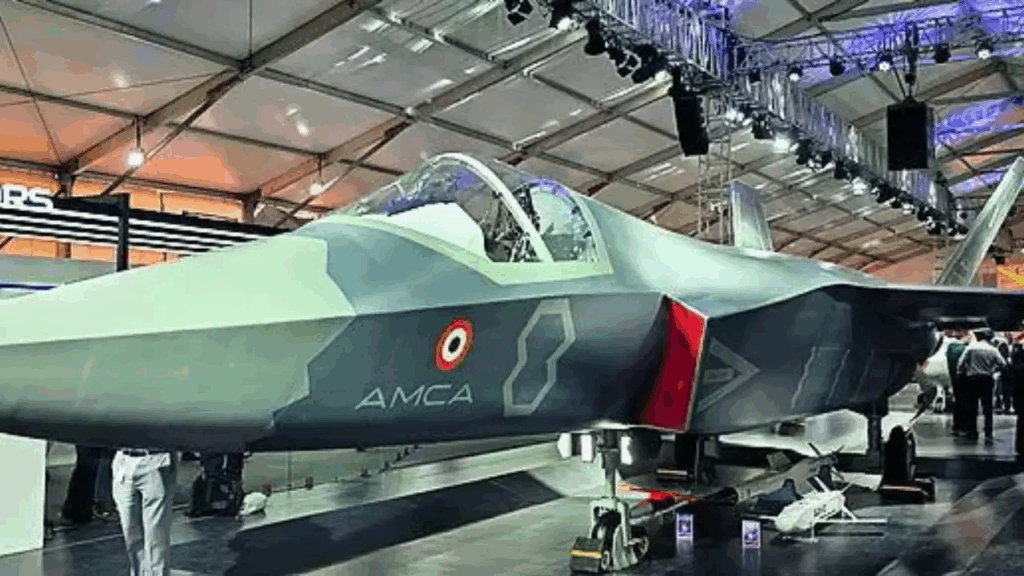
Safran-MTU Triangle: In the aerospace sector, we are witnessing a European Consortium approach. Germany’s MTU Aero Engines is now collaborating with France’s Safran and India’s DRDO to finalize the 110-140kN engine for the AMCA 5th Gen Stealth Fighter.
3. Aerospace Breakthrough: The MTU-Safran-DRDO Synergy
The mention of the AMCA (Advanced Medium Combat Aircraft) engine is where the Germany-India deal hits the stratosphere. While Safran is the lead partner, the integration of German MTU technology provides the Mechanical Backbone.
Hot Section Reliability: Germany’s expertise in high-temperature materials and engine control systems (FADEC) will be integrated into the new 110kN powerplant. This ensures that the AMCA will not just have stealth but also the Super-cruise capability needed to match the Chinese J-20.
Sovereign IP: Just like the submarine deal, the engine partnership guarantees that the Intellectual Property (IP) will reside in India, allowing New Delhi to maintain and upgrade the engines without seeking permission from foreign capitals.
4. The US Shock: Why Washington is Concerned
The rapid convergence of Berlin and New Delhi has caught Washington by surprise. While the US and India are close partners through the iCET 2.0 Framework, the German-Indian deal signals that India is not willing to put all its eggs in the American basket.
The Leverage Game
By bringing Germany into its core defense ecosystem, India has gained massive leverage:
Price Competition: The German deal forces US companies like GE and Lockheed Martin to be more competitive in their pricing and technology sharing.
Strategic Autonomy: It proves that India can build a world-class military using a European Model, which is less prone to the domestic political shifts of Washington.
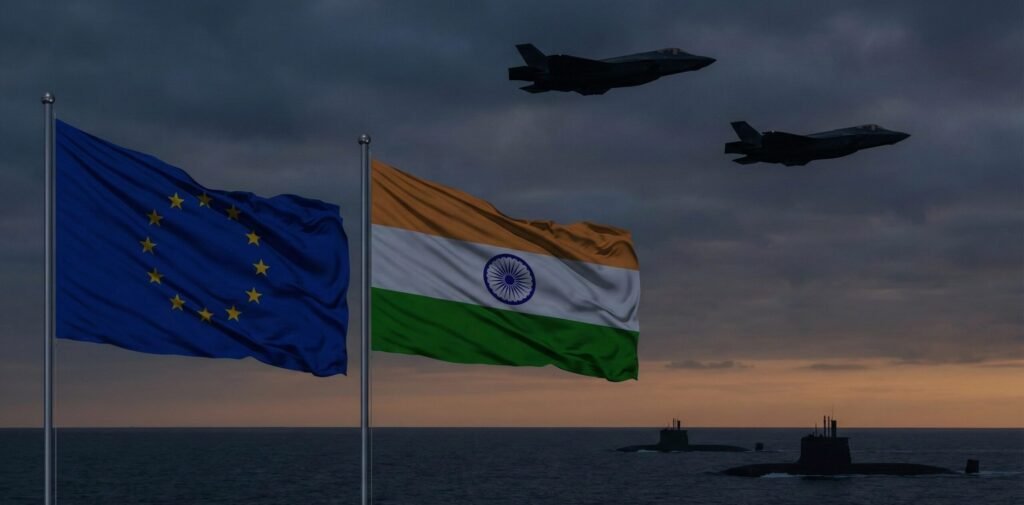
ermany and France are emerging as the new pillars of India’s aerospace and maritime security.
5. Land Warfare: The Leopard-2 DNA in Indian Tanks
The Germany-India deal isn’t just limited to the sea and air. The Future Ready Combat Vehicle (FRCV) program of the Indian Army is now looking toward German MTU engines to power India’s next-generation battle tanks.
The High-Altitude Challenge: In the freezing heights of Ladakh, Russian T-90 engines often struggle. The German MTU engines, optimized for extreme conditions, are being tested for the FRCV, promising a decisive edge over any adversary along the Line of Actual Control (LAC).
6. Economic Valuation: The $25 Billion Defense Industry
By 2026, the cumulative value of India-Germany defense cooperation is expected to cross $25 Billion.
Job Creation: The TKMS-MDL deal alone will support over 5,000 high-tech jobs in the Mumbai and Goa industrial clusters.
Export Ambitions: India and Germany are discussing a Joint Export Protocol where India can manufacture German-designed components for global markets, turning India into a global hub for maritime and aerospace maintenance.
7. The Futuristic Forecast: The 2028 Arctic Submarine
My research into the Arctic War 2026 trends suggests a new frontier for this partnership. Russia and NATO are currently in a standoff over the North Pole.
The Prediction: India and Germany are secretly discussing a specialized variant of the Type 214 for Arctic Operations. These Ice-Hardened submarines would allow India to protect its interests in the Northern Sea Route (NSR) alongside its German and Nordic partners, bypassing the traditional choke points of the Indo-Pacific.
8. The 2026 Roadmap: Key Milestones
January 12-13, 2026: Official signing of the Inter-Governmental Agreement (IGA) for Project 75I.
Q2 2026: Establishment of the MTU-Safran engine testing facility in Hyderabad.
Late 2026: Commencement of steel cutting for the first indigenous German-design submarine at MDL.
2027: Joint Naval Exercises (MILAN 2027) featuring the first integrated German-Indian sensor suites.
Conclusion: A Partnership of Equals
The India-Germany Defense Deal 2026 is the final confirmation of a new era. It is a partnership built on mutual respect, shared technology, and the harsh realities of the 21st-century resource war. By securing the deep blue with German submarines and the high skies with European-powered engines, India is insulating itself from the volatility of both Washington and Moscow.
As Chancellor Merz lands in New Delhi, he isn’t just bringing a delegation, he is bringing the keys to India’s military sovereignty.
The Berlin-Delhi Axis is no longer a possibility, it is the reality that will guard the Indo-Pacific for the next fifty years.
Recommended Reading: The Strategic Pillars
The Engine Deal: India AMCA 5th Gen Stealth Fighter: The 2026 Engine Roadmap
The Arctic Link: The Arctic War 2026: The New Northern Route and NATO-Russia Stand-off
The US Ultimatum: The Sergio Gor Mission 2026: Decoding Trump’s Silicon Ultimatum
The Naval Future: India’s Project 77 Nuclear Submarine: Decoding the $14 Billion Deal