Strategic Intelligence Report | By Wish, Analyst
The Intelligence Brief
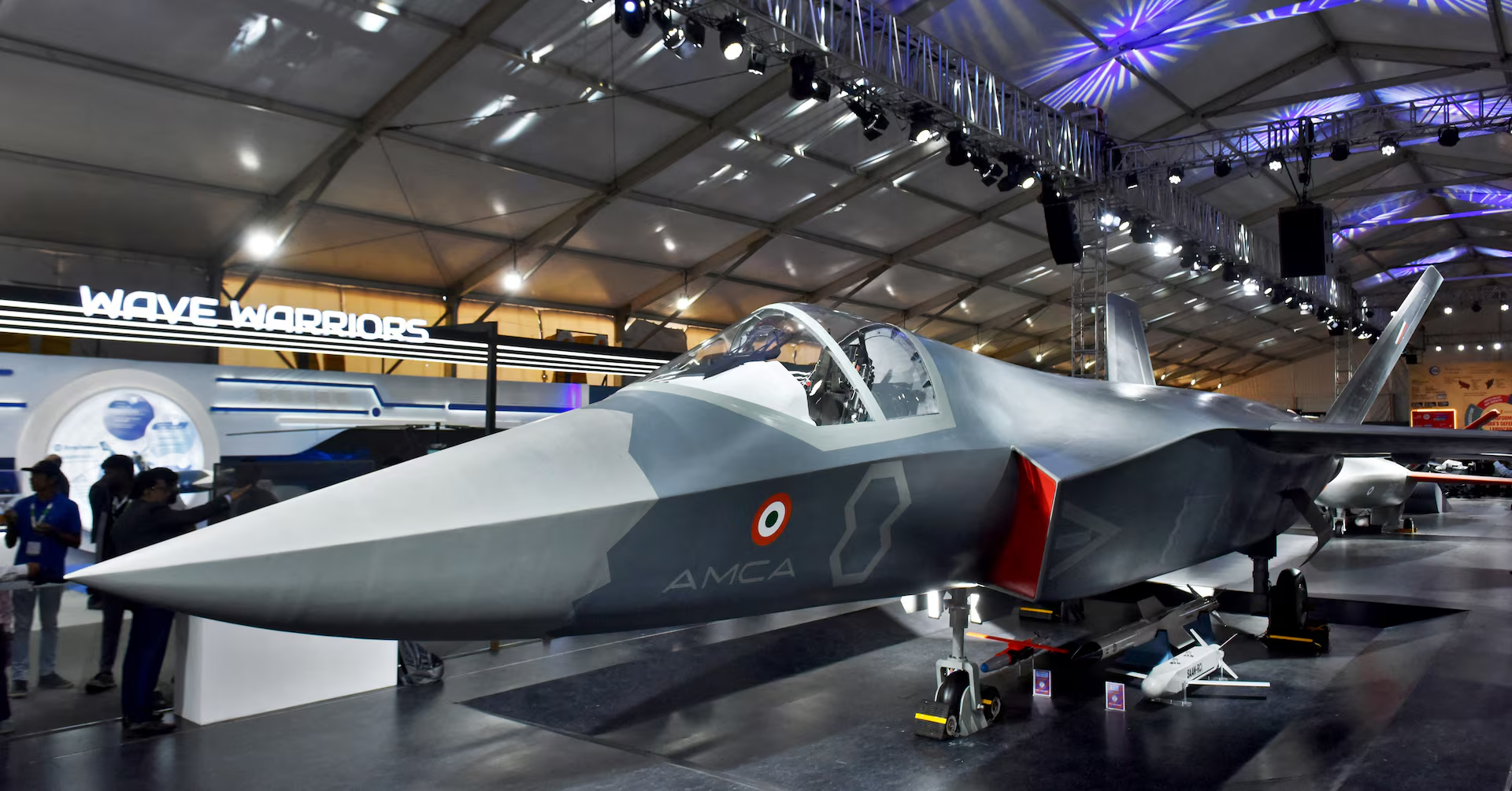
As we stand in late December 2025, the strategic skies of the Indo-Pacific are no longer defined by traditional dogfights but by the “Invisible War” of stealth and electronic dominance. For the Indian Air Force (IAF), the year 2025 has been a watershed moment. Following the tactical reviews of Operation Sindoor, it became clear that the IAF’s transition to a 5th-generation force is the only way to counter the growing PLAAF Western Theatre Command. The cornerstone of this future is the India AMCA 5th Gen Stealth Fighter.
Following the Cabinet Committee on Security (CCS) clearance of the $1.8 billion Full-Scale Engineering Development (FSED) phase, the project has moved from the drawing board to the assembly line. By late 2026, India is on track to roll out its first AMCA prototype—a moment that will place New Delhi in the same league as Washington, Beijing, and Moscow. This report dives deep into the $7 billion engine deal, the metamaterial “Analakshya” cloaking, and why the AMCA is the ultimate answer to the J-20 “Mighty Dragon.”
Jan 15, 2026 Update:
The AMCA’s propulsion roadmap has reached a critical milestone. Following the Merz-Modi summit, Germany’s MTU Aero Engines has officially integrated into the DRDO-Safran consortium. This ensures that the AMCA’s Digital Heart remains free from foreign software blocks. Read the full analysis in our latest report: [Why India is Building a Silicon Shield].
Jan 11, 2026 Update:
Following the landmark January 2026 Indo-German defense summit, Germany’s MTU Aero Engines has officially joined the Safran-DRDO consortium. This European synergy ensures a 110-140kN engine with specialized German control systems, providing the AMCA with superior high-altitude reliability and sovereign engine capabilities. Read the full analysis of this strategic shift here: The Berlin-Delhi Axis 2026: Decoding the $8 Billion Submarine Pact and Germany’s Military Pivot.
1. Sovereign Propulsion: The $7 Billion Safran Breakthrough
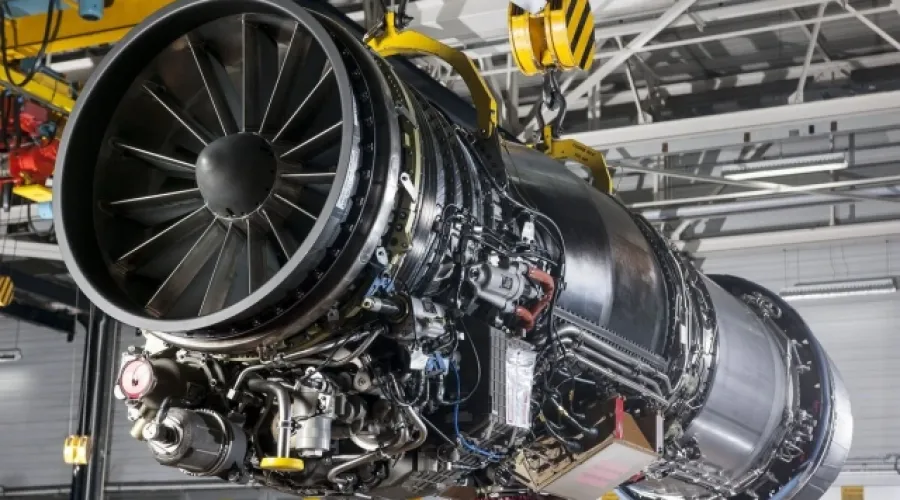
The Achilles heel of Indian aerospace has historically been engine technology. However, the signing of the $7 billion Safran-GTRE co-development deal in November 2025 has fundamentally changed the game. Unlike previous “off-the-shelf” purchases, this deal ensures that the India AMCA 5th Gen Stealth Fighter will have an indigenous heart with 100% intellectual property rights (IPR).
The Two-Tranche Engine Strategy
AMCA Mk1 (The Initial Strike): The first two squadrons of the India AMCA 5th Gen Stealth Fighter will be powered by the US-made GE F414-INS6 engines. This is a strategic move to ensure that airframe testing and pilot familiarization begin by 2026 without waiting for the new engine’s maturity.
AMCA Mk2 (The Full Stealth Predator): The Mk2 variant, starting in the early 2030s, will integrate the clean-sheet 120–140 kN thrust engine co-developed with Safran. This engine is designed for Supercruise—the ability to fly at supersonic speeds (Mach 1.5+) without using fuel-guzzling afterburners.
The Technology Transfer (ToT) Reality
Safran has agreed to transfer the most sensitive “Hot Section” technologies—including single-crystal turbine blades and high-temperature combustion chambers. I have analyzed that this level of ToT is unprecedented; it allows India to modify and upgrade the engine independently, ensuring that the India AMCA 5th Gen Stealth Fighter remains free from foreign export controls during a conflict.
2. Stealth Re-imagined: The ‘Analakshya’ Metamaterial Cloak
Stealth is not just about the shape of the aircraft, it’s about the materials that interact with electromagnetic waves. For the India AMCA 5th Gen Stealth Fighter, the Breakthrough comes from IIT-Kanpur’s ‘Analakshya’ (Sanskrit for “Invisible“) system.
The Science of Metamaterials
Unlike the heavy and toxic Radar Absorbent Materials (RAM) used by the US F-35 or Chinese J-20, Analakshya is a metamaterial-based surface cloaking system.
90% Radar Absorption: It uses microscopic structures that trap incoming radar waves from Synthetic Aperture Radar (SAR) systems and convert them into minute amounts of heat.
Acoustic & Thermal Stealth: Beyond radar, the coating manages the aircraft’s infrared (IR) signature, making it exceptionally difficult for heat-seeking missiles to lock on.
Ruggedized for the Himalayas: Conventional stealth coatings are fragile and require climate-controlled hangars. Anālakṣhya is designed to be rugged, allowing the AMCA to operate from high-altitude bases in Ladakh without losing its stealth edge to extreme cold.

3. Lethality from Within: The Internal Weapons Bay (IWB)
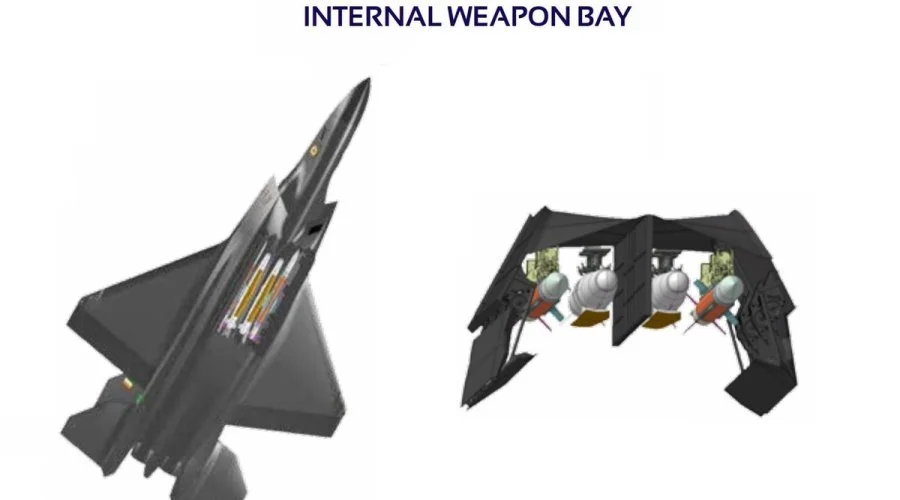
To maintain a Low Radar Cross-Section (RCS), the India AMCA 5th Gen Stealth Fighter must hide its weaponry. The AMCA features a sophisticated Internal Weapons Bay (IWB) with a payload capacity of 1.5 tonnes.
The ‘Deep Penetration’ Arsenal
BrahMos-NG Integration: By 2026, the BrahMos-NG (Next Generation) will be ready for testing. This compact, Mach 3.5 missile is being specifically optimized to fit inside the AMCA’s IWB. A stealth fighter carrying a supersonic cruise missile is a combination that current air defense systems (like the S-300) cannot effectively counter.
Astra Mark-III (SFDR): For Beyond Visual Range (BVR) combat, the AMCA will carry the Solid Fuel Ducted Ramjet (SFDR) variant of the Astra missile. With a range of 250+ km, the AMCA can neutralize enemy AWACS and tankers from safety.
Dual-Mode Flexibility: In a “Beast Mode” configuration (once air superiority is established), the AMCA can utilize its 14 hardpoints to carry up to 7 tonnes of ordnance externally, similar to a 4.5-gen fighter like the Rafale.
4. The Digital Co-Pilot: AI-Assisted Sensor Fusion
The cockpit of the India AMCA 5th Gen Stealth Fighter is designed around a single, massive Wide Area Touch Display (WAD). However, the real intelligence lies in the AI-based electronic co-pilot.
Uttam GaN AESA Radar
The aircraft is equipped with the advanced indigenous Uttam AESA Radar, utilizing Gallium Nitride (GaN) technology. This provides:
Longer Range: Detection of stealthy targets like the J-20 from a much greater distance.
Low Probability of Intercept (LPI): The radar can track targets without letting the enemy know they are being “painted” by a radar beam.
Multi-Spectral Fusion: The AI system merges data from the radar, the IRST (Infra-Red Search and Track), and the Electronic Warfare (EW) suite into a single, simplified picture for the pilot. This reduces “cognitive load,” allowing the pilot to act as a mission commander rather than just a driver.
5. Geopolitical Confrontation: AMCA vs. J-20 ‘Mighty Dragon’
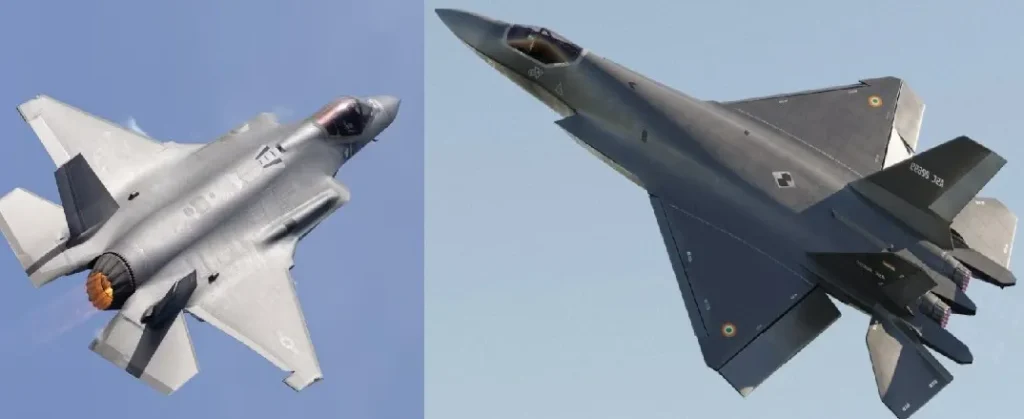
The deployment of the India AMCA 5th Gen Stealth Fighter is a direct response to China’s rapid expansion of its J-20 fleet. While the J-20 is a large, heavy air-superiority fighter, the AMCA is a more balanced 25-tonne multi-role platform.
Technical Comparison Table
| Feature | India’s AMCA Mk2 (2026+) | China’s Chengdu J-20 | US Lockheed F-35A |
| Max Speed | Mach 2.15 (Supercruise) | Mach 2.0+ | Mach 1.6 |
| Engine Thrust | 120-140 kN (Indo-French) | Estimated 150-180 kN | 191 kN (F135) |
| Stealth Tech | IITK Anālakṣhya Metamat | Legacy RAM Coatings | Fibre-Mat Tech |
| Combat Radius | 1,620 km | 2,000 km+ | 1,235 km |
| AESA Tech | Indigenous GaN (Uttam) | Estimated GaAs AESA | AN/APG-81 GaN |
Note: While the J-20 has a longer range, the AMCA’s superior thrust-to-weight ratio and metamaterial stealth make it far more effective for the high-altitude, contested environment of the LAC.
6. Manned-Unmanned Teaming (MUM-T): The Loyal Wingman
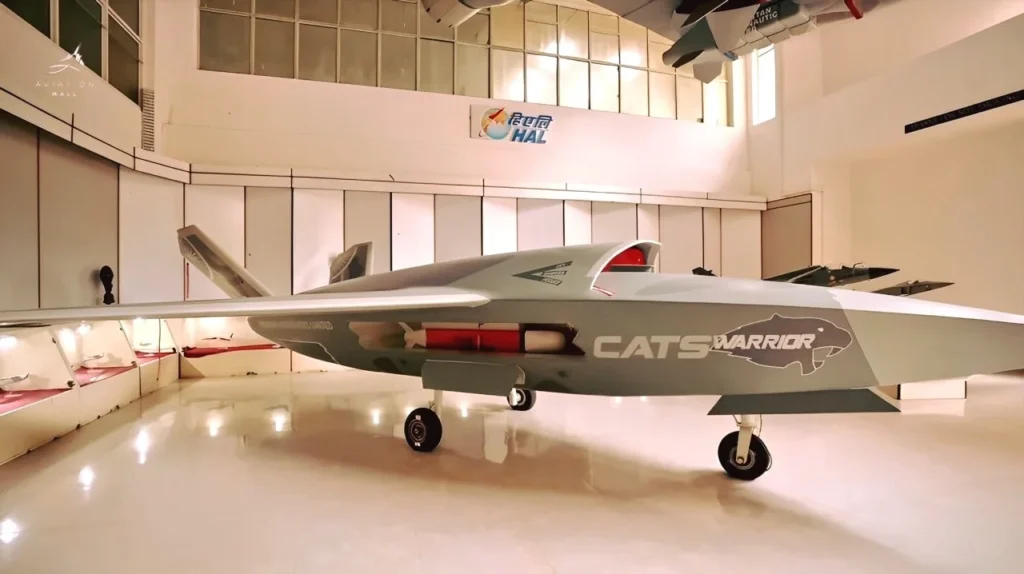
The India AMCA 5th Gen Stealth Fighter is being developed as a “System of Systems.” By 2026, the testing of the CATS (Combat Air Teaming System) will reach a critical phase.
The Mother-Ship Role: A single AMCA pilot will be able to control a swarm of 4 to 6 Warrior Drones. These drones act as shields, absorbing enemy missiles or acting as forward sensors to identify targets.
Seamless Integration: This integration aligns with the Integrated Theatre Commands India 2026 philosophy, where air-launched drones can share data with India’s Project 77 Nuclear Submarines to create a cross-domain “Kill Web.”
7. The 2026 Roadmap: From Rollout to Air Supremacy
The Full-Scale Engineering Development (FSED) phase consists of five prototypes.
Late 2026: First prototype rollout and ground testing.
2028-2029: Maiden flight of the AMCA Mk1.
2034-2035: Initial Operational Clearance (IOC) and start of serial production.
Strategic analysts at the India Pacific Post believe that the fast-tracking of this timeline is due to the infrastructure already being built at the Project Seabird Karwar naval base, which will eventually house the naval variant of the AMCA (Twin Engine Deck Based Fighter or TEDBF derivative) for India’s aircraft carriers.
Conclusion: Securing India’s Sovereign Skies
The India AMCA 5th Gen Stealth Fighter is more than just an aircraft; it is the ultimate expression of India’s technological sovereignty. By combining the $7 billion Safran engine deal with the revolutionary Analakshya stealth material, New Delhi has ensured that its 2026 roadmap is both realistic and lethal. As the first prototype takes shape, the message to the Indo-Pacific is clear, India’s skies are no longer open to intrusion; they are guarded by silent, invisible, and sovereign predators.
Recommended Reading: The Pillars of Indian Defense
To understand how the AMCA fits into India’s 2026 military transformation, we recommend reading these intelligence reports:
Command Reform: Integrated Theatre Commands India 2026: The $20 Billion Military Revolution
Subsurface Hegemony: India’s Project 77 Nuclear Submarine: Decoding the $14 Billion Deal
Naval Bastion: Project Seabird Phase IIA 2026: Asia’s Largest Naval Base