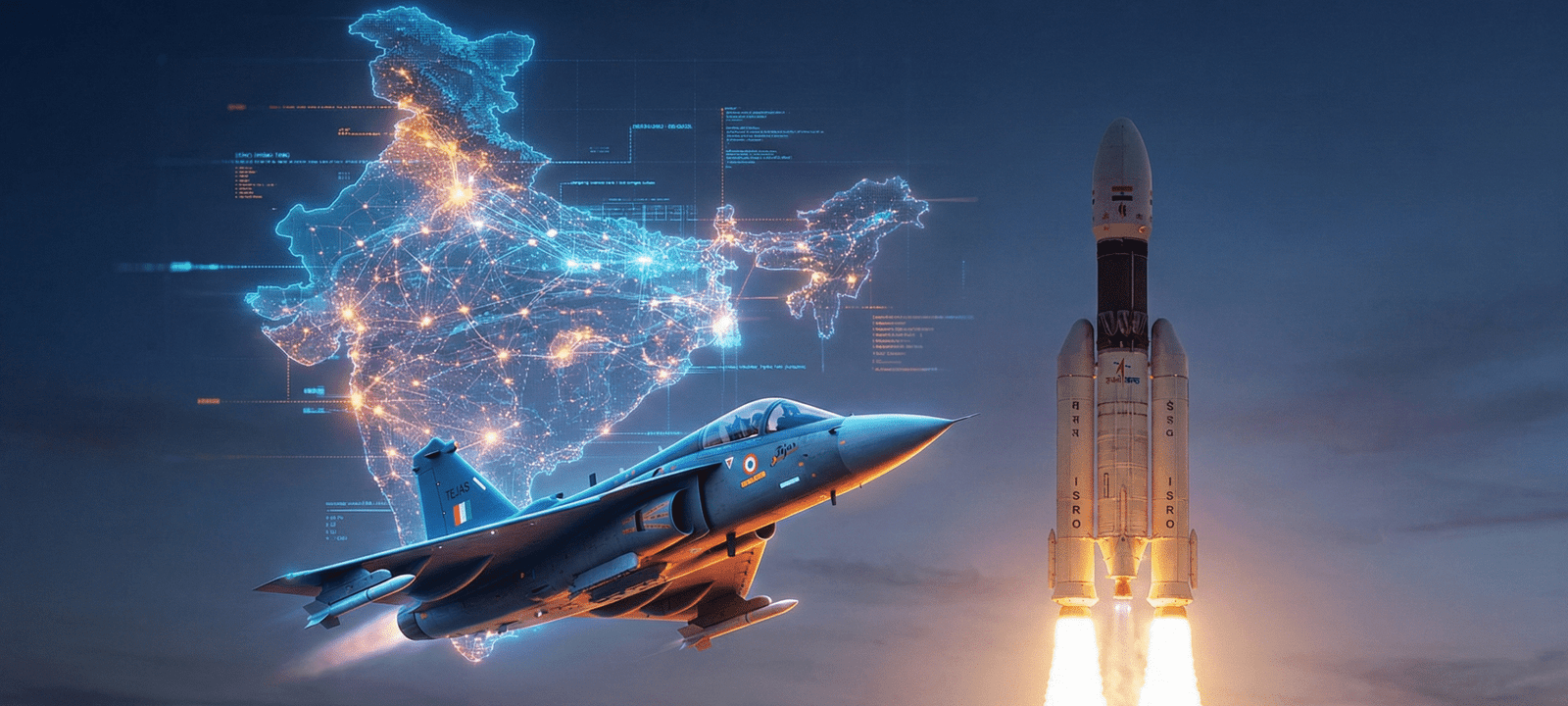
Quick Summary:
The Sky: How Tejas Mk2 will neutralize Pakistan’s Chinese J-10Cs.
The Stars: ISRO’s Gaganyaan and the race for Space Dominance.
The Soil: The “White Gold” (Lithium) discovery in Kashmir breaking China’s battery monopoly.
The India 2030 Strategy is New Delhi’s comprehensive roadmap to dismantle Chinese hegemony. The geopolitical chessboard of the 21st century is being redrawn, and New Delhi is no longer content with playing defense. While headlines often focus on border skirmishes, a deeper, structural shift is happening behind the scenes. Based on current developments in late 2025, India has activated a synchronized “Three-Pillar Strategy” designed to counter Chinese influence not just on the border, but in the sky, in space, and in the global supply chain.
This analysis decodes the three critical assets—Tejas Mk2, Gaganyaan, and Lithium—that will define India’s rise as a superpower by 2030.
Pillar 1: The Sky – Tejas Mk2 vs. The Dragon’s Wings
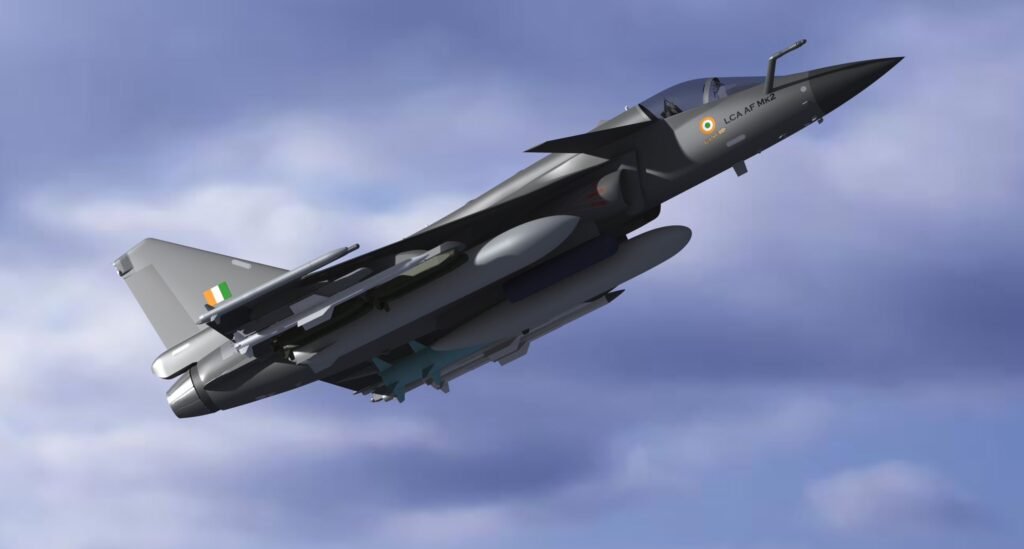
Following reports that China used the India-Pakistan conflict to test its J-10C fighters, the Indian Air Force (IAF) has accelerated its most ambitious project: the Tejas Mk2.
While the Tejas Mk1A was a “replacement” for the MiG-21, the Tejas Mk2 is a “Dominator.” It is specifically designed to outperform the Chinese J-10C and the Pakistani F-16 Block 70.
Why Tejas Mk2 is the “J-10C Killer”
The comparison between the Tejas Mk2 vs J-10C is critical for the balance of air power in South Asia.
Payload Capacity: The Tejas Mk2 is a Medium Weight Fighter (MWF) capable of carrying 6.5 tons of weapons, significantly more than the J-10C’s payload. This means it can carry more ASTRA Mk2 (Beyond Visual Range) missiles, allowing it to shoot down enemy jets before they even know they are being targeted.
Engine Power: Powered by the American GE-F414 engine (manufactured in India), the Mk2 has superior thrust-to-weight ratio compared to the Chinese WS-10B engine, which is known for reliability issues.
Electronic Warfare: Unlike the J-10C, which relies on borrowed Russian tech, the Mk2 features an indigenous Uttam AESA Radar. This allows Indian pilots to jam Chinese radar signatures effectively—a lesson learned from the 2025 skirmishes.
By 2030, the IAF plans to induct multiple squadrons of the Mk2, effectively creating an “Iron Dome” in the skies over Kashmir and the North-East.
Pillar 2: The Stars – Gaganyaan and Space Diplomacy
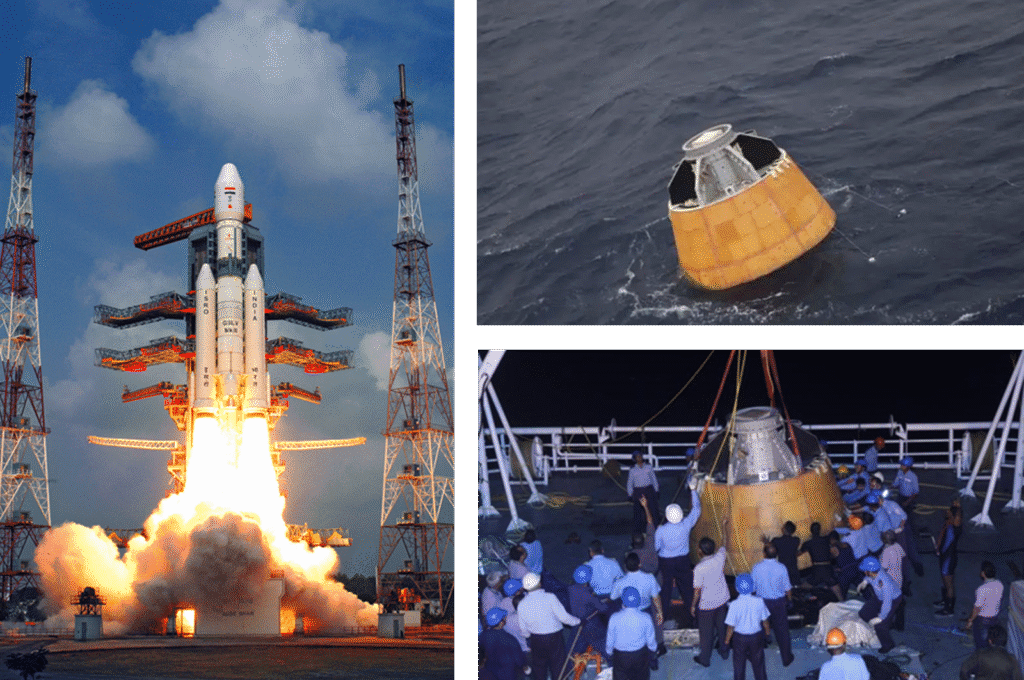
While the IAF secures the skies, the Indian Space Research Organisation (ISRO) is securing the final frontier. The Gaganyaan Mission—India’s first manned space flight—is not just a science experiment; it is a massive geopolitical statement.
The Race for the “Bharatiya Antariksha Station”
China already has its own space station (Tiangong). The US has the ISS. For India to claim “Superpower” status, it cannot rely on others.
Gaganyaan Update: Scheduled for a pivotal launch, this mission will demonstrate India’s capability to send humans to Low Earth Orbit (LEO) and bring them back safely.
Strategic Implication: The success of Gaganyaan lays the foundation for the Bharatiya Antariksha Station (Indian Space Station) planned for 2035.
Why Space Matters for Defense
Space is no longer peaceful. It is the “Fourth Frontier” of war. Future wars will be fought with satellite data. China has developed anti-satellite (ASAT) weapons to blind enemy communications. By establishing a permanent human presence in space and deploying a network of NavIC (Indian GPS) satellites, India ensures its missiles and drones function even if the US or Russia cut off GPS access during a crisis.
Pillar 3: The Soil – Lithium and the Energy War
Perhaps the most underrated but deadly pillar of this strategy lies underground. For decades, China has held the world hostage through its monopoly on Lithium-ion batteries—the heart of Electric Vehicles (EVs) and modern electronics.
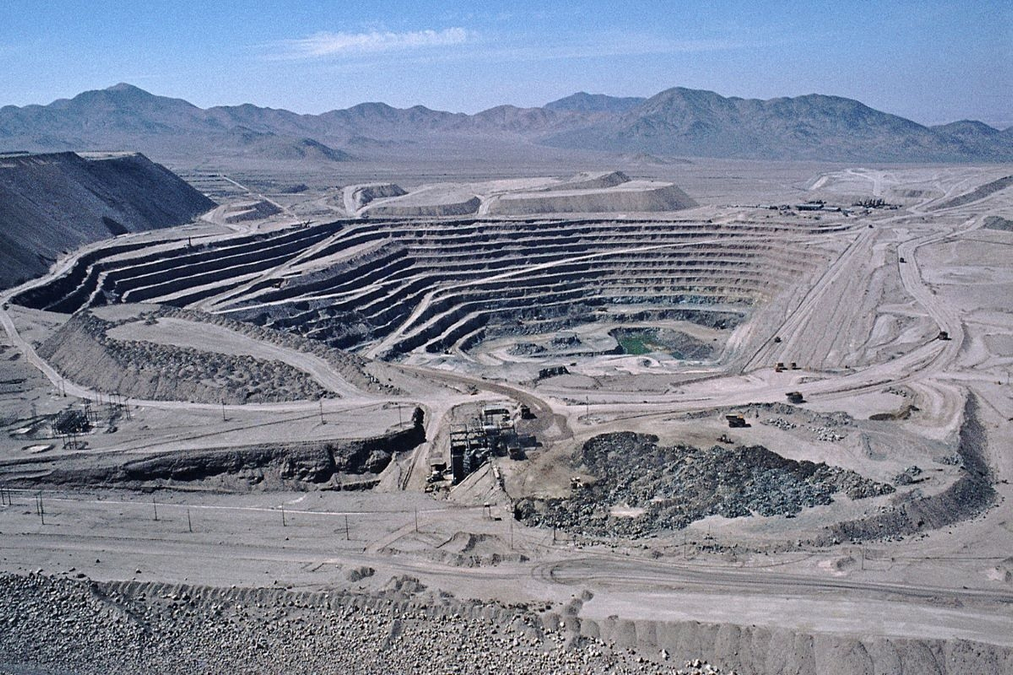
The discovery of massive Lithium reserves in Jammu & Kashmir (Reasi District) and Rajasthan has changed the game.
Breaking the “Red Supply Chain”
Currently, China controls nearly 60% of global Lithium processing. India’s discovery (estimated at 5.9 million tonnes in J&K alone) catapults it into the top league of Lithium-rich nations.
Economic Independence: By mining and processing this “White Gold” domestically, India can slash its import bill by billions.
The EV Revolution: The Electric Vehicle future in India depends on cheap batteries. With domestic Lithium, Indian companies like Tata and Mahindra can produce EVs at half the cost, competing directly with Chinese brands like BYD.
Strategic Security
Lithium is also essential for military submarines, drones, and communication gear. By securing its own supply, India ensures that in a war scenario, Beijing cannot cripple the Indian military by cutting off battery supplies.
Conclusion: The Success of India 2030 Strategy
The convergence of these three timelines—the induction of Tejas Mk2 (Defense), the success of Gaganyaan (Space), and the mining of Lithium (Economy)—creates a formidable fortress.
New Delhi has realized that countering China requires more than just troops on the border. It requires a holistic “Grand Strategy” where a fighter jet pilot, an astronaut, and a miner in Kashmir are all soldiers in the same war.
As we move closer to 2030, the question is no longer “Can India catch up to China?” but rather, “How will China respond to a self-reliant India?”
Related Analysis: [Read how the China-Pakistan axis used recent conflicts to test their weapons against India.]