Global AI Arms Race 2026:
Strategic Intelligence Report | By Wish, Geopolitical & Defence Analyst
The 2026 Inflexion Point: Algorithms as Ammunition
As of January 4, 2026, the global order has transitioned from the Silicon Age to the Intelligence Age. The world is no longer just fighting over the chips themselves, but over what those chips can think, predict, and execute. We have entered the Global AI Arms Race 2026, a period where the traditional measure of national power, GDP and military hardware, is being eclipsed by a new metric, Cognitive Dominance.
While the 20th century was defined by the Nuclear Triad, 2026 is defined by the AI Triad: Compute Power, Data Sovereignty, and Algorithmic Edge.
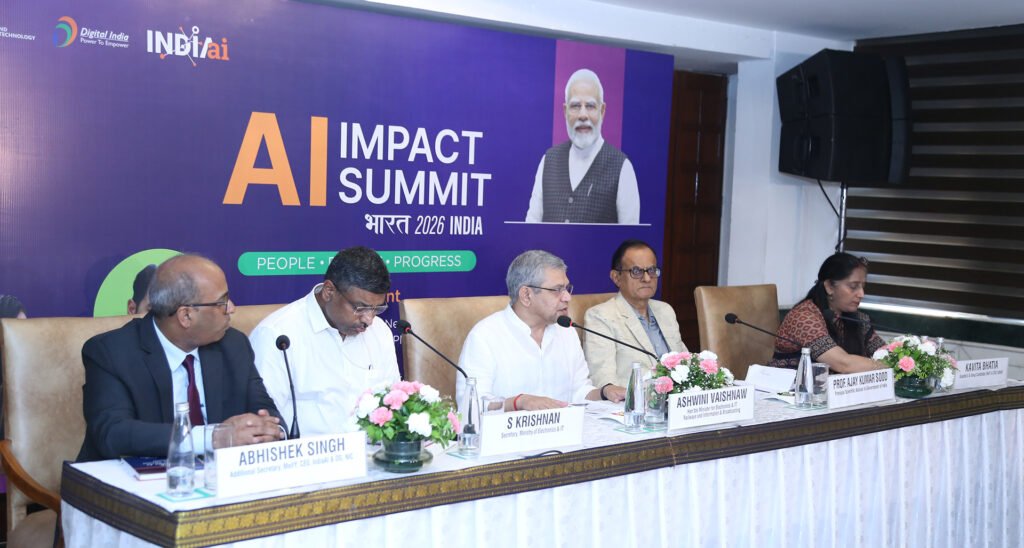
For India, the stakes could not be higher. With the upcoming India-AI Impact Summit 2026 scheduled for February 19-20 at Bharat Mandapam, New Delhi is signaling its intent to lead the Global South in the AI domain. This is not just about chatbots or productivity, it is about building a Sovereign AI Shield that ensures India’s strategic autonomy in a world where algorithms can decide the fate of nations.

1. Sovereign AI: India’s Declaration of Digital Independence
The most trending term in global tech-politics for 2026 is Sovereign AI. It is the realisation that relying on foreign AI models (like GPT-5 from the US or Ernie Bot from China) is a strategic risk. If an adversary controls the AI, they can control the information, the narrative, and even the decision-making process of a nation.
The Homegrown Model: February 2026 Roadmap
India is set to launch its first massive Sovereign AI Model by February 2026. This is not just a translation tool, it is a foundational Large Language Model (LLM) trained on curated Indian data, reflecting the country’s linguistic diversity and strategic ethics.
Avatar AI: Under this initiative, India is developing specialised AI avatars (up to 70B parameters) optimised for Indian languages, agriculture, and defence.
Data Residency: Unlike global models that store data on foreign clouds, India’s Sovereign AI runs on the National AI Compute Backbone, ensuring that sensitive strategic data never leaves Indian soil.
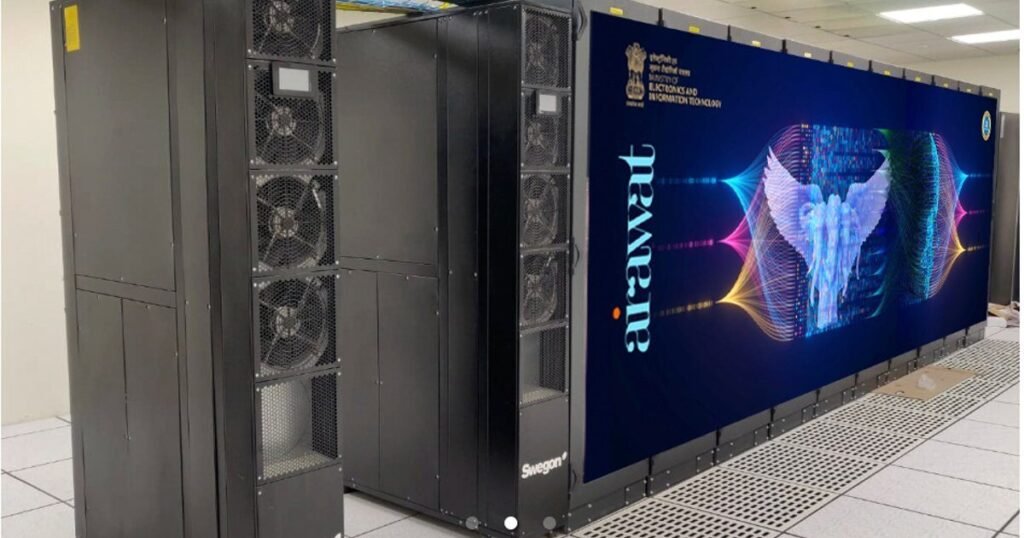
2. AIRAWAT PSAI: The Silicon Brain of India
At the heart of Global AI Arms Race 2026 is the need for Compute. You cannot win the AI race without the massive processing power required to train these complex models. This is where AIRAWAT PSAI comes in.
Supercomputing Dominance
Installed at C-DAC Pune, AIRAWAT has been upgraded in early 2026 to reach a peak performance of over 20 Petaflops.
The AI Fuel: AIRAWAT is the primary engine training India’s military AI and the Project Sanjeevani Bio-Shield.
Energy Efficiency: Utilizing the latest liquid-cooling technology and Sovereign Chips from the Tata-Micron fabs, AIRAWAT is one of the most power-efficient AI supercomputers in the Top 500 list, a critical factor for long-term sustainability.
3. The Military AI Roadmap 2026-27: Transforming the Battlefront
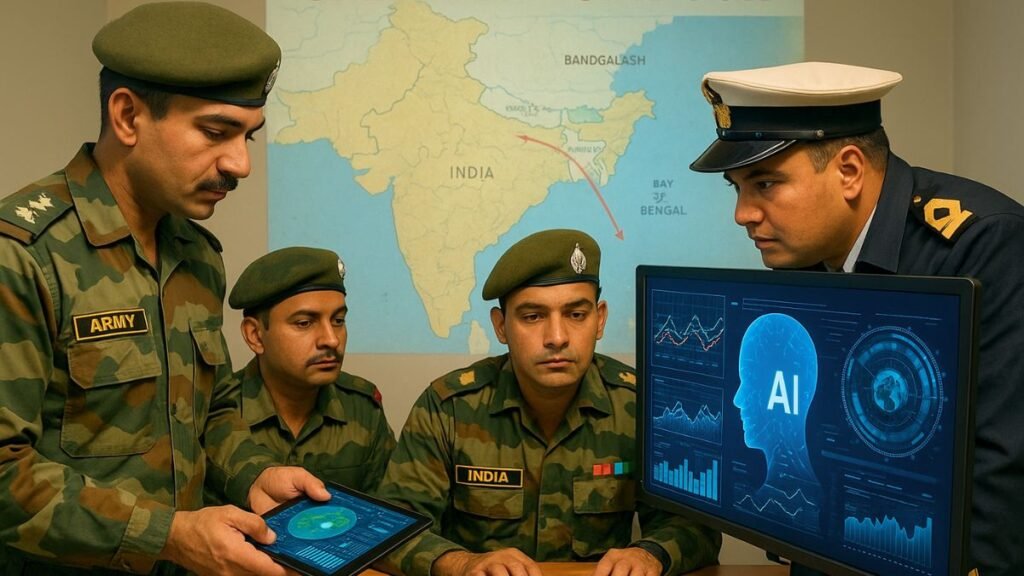
The Indian Army has fast-tracked its AI Roadmap 2026-27, moving beyond research into actual battlefield deployment. Following the lessons from Operation Sindoor (2025), the military has identified 85+ high-impact use cases for AI.
AI War Rooms and Decision Intelligence
By mid-2026, the first batch of AI-Enabled War Rooms will be operational under the Northern Theatre Command.
The Sensor-to-Shooter Loop: AI systems can now process thousands of inputs from drones, satellites, and ground sensors in milliseconds, identifying a target and suggesting the optimal weapon (like the BrahMos-X) to neutralize it.
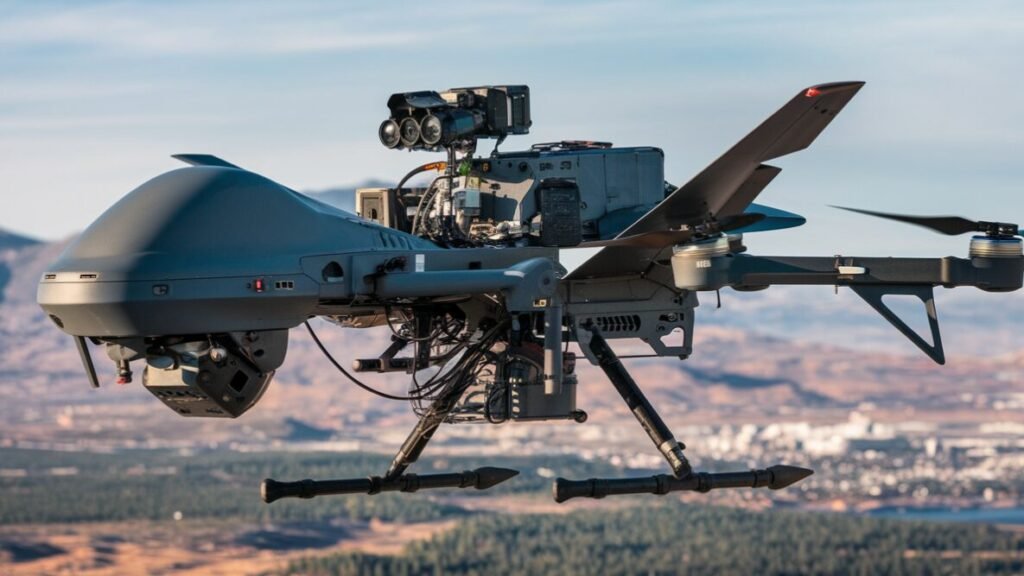
Drone Swarming: Project Storm Drone is now testing autonomous swarms that can communicate with each other using edge-AI, making them immune to traditional electronic jamming.
Predictive Maintenance: AI algorithms now predict the failure of critical assets like the T-90 Bhishma tanks or Rafale jets, ensuring 95% fleet availability during a conflict.
4. Cognitive Warfare: The Battle for the Human Mind
The Global AI Arms Race 2026 has introduced a dangerous new dimension: Cognitive Warfare.
This involves using AI-generated deepfakes and automated bot networks to influence public opinion and demoralize enemy forces.
The Prajna AI Defense
As part of its Space Defense and Bio-defense strategies, India has integrated the Prajna AI system for information warfare.
Deepfake Detection: Prajna can identify AI-generated video and audio in real-time, preventing Deepfake Strikes aimed at creating civil unrest.
Sentiment Shield: The DSC (Defence Space Command) uses AI to monitor global digital sentiment, allowing India to counter hostile narratives before they go viral.
5. Geopolitical Rivalry: The AI Tri-Polar World 2026
The global balance of power is now a tri-polar struggle between the USA, China, and India.
Comparative Analysis: Global AI Power 2026
| Feature | USA (Silicon Valley/Pentagon) | China (State-Driven AI) | India (Sovereign AI/DSC) |
| Primary Goal | Global Tech Hegemony | Comprehensive National Power | Strategic Autonomy (Vishwa Mitra) |
| Core Asset | Nvidia/GPT-5 | Baidu/SenseTime | Airavat/BharatGPT |
| Strategy | Project Artemis/Stargate | Intelligentized Warfare | 4D Shield & Sovereign Cloud |
| Key Advantage | Technical Talent/Capital | Massive Data/State Control | Trust/Linguistic Diversity |
6. Technical Integration: The Sovereign AI Formula
In 2026, strategic analysts use the Cognitive Dominance Ratio (CDR) to measure a nation’s AI preparedness:
Where:
P = Peak Compute Power (Petaflops)
D = Data Sovereignty Index (%)
A = Algorithmic Adaptability
V = Vulnerability to Cyber-interdiction
By 2026, India’s goal is to keep V at a minimum by using air-gapped AI clusters for sensitive defense operations.
7. The Economic Engine: AI and the $7 Trillion Economy
AI is not just a weapon, it is an economic multiplier. By 2026, the impact of AI on India’s GDP will be visible in three sectors:
Precision Agriculture: AI-driven drones and soil sensors are increasing crop yields by 25% in Vibrant Villages.
Health-Tech: The Project Sanjeevani AI is reducing drug discovery time by 60%.
Governance (Digital India 2.0): AI-powered public services (Bhashini) are breaking linguistic barriers, allowing every citizen to access the digital economy in their mother tongue.
8. The Challenges: The Ethics of Autonomous Killers
The Global AI Arms Race 2026 faces a major ethical hurdle: Lethal Autonomous Weapons Systems (LAWS).
The Human-in-the-Loop: India’s 2026 doctrine mandates a human-in-the-loop for all lethal decisions. However, the speed of modern combat (hypersonic missiles) is pushing this protocol to its limits.
Algorithmic Bias: Training AI on non-Indian datasets led to biases in early trials. The Sovereign AI mission is now fixing this using Indocentric data to ensure fairness in AI-driven governance.
9. The 2026 Roadmap: Milestones to Algorithmic Sovereignty
Feb 19-20, 2026: India-AI Impact Summit at Bharat Mandapam.
Q2 2026: Deployment of AI-Decision Support Systems in the Himalayan Command.
Q3 2026: Launch of BharatGPT 2.0 (175B parameters) for strategic governance.
December 2026: Integration of AI-driven predictive maintenance for all Project 77 Nuclear Submarines.
Conclusion: The Shield of Wisdom
Global AI Arms Race 2026 is the ultimate test of a nation’s intellect. India’s transition to a Sovereign AI Strategy proves that New Delhi is no longer content being the Back Office of the world. By building Airavat, empowering the DSC, and launching BharatGPT, India has ensured that its future is not written in foreign code.
In 2026, the tricolor flies high not just on land, sea, and space, but in the very synapses of the digital world. The shield of the 21st century is made of silicon, but it is forged with sovereign wisdom.