By Wish | [Geopolitical Intelligence]
The Final Frontier is No Longer Peaceful
For decades, the Indian Space Research Organisation (ISRO) has worn the badge of a civilian agency with pride. Its mission was simple: use space for the common man agriculture, weather forecasting, and communication. But as we approach the end of 2025, the narrative has shifted.
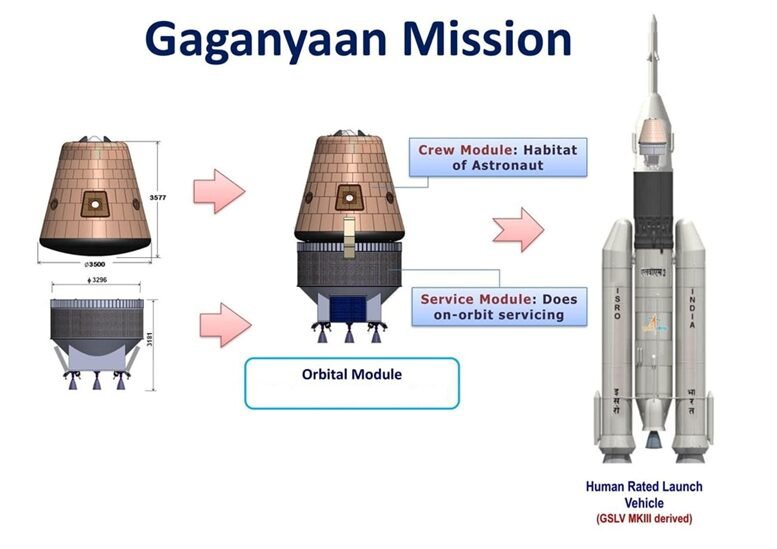
The upcoming launch of the Gaganyaan Mission Strategy represents something far more profound than just sending Indians to space. While the media cheers for the “Vyommitra” robot and the scientific milestones, defense analysts are looking at the mission through a different lens.
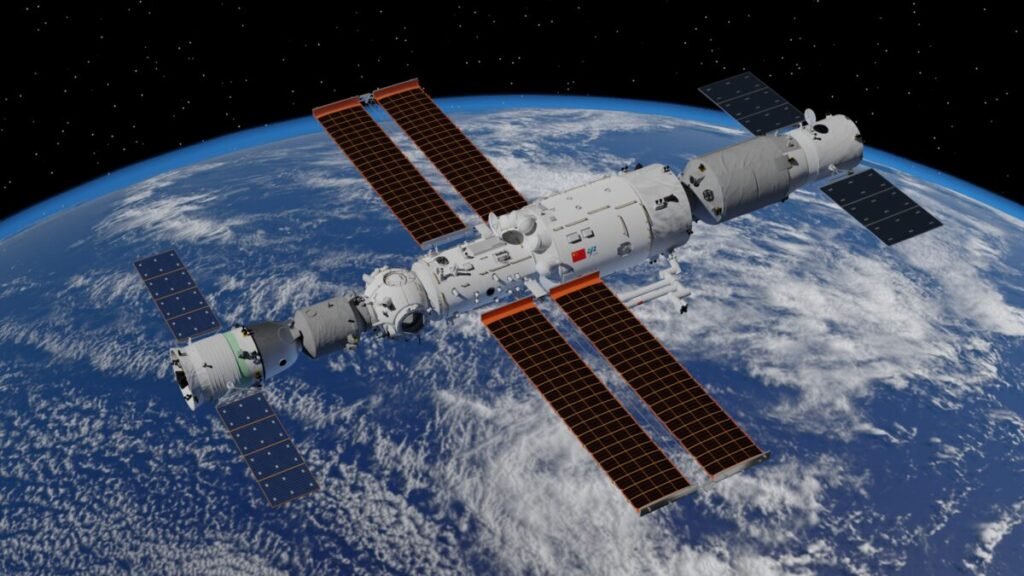
Space is no longer a vacuum of peace; it is the new “High Ground” of warfare. With China’s Tiangong space station acting as a permanent lookout post and the US creating a dedicated “Space Force,” India cannot afford to be a bystander.
This analysis decodes the unsaid military and strategic implications of India’s human spaceflight program.
Comparative Data: The Asian Space Race
To understand why the Gaganyaan Mission Strategy is critical, we must compare New Delhi’s capabilities with Beijing’s current assets.
| Feature | China (CNSA / PLA) | India (ISRO / DSA) |
| Human Presence | Tiangong Station (Permanent) | Gaganyaan (2025/26) |
| Space Weaponry | Shijian-17 (Robotic Arm) | Mission Shakti (ASAT) |
| Military Command | SSF (Strategic Support Force) | DSA (Defense Space Agency) |
| Navigational Sys | BeiDou (Global) | NavIC (Regional) |
| Goal | Space Dominance | Space Situational Awareness |
1. Credibility in the ‘High Ground’
In geopolitics, capability is currency.
The Gaganyaan Mission Strategy is primarily about demonstrating technical maturity. Sending a human to Low Earth Orbit (LEO) and bringing them back alive is the gold standard of rocket science. Only three nations, Russia, the US, and China, have done it independently.
Why does this matter for defense?
If you can pinpoint a capsule to re-enter the atmosphere at a specific angle and land it safely in the ocean, you have mastered the technologies required for Intercontinental Ballistic Missiles (ICBMs) with Multiple Independently Targetable Re-entry Vehicles (MIRVs). The guidance systems, heat shields, and telemetry used in Gaganyaan have direct applications in long-range missile technology. By succeeding here, India signals to its adversaries that its aerospace engineering is second to none.
2. Mission DefSpace: The Shadow Agency
While ISRO builds the rockets, a newer, quieter entity is watching closely: the Defense Space Agency (DSA).
Launched by PM Modi, “Mission DefSpace” listed 75 distinct challenges for the Indian industry to solve. These weren’t about growing potatoes in space; they were about secure communications, small satellite launches, and space surveillance.
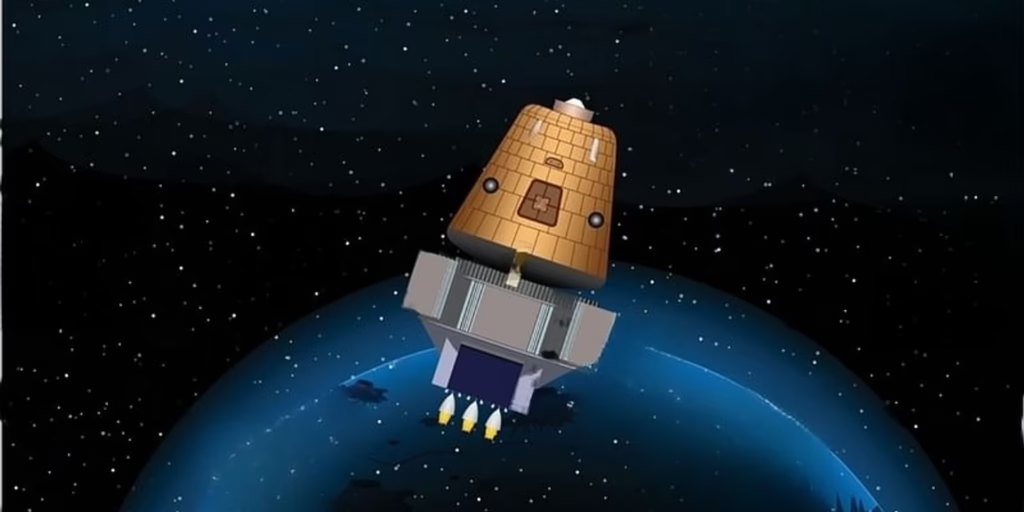
The Gaganyaan Mission Strategy acts as the heavy lifter for these ambitions. A human presence in space allows for real-time experiments with military-grade sensors and communication protocols that robotic satellites cannot easily perform.
The launch of the uncrewed G1 mission (carrying the humanoid Vyommitra) later this month is a test of these systems. If Vyommitra can function in the radiation-heavy environment of space, it proves that India’s radiation-hardened electronics vital for military satellites during a nuclear war, are combat-ready.
3. Countering the ‘Tiangong’ Threat
China’s Tiangong Space Station is a massive strategic headache for India. It provides Beijing with a permanent platform to conduct surveillance, test new materials, and potentially direct space assets.
Reports suggest that Chinese satellites like the Shijian-17 have robotic arms capable of grappling other satellites. In a war scenario, China could simply “kidnap” or disable Indian communication satellites, blinding our military.
The Gaganyaan Mission Strategy is the stepping stone to the “Bharatiya Antariksh Station” (Indian Space Station) planned for 2035. You cannot counter a permanent fortress with temporary visits. India needs its own outpost to monitor activity in LEO. Gaganyaan proves we have the logistics to build and maintain such a station. It moves India from a “guest” in space to a “resident.”
4. Space Situational Awareness (SSA)
Modern warfare is network-centric. Our S-400 systems, our BrahMos missiles, and the [Agalega Island India Base] all rely on satellite data.
If the enemy blinds our satellites, our missiles become unguided rockets.
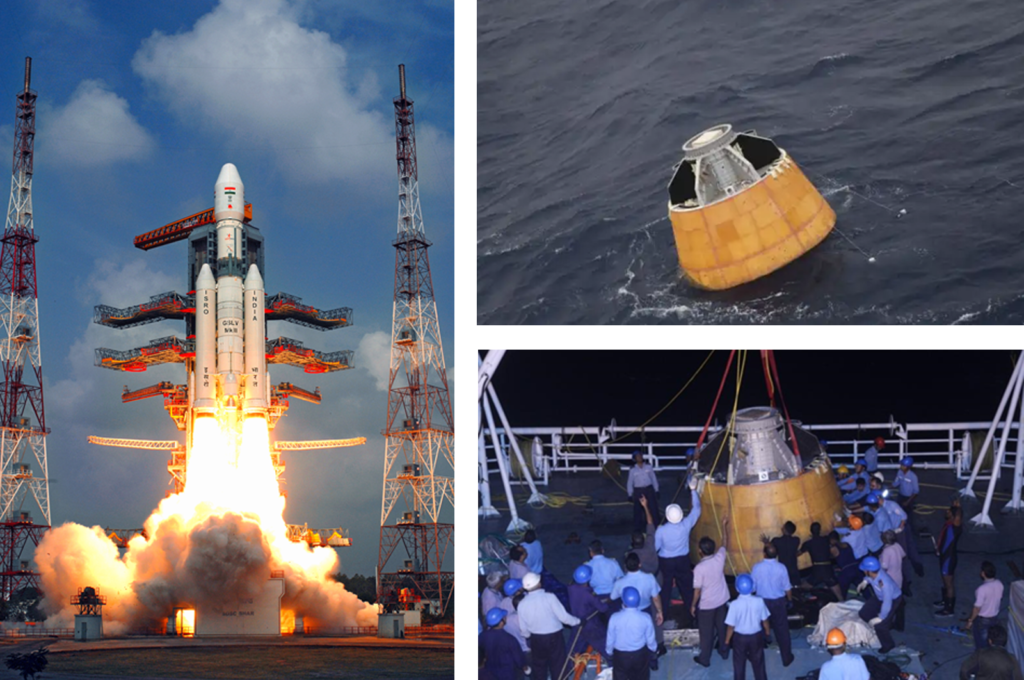
The Gaganyaan Mission Strategy enhances India’s Space Situational Awareness (SSA). It pushes the development of powerful ground-based radars and tracking ships (like the INS Dhruv) to monitor the spacecraft. This same infrastructure is used to track enemy spy satellites passing over India.
When Gaganyaan launches, the entire Indian tracking network goes on high alert. This is essentially a “live fire” exercise for our space surveillance grid, testing our ability to track fast-moving objects in orbit, a skill needed to track hypersonic glide vehicles.
5. The Anti-Satellite (ASAT) Connection
We must remember “Mission Shakti” (2019), where India shot down its own satellite to prove it could. That was the sword; Gaganyaan is the shield.
The technologies refined in the Gaganyaan Mission Strategy, specifically the orbital manoeuvring engines, are crucial for developing manoeuvrable satellites. In a future war, if China tries to shoot down an Indian satellite, that satellite needs to be able to dodge. The propulsion systems being tested for the crew module provide the data needed to build these agile, elusive military satellites.
6. The Economic Angle: Launch on Demand
War consumes resources. If satellites are destroyed in the first hour of conflict, you need to replace them instantly.
The heavy-lift capability demonstrated by the LVM3 (Launch Vehicle Mark-3) for Gaganyaan ensures that India has a reliable workhorse.
Furthermore, the Gaganyaan Mission Strategy is creating a private ecosystem. Companies like Skyroot and Agnikul are benefiting from the technology transfer. In a conflict, these private players can provide “Launch on Demand” services, sending small surveillance satellites into orbit within 24 hours to replace lost eyes in the sky. This resilience is a core part of modern deterrence.
Conclusion: The High Ground is Secured
To view Gaganyaan merely as a scientific endeavor is a mistake. It is a declaration of intent. In an era where the S-500 can target satellites and “Space Forces” are becoming reality, a nation without human spaceflight capability is a second-tier power.
The Gaganyaan Mission Strategy ensures that India secures the ultimate high ground. It tells the world that while we seek peace in space, we are prepared to defend our assets. From the depths of the Indian Ocean to the orbit of the Earth, the security architecture is now complete.
What do you think?
Should India accelerate its Space Station program to catch up with China, or focus on robotic missions? Let us know in the comments.
Read Next: [Putin India Visit 2025: Secret S-500 Talks & A Bold Message to China]