By Wish | Strategic Defense Analysis
The Game Changer
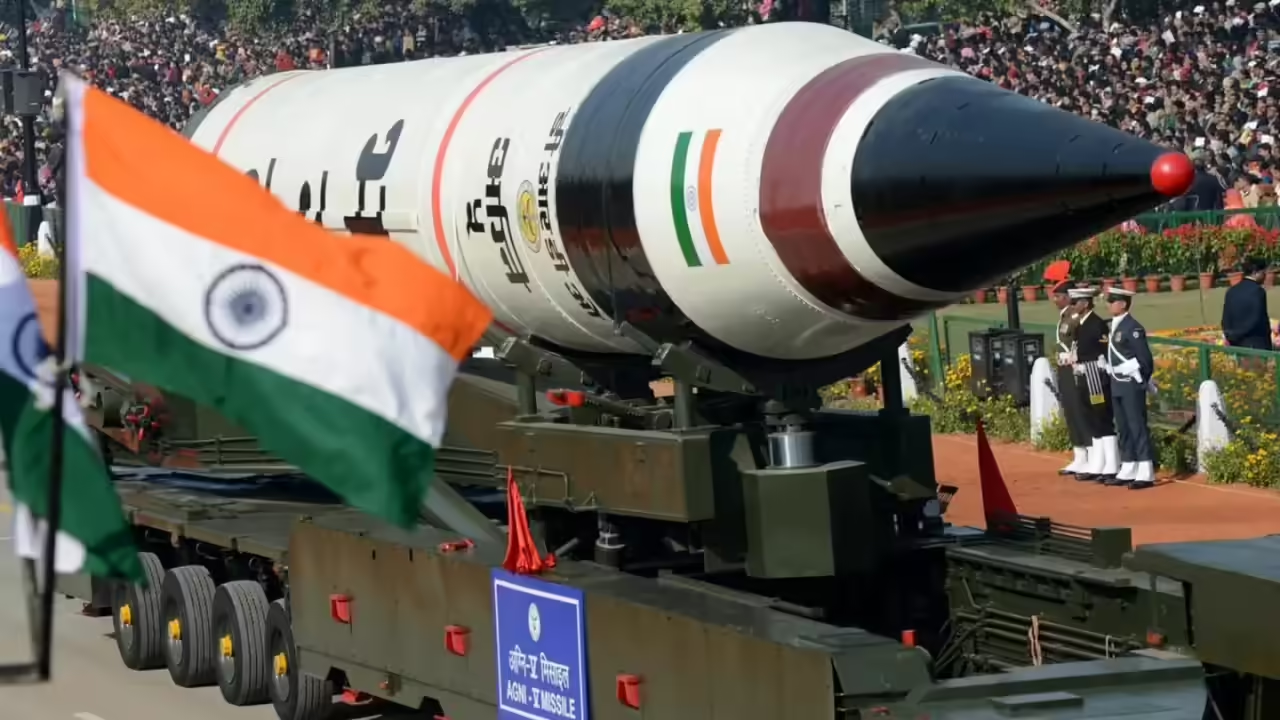
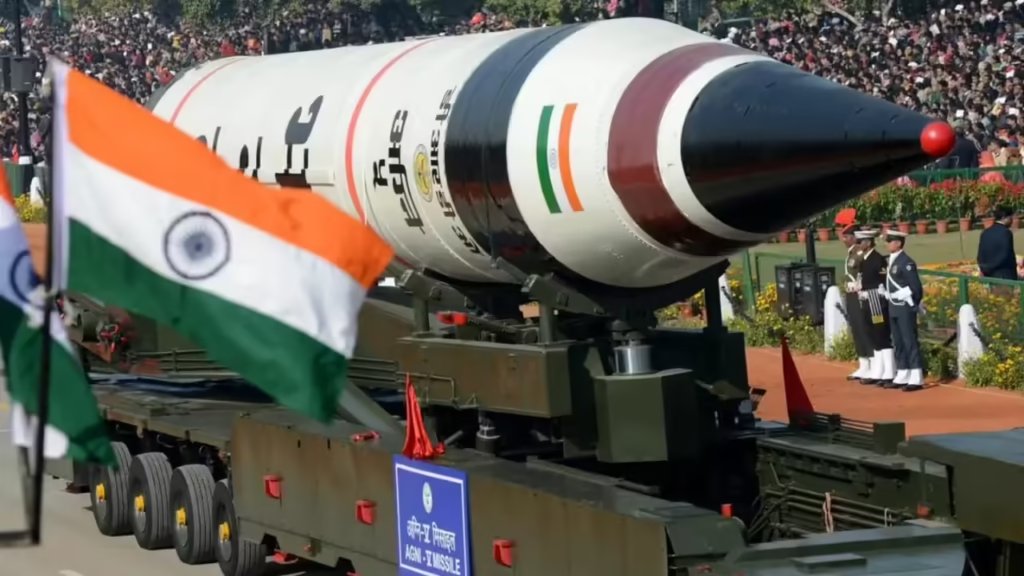
The Agni-5 MIRV test, dubbed “Mission Divyastra,” marks a pivotal moment in Asian geopolitics. On a quiet Monday, Prime Minister Narendra Modi posted a simple tweet praising DRDO scientists. Within minutes, strategic circles in Beijing and Islamabad went into overdrive.
India had successfully flight-tested the Multiple Independently Targetable Re-entry Vehicle (MIRV) technology. This was not just another missile test. It was the moment India joined the elite club of nations (US, Russia, China, UK, France) capable of launching a single missile that can destroy multiple targets across a continent.
For India Pacific Post, we decode why the Agni-5 MIRV renders China’s missile defense shields useless.
What is MIRV Technology?
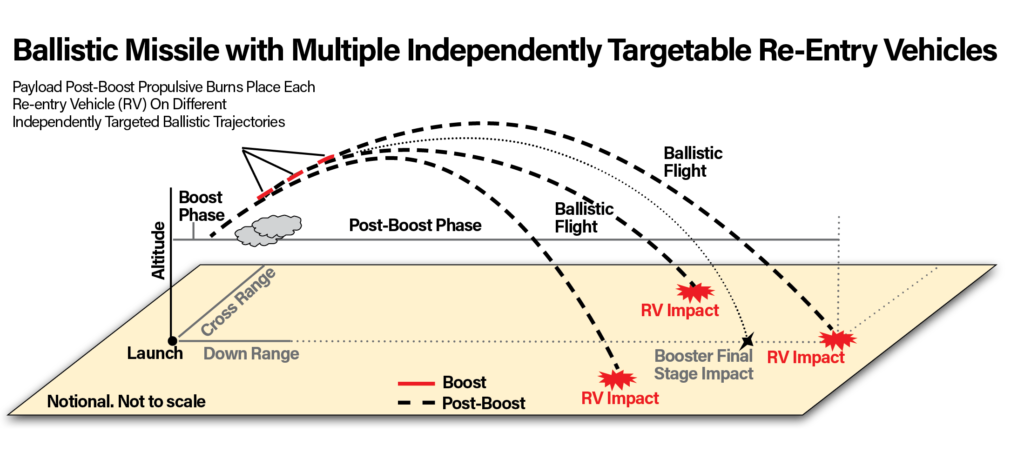
To understand the threat, imagine a shotgun versus a sniper rifle. A standard missile carries one warhead to hit one city. The Agni-5 MIRV carries multiple warheads (estimated 3 to 4) inside a single nose cone.
The Separation: Once the missile reaches space, these warheads separate and travel independently.
The Target: One warhead could hit a military base in Beijing, while another simultaneously hits a naval yard in Shanghai, hundreds of kilometers away.
1. Beating the Anti-Ballistic Missile (ABM) Shield
China has invested billions in its S-400 and HQ-19 missile defense systems. These systems work by firing an interceptor to collide with an incoming missile. The Agni-5 MIRV defeats this logic.
The Problem: It is easy to stop one incoming rock. It is nearly impossible to stop four rocks thrown at different speeds and directions at the same time.
Decoys: The missile also carries “Decoys” (fake warheads). The enemy radar gets confused, wasting expensive interceptors on fake targets while the real warheads slip through.
2. Strategic Reach: Covering All of China
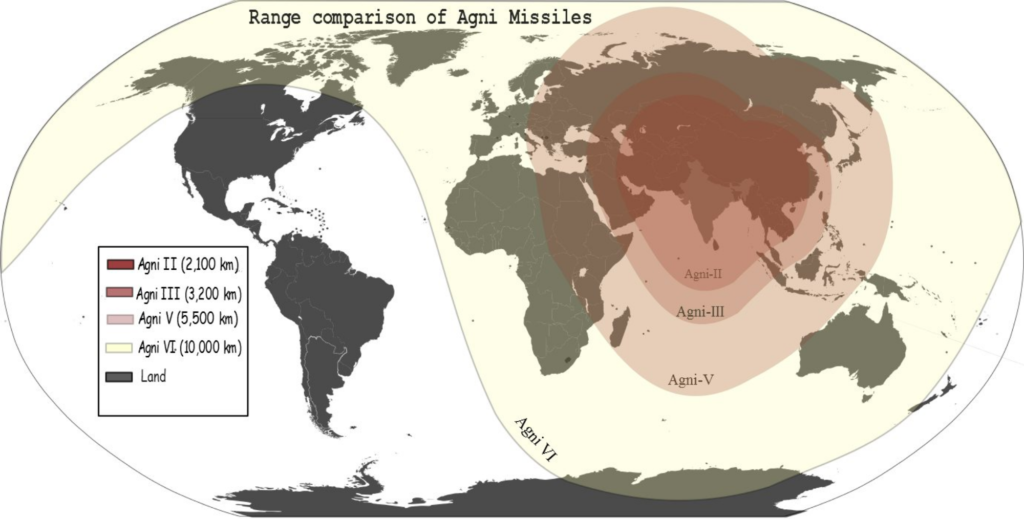
The Agni-5 MIRV has a range of over 5,000 kilometres. This effectively brings every single square inch of China—from the border bases in Tibet to the industrial hubs on the East Coast within India’s striking range.
Comparison of Agni Variants:
| Missile Version | Range | Payload Type | Target |
| Agni-1 | 700 km | Single | Pakistan border |
| Agni-3 | 3,000 km | Single | South China |
| Agni-5 | 5,000+ km | Single | All of China |
| Agni-5 MIRV | 5,000+ km | Multiple | Multiple Cities |
3. The “No First Use” Enforcer
India follows a “No First Use” (NFU) nuclear policy. This means India will absorb a nuclear strike before retaliating.
The Survivor: For NFU to work, the retaliation must be so terrifying that the enemy never dares to attack first.
Credible Deterrence: The Agni-5 MIRV guarantees that even if a few Indian missiles are destroyed on the ground, a single surviving missile can inflict “unacceptable damage” on the enemy.
4. Indigenous Triumph: The Avionics
What makes Mission Divyastra special is the “System on Chip” avionics developed indigenously by DRDO.
Accuracy: Hitting a target 5,000 km away requires pinpoint accuracy. The onboard computers adjust the trajectory in micro-seconds.
Self-Reliance: Since the guidance system is made in India, it cannot be jammed or switched off by foreign powers during a crisis.
5. The Message to the World
This test was conducted just days after a Chinese spy ship docked in the Maldives. The timing was deliberate.
It signals that while China plays games in the Indian Ocean (String of Pearls), India holds the capability to strike the Chinese mainland directly. It shifts the psychological balance of power.
Conclusion: The Ultimate Checkmate
The Agni-5 MIRV is not a weapon of war; it is a weapon of peace. In the cold logic of nuclear strategy, peace is maintained only when both sides know they can destroy each other.
With Mission Divyastra, India has leveled the playing field. The days of China holding a technological edge in ballistic missiles are officially over.
What do you think?
Does possessing MIRV technology make India safer, or does it trigger a new arms race in Asia? Let us know in the comments.
Read Next: [How India’s Nuclear Triad ensures 360-degree protection from Land, Air, and Sea.]