The Red Sea Total Lockdown
Strategic Intelligence Report | By Wish, Analyst
The Intelligence Brief
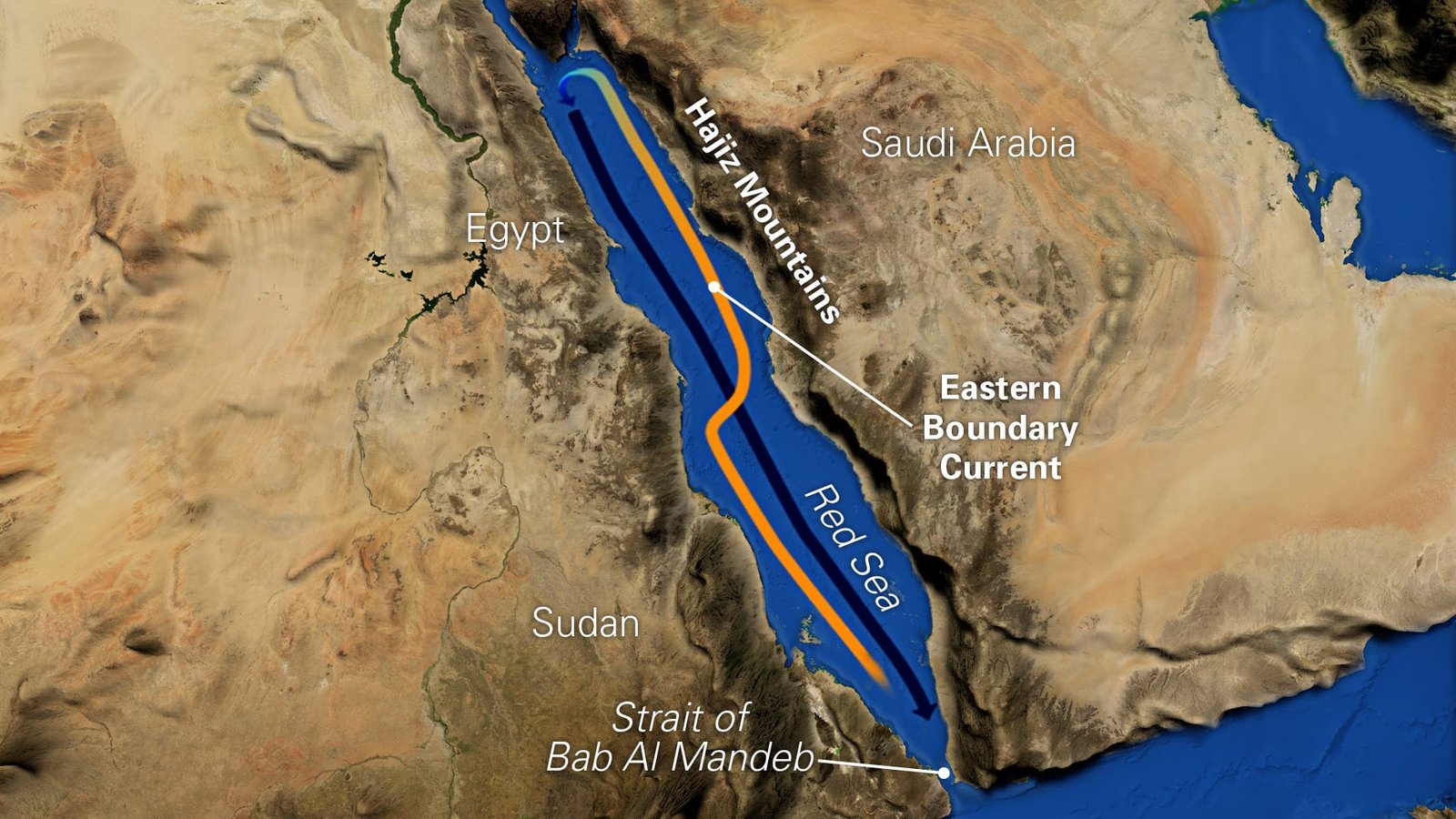
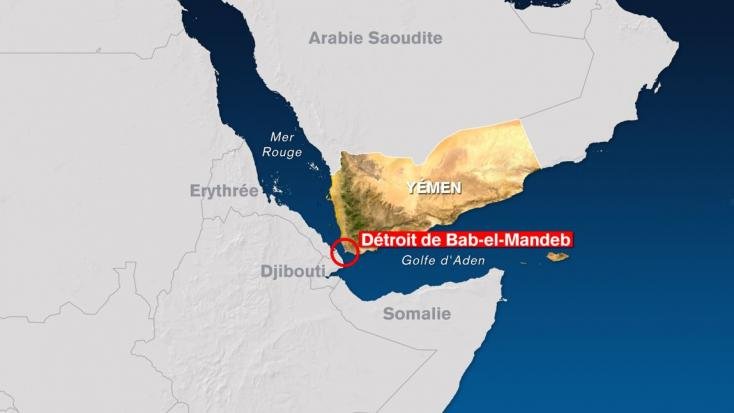
As of March, 2026, the global maritime order has officially collapsed. Following the catastrophic failure of Operation Southern Shield in early March, the Bab-el-Mandeb strait has been effectively shuttered. The Red Sea, once the jugular vein of 15% of global trade, is now a Kinetic Kill Zone. The Iranian-backed blockade, powered by the 2026-generation of Asif-series Anti-Ship Ballistic Missiles (ASBMs), has achieved what decades of diplomacy couldn’t, a total maritime lockdown.
For India, this is the Moment of Truth. With $200 billion of Indian trade at risk and oil prices breaching the $140 per barrel mark, New Delhi has abandoned its traditional Strategic Restraint. The deployment of the Project 77 Nuclear Submarines and the Sudarshan Chakra Sky Shield assets toward the Western Arabian Sea marks the birth of India’s Maritime Monroe Doctrine.
1. The Tactical Collapse: Why Operation Southern Shield Failed
The Western naval coalition’s attempt to secure the Red Sea in late 2025 relied on legacy Aegis-based defense systems. However, the 2026 escalation saw the introduction of Swarm-AI Drones and Hypersonic Cruise Missiles that overwhelmed the coalition’s interceptor capacity.
The Saturation Strategy
Intelligence reports suggest that Iran and its proxies utilised a Saturation Attack logic, launching 50+ low-cost drones simultaneously with a single high-speed missile. The cost-to-kill ratio became unsustainable for the US Navy, costing $2 million per interceptor against a $20,000 drone. By mid-March 2026, the Red Sea was declared Uninsurable by Lloyd’s of London.
Internal Reference: This tactical failure is a direct consequence of the regional shifts we analyzed in Operation Sankalp 2.0: Red Sea India Security Provider, where we predicted that local players would eventually outpace external naval forces.
2. India’s Response: The Mercantile Escort Mandate
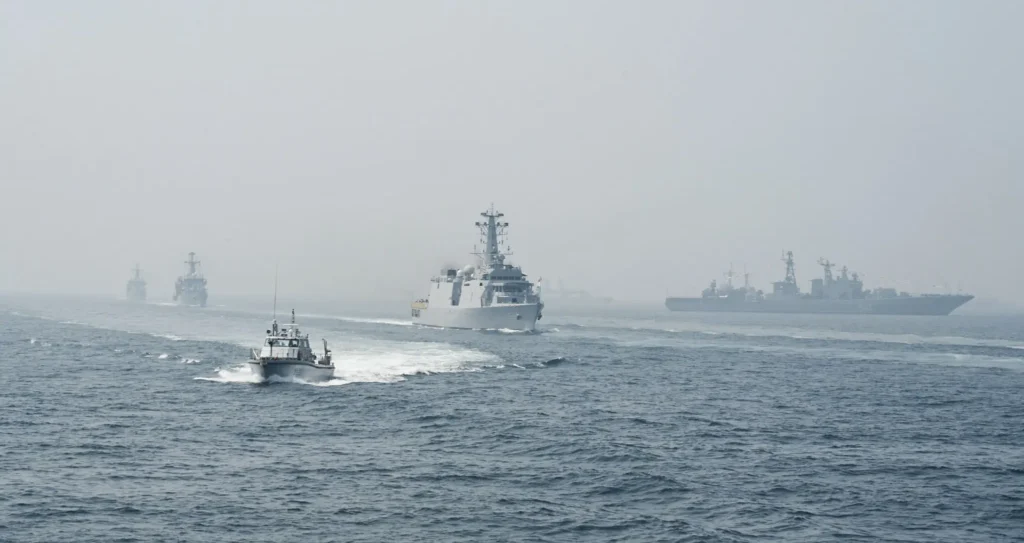
Unlike the US, which has shifted focus toward the South China Sea, India cannot afford a closed Red Sea. The Indian Navy has initiated Operation Abhay, a 24/7 armed escort for any Indian-flagged vessel or ships carrying Strategic Cargo for New Delhi.
The Deployment of Project 77
For the first time, India has deployed its Project 77 Nuclear-powered Attack Submarines (SSNs) in a Search and Neutralize role. These silent guardians are now tracking proxy launch sites along the coastline, providing a kinetic deterrent that surface ships cannot.
Internal Reference: The technical superiority of these vessels is detailed in our report: India’s Project 77 Nuclear Submarine 2026: A Silent Guardian.
3. The Economic Fallout: Oil at $140 and the Death of ‘Just-in-Time’
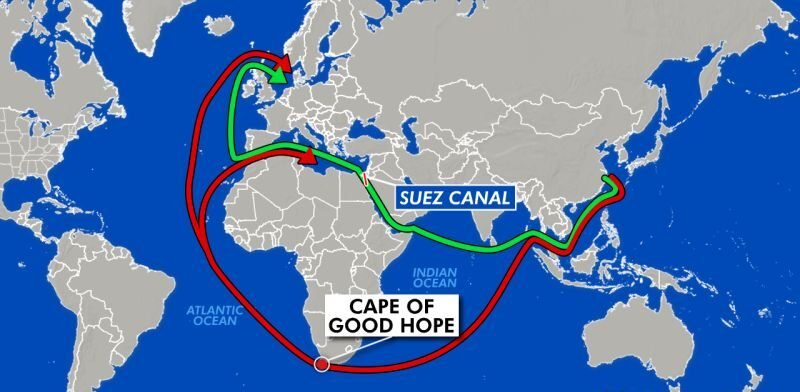
The lockdown has sent shockwaves through the global supply chain. With ships forced to take the Cape of Good Hope route, transit times have increased by 14 days, and fuel costs have spiked by 40%.
The Energy War 2026
The Red Sea crisis has triggered a secondary Global Energy War. India’s reliance on Russian and Middle Eastern crude is now under direct threat. This has fast-tracked the India-Russia Northern Sea Route (NSR) negotiations, as New Delhi seeks to bypass the Middle Eastern chokepoints entirely.
Internal Reference: We explored the roots of this volatility in Global Energy War 2026: Venezuela Strike and Trump’s 500% Tariff, and the Red Sea crisis is now the final nail in the coffin of stable energy prices.
4. Geopolitical Pivot: The INSTC vs. The IMEC Corridor
With the Red Sea blocked, the much-touted IMEC Corridor (India-Middle East-Europe) has hit a physical wall. You cannot build a railway through a war zone. Consequently, the International North-South Transport Corridor (INSTC) via Iran and Russia has suddenly become the only viable terrestrial alternative for Indian exports.
The Chabahar Advantage
India’s investment in Chabahar Port is now paying off. While the Red Sea is a graveyard, the Gulf of Oman remains under the watchful eye of the Indian Navy’s Western Fleet, operating out of the INS Jatayu base.
Internal Reference: See our analysis on IMEC Corridor: India Middle East Europe Trade Route to understand why the maritime leg is the weakest link in 2026.
5. Technical Comparison: Naval Assets in the Conflict
| Asset Class | US/Coalition (Operation Southern Shield) | India (Operation Abhay) | Iran/Proxies (The Blockade Force) |
| Primary Shield | Aegis / Patriot (Legacy) | Project Kusha (Sky Shield) | S-300 / Bavar-373 |
| Strike Capability | Tomahawk / F/A-18 | BrahMos-ER / P-8I | Asif ASBM / Shahed-2026 |
| Underwater | Virginia-class SSN | Project 77 (SSN) | Ghadir-class Midget Subs |
| Strategic Edge | Satellite Coverage | Regional Proximity & ITCs | Asymmetric Swarm AI |
6. The Birth of the Indian ‘Monroe Doctrine’
The March 2026 crisis has proven that External Powers cannot guarantee Indian interests in the Indian Ocean Region (IOR). The Indian Navy’s refusal to wait for US Command and Control (C2) and its decision to operate under its own Integrated Theatre Commands (ITC) signals a new era.
India is now telling the world: If it happens in the Indian Ocean, India is the final authority. This is the maritime version of the Monroe Doctrine. It ensures that while the Red Sea may be closed to the West, it remains, at a high cost, negotiable for India.
Internal Reference: This shift is the culmination of the reforms mentioned in Integrated Theatre Commands India 2026 Roadmap.
7. Conclusion: A Resilient Republic
The Red Sea Lockdown of 2026 is a brutal reminder that global trade is a privilege, not a right. As India navigates these contested waters, the focus must remain on Strategic Autonomy. By securing its own trade routes and deploying its most advanced assets, from Diego Garcia to the Great Nicobar, India is no longer a passenger in history, it is the pilot.
The 2026 crisis will eventually pass, but the Blue Water dominance of the Indian Navy is here to stay.
Recommended Reading: The 2026 Intelligence Series
Base Strategy: Diego Garcia Sovereignty 2026: The New Security Paradox
Regional Security: Agalega Island: India’s Southern Anchor
Future Tech: Project Kusha: India’s Indigenous Sky Shield 2026
Economic Defense: India’s 2030 Strategy: The Road to $10 Trillion