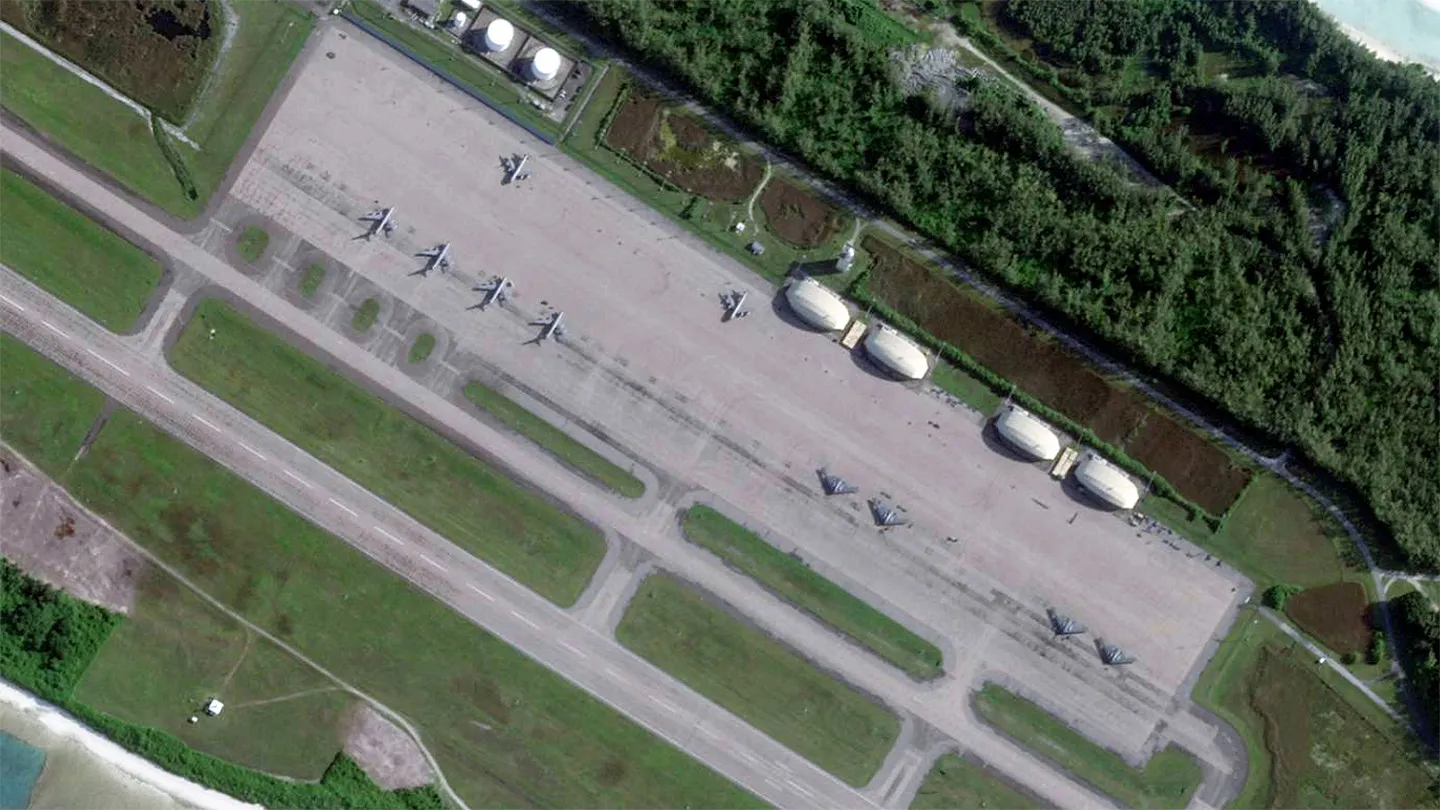
The Diego Garcia Island:
UK’s Sovereignty Shift and the New Indian Ocean Security Architecture
Strategic Intelligence Report
By Wish, Analyst
The Intelligence Brief
As of March 2026, the Indian Ocean has entered its most volatile geopolitical phase since the end of the Cold War. The formalization of the UK-Mauritius Treaty regarding the Chagos Archipelago has triggered a Security Paradox. While the United Kingdom has finally conceded sovereignty to Mauritius, the 99-year lease granted to the United States for the Diego Garcia military base has created a legal and tactical Grey Zone.
For the global strategic community, the implications are profound. Diego Garcia is no longer just a British Indian Ocean Territory (BIOT) outpost, it has become the central node in a contested maritime domain where India, the US, and China are recalibrating their Hemispheric Influence.
This report decodes the classified layers of this transition, the military upgrades of 2026, and why New Delhi has emerged as the true Guarantor of this deal.
1. The Treaty of 2026: Sovereignty vs. Security
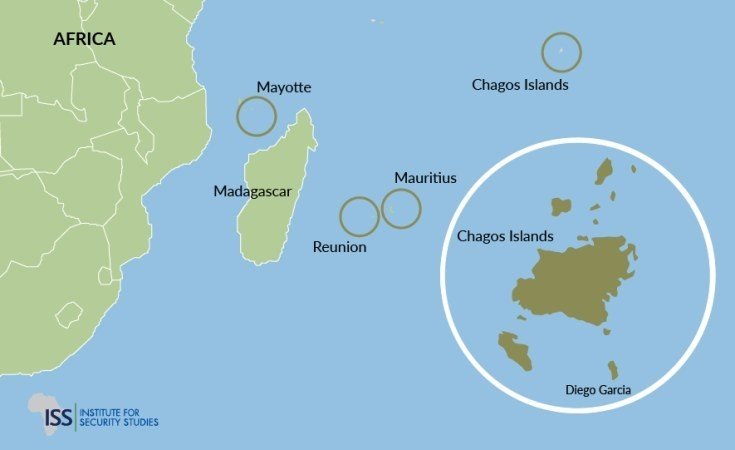
The 2026 treaty between London and Port Louis is a masterpiece of Functional Ambiguity. Under the terms, Mauritius gains full sovereignty over the entire Chagos Archipelago, including the outer islands of Peros Banhos and the Salomon Islands. However, Diego Garcia remains under Administrative and Military Control of the US and UK for a guaranteed century.
The Sovereign Grey Zone
The crisis emerges from the resettlement clause. As Mauritian citizens begin returning to the outer islands in late 2026, the Pentagon faces a nightmare in Maritime Proximity Risk. The outer islands are within 100-150 kilometers of the highly sensitive B-21 Raider hangars on Diego Garcia. Any civilian settlement in these islands could theoretically host Dual-Use surveillance technology under the guise of Mauritian fisheries or research stations.
Intelligence suggests that China’s Ministry of State Security (MSS) has already initiated talks with Mauritian shell companies to fund Oceanic Research Centers in the newly sovereign Peros Banhos. This mirrors the strategy explored in our previous analysis of the Coco Islands: Myanmar-China Spy Base India, where geographic proximity is weaponized to monitor strategic assets.
2. The India Factor: New Delhi as the Silent Underwriter
While the deal was bilateral (UK-Mauritius), its success was underwritten by New Delhi. For India, the 2026 shift is a strategic masterstroke. By removing the Colonial tag of the UK, India has neutralized the Global South criticism of Western presence in the Indian Ocean.
The Agalega-Diego Garcia Surveillance Net
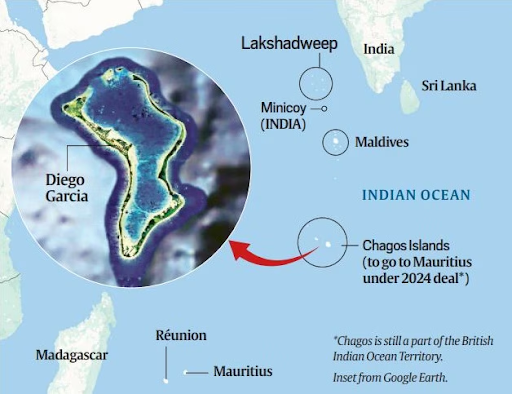
The most critical development of 2026 is the operational integration between India’s newly commissioned base on Agalega Island and the US facilities at Diego Garcia. India’s P-8I Neptune aircraft and the SeaGuardian drones now maintain a 24/7 Search-and-Track link with US assets.
This creates a Double-Lock on the Indian Ocean. While the US focuses on long-range power projection toward the South China Sea, India provides the Regional Domain Awareness (RDA) that secures the base’s western and northern flanks. This synergy is a core component of the Integrated Theatre Commands India 2026 model, where maritime security is no longer siloed but part of a unified Trans-Oceanic Shield.
3. Technical Lethality: The 2026 Military Upgrades
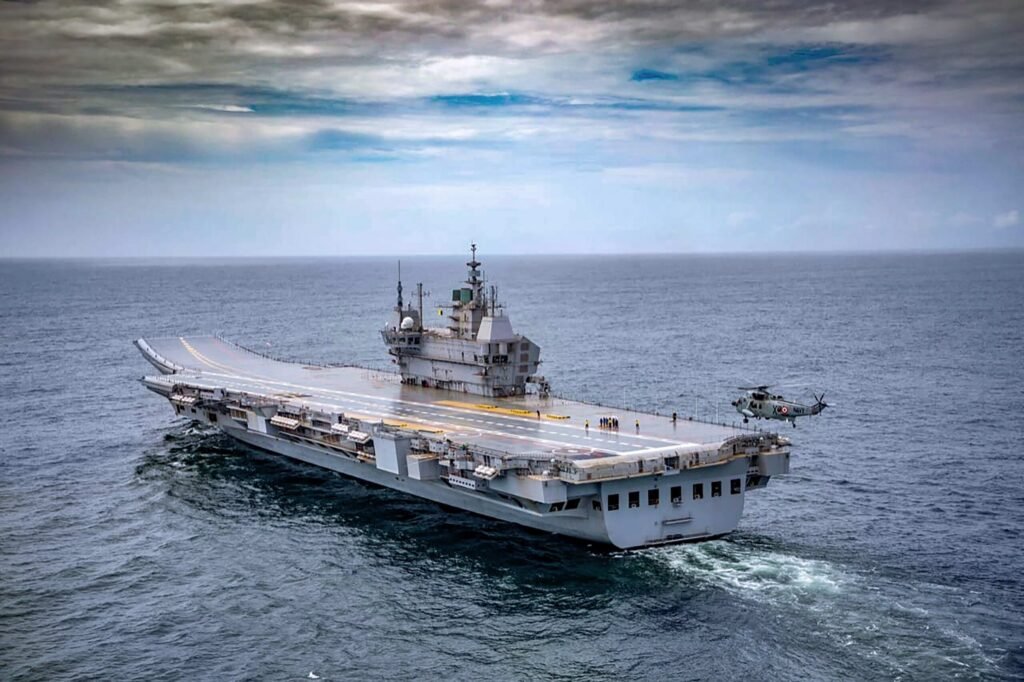
Diego Garcia is undergoing its most significant hardware overhaul in forty years. The 2026 Upgrade Program is designed to counter the Global AI Arms Race and the proliferation of hypersonic threats in the Indo-Pacific.
The B-21 Raider Integration
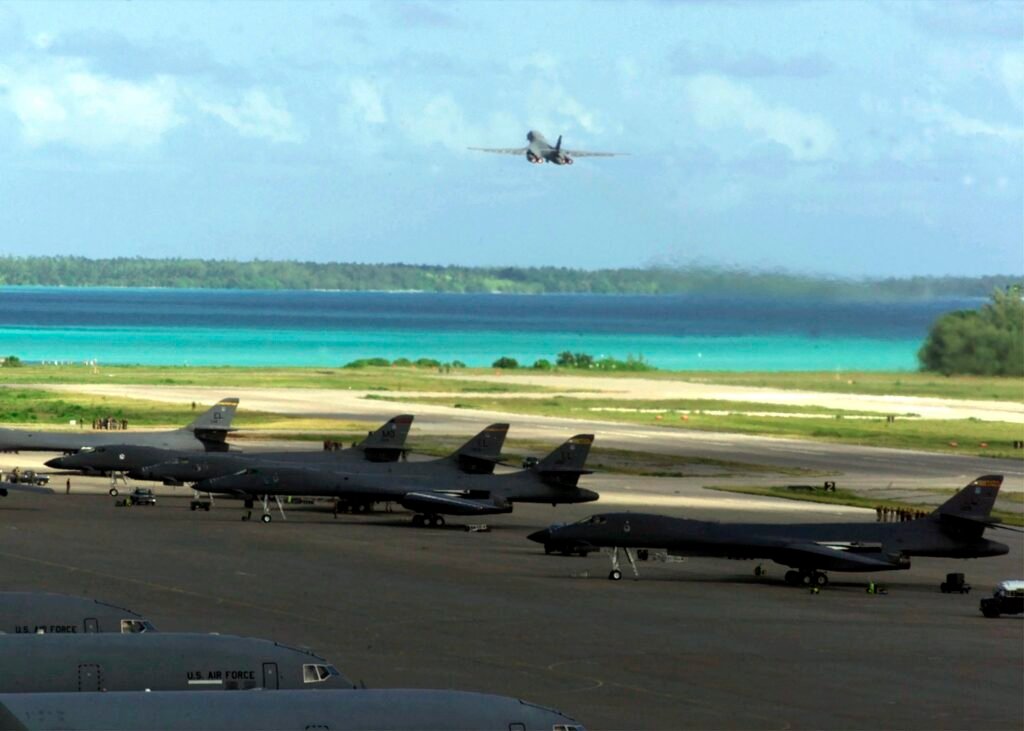
As of February 2026, the Dragon’s Den, the nickname for the reinforced Hangar 5 complex, is fully operational. It now hosts a permanent forward-deployed squadron of B-21 Raider stealth bombers. These aircraft are the only platforms capable of penetrating the Anti-Access/Area Denial (A2/AD) bubbles of the Chinese mainland from a distance that bypasses the First Island Chain vulnerabilities.
SOSUS 2.0: The Subsurface Wall
In response to the increasing incursions of Chinese Type 094 (Jin-class) nuclear submarines, a new Sound Surveillance System (SOSUS) has been laid across the Chagos Trench. This underwater sensor array uses AI-driven acoustic fingerprinting to distinguish between biological noise and the specific cavitation of Chinese reactors.
This subsurface wall is directly linked to the intelligence sharing protocols of India’s Project 77 Nuclear Submarines, ensuring that any Silent Incursion by the PLAAF or PLAN is detected long before it reaches the critical chokepoints of the Malacca Strait.
4. Geopolitical Friction: The China-Mauritius Leverage
Beijing has viewed the 2026 treaty as a window of opportunity. By offering Mauritius a Comprehensive Blue Economy Package (worth an estimated $4.2 Billion), China is attempting to create a Leverage Point over the US presence in Diego Garcia.
The Debt-Trap Sovereignty
If Mauritius defaults on its new infrastructure loans, Beijing could demand Port Access Rights in the outer Chagos. For the US, this is a red line. The 2026 crisis is therefore not about the base itself, but about the Sovereignty of the Surrounding 1.2 Million Square Kilometers of Exclusive Economic Zone (EEZ). This is the Necklace of Diamonds strategy in action. India’s counter-move has been to integrate Mauritius into the IMEC Corridor (India-Middle East-Europe Trade Route), providing Port Louis with a democratic and transparent economic alternative to Chinese Predatory Lending.
5. Strategic Comparison: The Shift in Power Projection
| Feature | Pre-2026 Era (BIOT Control) | 2026 Era (Mauritian Sovereignty) |
| Legal Status | British Overseas Territory | Mauritian Sovereign / US Leased |
| Primary Guardian | UK Royal Navy | Indian Navy / US Navy Joint Task Force |
| Key Threat | Regional Piracy | State-Actor A2/AD (China) |
| Surveillance | Satellite / Analog Radar | AI-Integrated SOSUS & SeaGuardians |
| Strategic Focus | Middle East Operations | Indo-Pacific & South China Sea |
6. The Monroe Doctrine of the Indian Ocean
The Chagos handover signals the birth of an informal Indian Ocean Monroe Doctrine. New Delhi is signaling to extra-regional powers (specifically the UK and France) that while their partnership is welcome, the Primary Security Provider must be a resident power.
The 2026 framework ensures that:
US Interests are Protected: The Diego Garcia base remains a kinetic launchpad.
Mauritian Dignity is Restored: Sovereignty is legally recognized.
India’s Hegemony is Cemented: India becomes the Bridge between Western military needs and African/Island-nation sovereignty.
This transition is closely tied to the Great Nicobar Project: India-Malacca Strategy, which focuses on the eastern entrance of the Indian Ocean, while Diego Garcia secures the central heartland.
7. Economic Vulnerabilities: The Seabed Mining Race
Beyond missiles and bombers, the Chagos Archipelago sits atop a massive reserve of Polymetallic Nodules. As the world shifts toward Green Energy, the race for Cobalt and Lithium has moved to the deep sea.
The 2026 sovereignty change gives Mauritius (and by extension, its partner India) control over some of the richest seabed mining sites in the world. This economic potential is the Silent Driver of the 2026 treaty. If India can secure the mining rights in partnership with Mauritius, it will break the Chinese monopoly on rare-earth minerals, further fueling India’s Semiconductor Mission and the Silicon Shield.
8. Conclusion: The Unsinkable Guardian
The Diego Garcia Paradox of 2026 is a testament to the changing world order. It proves that military power can no longer exist in a vacuum of Colonial Legality. By transitioning to a Mauritian-Sovereign/US-Leased model, the West has bought another century of presence in the Indian Ocean, but only by accepting India as an equal stakeholder in the security architecture.
As the first B-21 Raiders take off from the Diego Garcia runways in late 2026, they do so over waters that are increasingly Blue, Indian, and Secure. The Sky Shield provided by Project Kusha on the mainland and the Oceanic Shield provided by the Diego Garcia-Agalega axis ensure that India’s 2030 strategy remains on track.
Recommended Reading: The 2026 Strategic Roadmap
Maritime Strategy: Agalega Island: India’s New Base and the Mauritius Strategy
Encirclement Analysis: Coco Islands: The Chinese Spy Base and India’s Response
Economic Corridors: IMEC 2026: Trade, Energy, and the New Silk Road
Nuclear Deterrence: India’s Project 77: The Stealth Submarine Revolution
Defense Reform: Integrated Theatre Commands: Redefining Indian Warfare 2026
1 thought on “The Diego Garcia Paradox (2026)”