The Arctic War 2026
Strategic Intelligence Report | By Wish, Geopolitical Analyst
The Intelligence Brief: January 2026 Flashpoint
As we reach the conclusion of the first full week of January 2026, the focus of the global resource struggle has shifted decisively from the tropical oil fields of Venezuela to the freezing, high-stakes expanses of the North Pole. While the world was watching the capture of Nicolas Maduro and the seizure of the Russian tanker Marinera in the Atlantic, a far more permanent and dangerous confrontation was being formalized in the Arctic Circle.
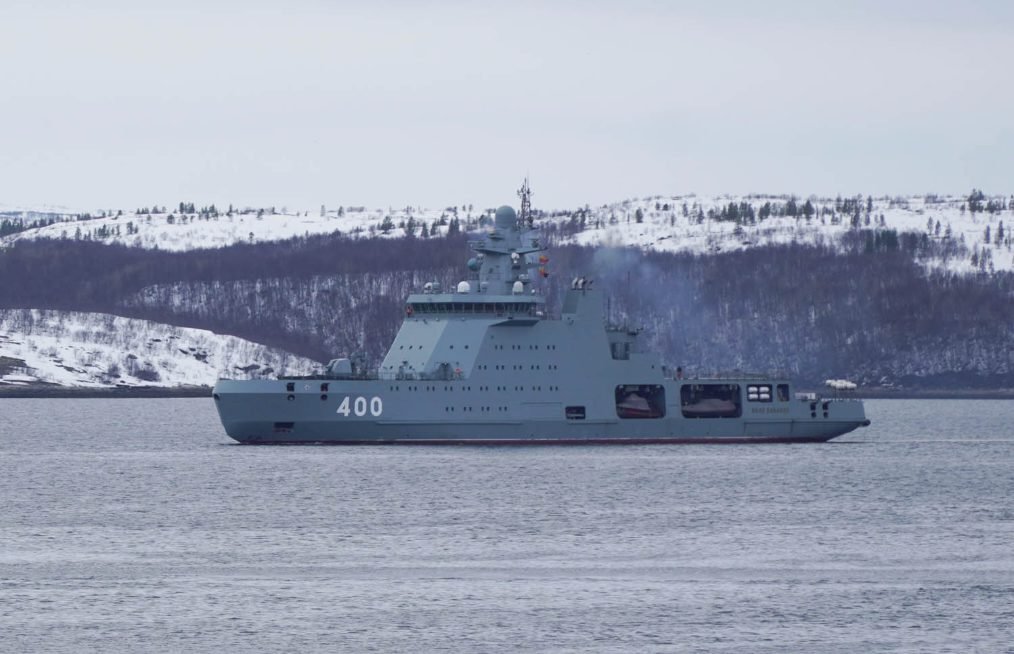
On January 8, 2026, Russia officially deployed its first nuclear-powered combat icebreaker, the Ivan Papanin, into the Barents Sea. Simultaneously, NATO activated Polar Shield 2026, a massive multinational naval exercise designed to challenge Moscow’s absolute claim over the Northern Sea Route (NSR).
But the most significant development of 2026 is not just military, it is logistical. We are witnessing the birth of the Eurasian-Arctic Axis. Following the full implementation of the Russia-Iran Comprehensive Strategic Partnership Treaty in late 2025 and the subsequent 2026-2028 consultation program, Moscow and Tehran have begun the physical integration of the International North-South Transport Corridor (INSTC) with the Arctic NSR. This is a direct challenge to the maritime supremacy of the West.
This report decodes the militarization of the North, the strategic link with Iran, the Greenland standoff, and why the Arctic is the new center of the world order.
Jan 11, 2026 Update:
As the Arctic Northern Sea Route (NSR) opens up, Germany and India have initiated high-level consultations on Ice-Hardened Submarine technology. This secret layer of the Jan 2026 Merz-Modi summit aims to protect India’s mineral interests in the North Pole. Full details here: The Berlin-Delhi Axis: Germany’s Pivot and the Arctic Link.
1. The Northern Sea Route (NSR): The New Suez?
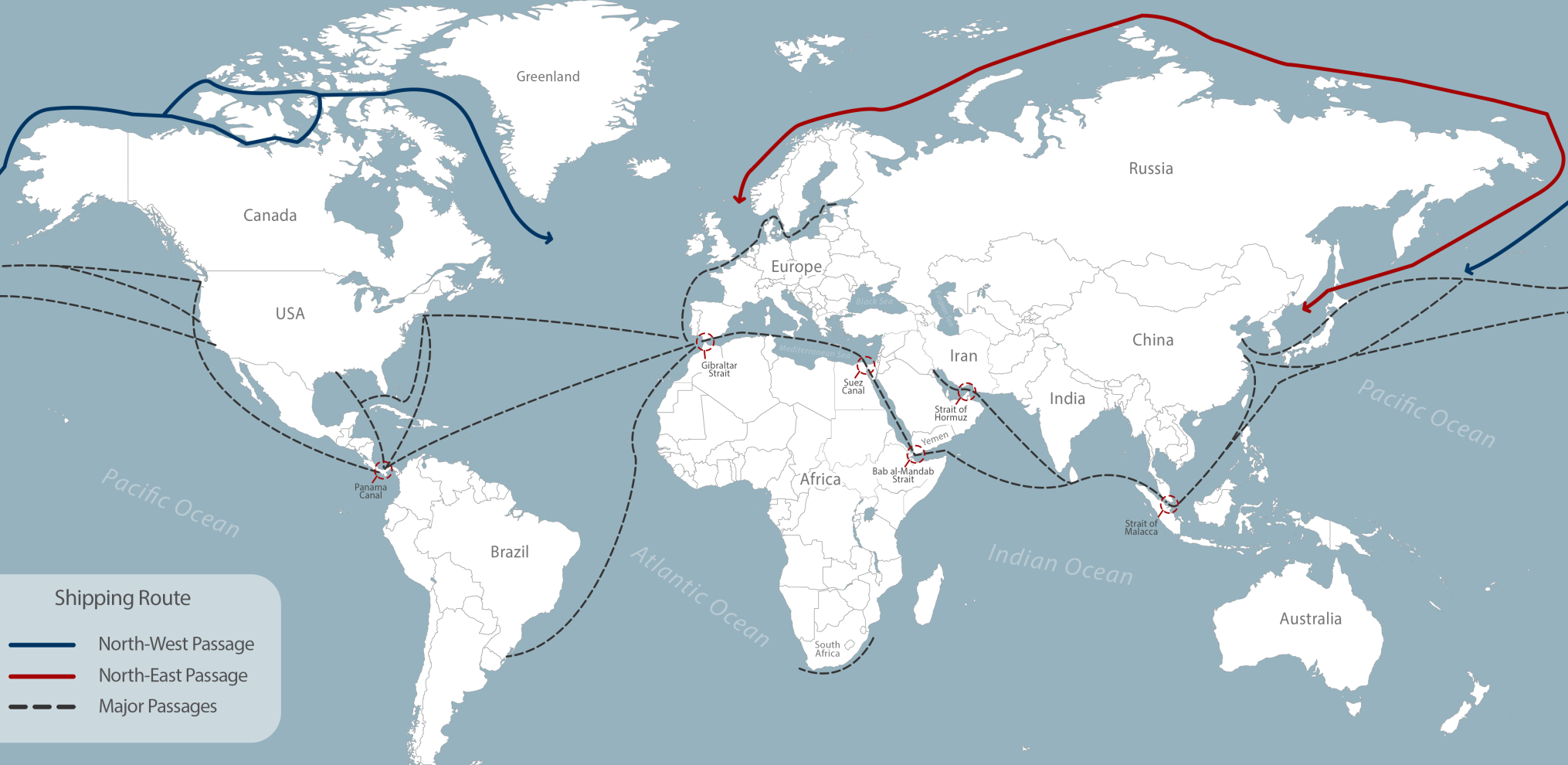
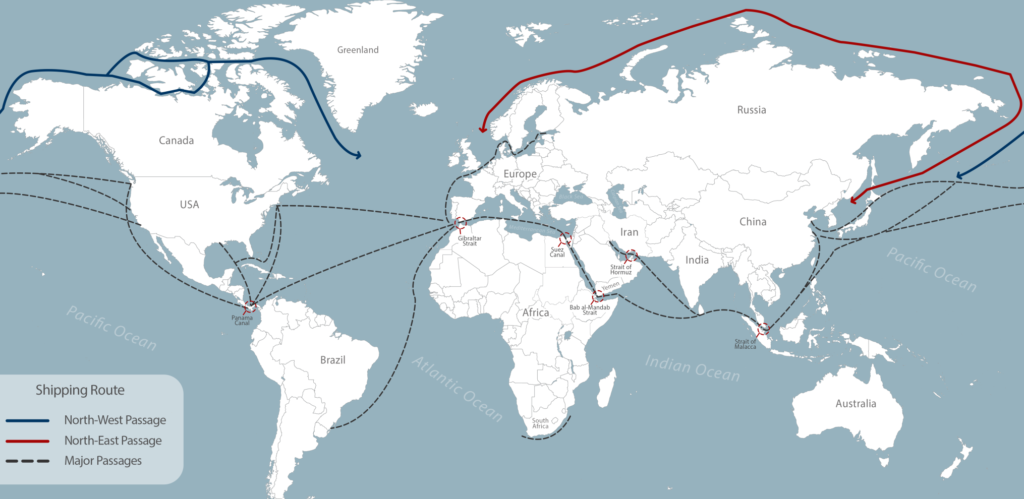
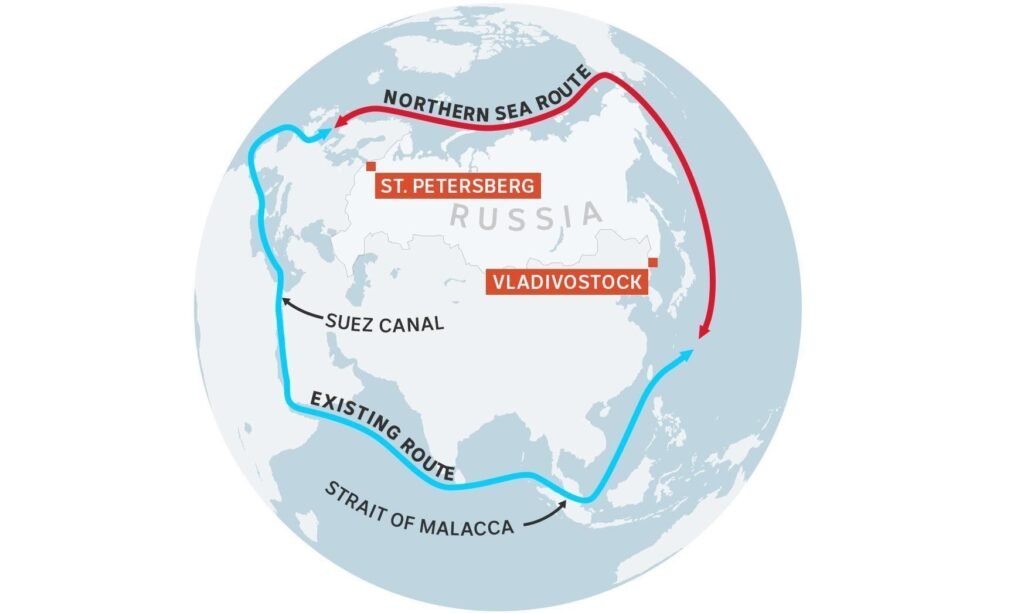
To understand why the Arctic has become a battlefield, one must look at the geography of global trade. The NSR runs along Russia’s northern coast, connecting Europe to Asia. For centuries, this route was blocked by impassable ice. However, as of January 2026, melting ice and advanced nuclear icebreaker technology have made it a year-round reality.
The Distance Advantage: A ship traveling from Shanghai to Hamburg via the NSR covers 30% less distance than going through the Malacca Strait and the Suez Canal. In a world where energy costs are skyrocketing, this translates to savings of millions of dollars in fuel and transit fees per voyage.
Sovereignty vs. Freedom: Russia claims the NSR as its Internal Waters, demanding tolls and the mandatory use of Russian ice-breaking services. Washington and the Nordic-7 nations have officially rejected this, calling the Arctic a global common and demanding Freedom of Navigation.
2. The Eurasian-Arctic Axis: Linking Iran to the North Pole
The most critical interlink of 2026 is the connection between the INSTC and the NSR. This is the realization of a decades-old dream for Moscow and Tehran, a transport network that completely bypasses NATO-controlled waters.
The Iran-Russia Strategic Connection
Under the 2026-2028 consultations plan signed in Moscow, Iran has become the southern gateway for the Arctic.
The Rasht-Astara Link: With the completion of the final rail segments in Iran, cargo from India’s Mumbai and Chennai ports can now travel through Iran, across the Caspian Sea, into Russia, and then directly onto ice-hardened tankers for the Arctic NSR.
Sanction-Resilient Trade: This corridor is designed to be immune to Western maritime blockades. If the US seizes a tanker in the Atlantic or the Red Sea, the Eurasian-Arctic Axis offers a hidden, secure alternative that the West cannot physically block without declaring full-scale war on the Russian coast.
3. Militarization of the Ice: Project 23550 and NATO’s Response
Russia’s Arctic Bastion Strategy
Moscow has reopened over 50 Soviet-era Arctic bases. These are no longer just weather stations, they are high-tech fortresses.
Integrated Defense: These bases are now protected by the latest S-500 systems and Project Kusha logic-based radar nets, creating a No-Fly Zone over the NSR.
Escorting the Shadow Fleet: As the US cracks down on Russian oil tankers globally, the Arctic offers a sanctuary. The combat icebreakers act as heavily armed bodyguards for the oil and mineral exports heading toward the Pacific.
NATO’s Polar Shield 2026
NATO’s response has been swift. Under the Nordic-7 framework, which now includes Finland and Sweden, the alliance is demonstrating its ability to operate in sub-zero conditions.
Autonomous Deterrence: NATO is deploying thousands of underwater drones and Ghost Fleet 2026 autonomous surface vessels to monitor the GIUK (Greenland-Iceland-UK) gap. The goal is to ensure that the Russian Northern Fleet remains bottled up in the Arctic.
4. Greenland: The Western Lock on the Arctic
While Russia and Iran secure the Eastern Arctic, the battle for the Western Arctic is centered on Greenland. As of January 9, 2026, Greenland has emerged as the ultimate strategic fortress for the West.
The Resource Standoff
Greenland possesses 39 of the 50 minerals classified as critical to national security.
Excluding China: Greenland’s government has officially moved to prioritize Western mining alliances over Chinese interests. This is a direct response to China’s Near-Arctic State ambitions. By securing Greenland’s rare-earth minerals, the US aims to power the next phase of the Semiconductor Mission 2026.
The Thule Expansion: The US is expanding its military and surveillance footprint in Greenland, effectively turning the island into a stationary aircraft carrier that overlooks the entry points of the Northern Sea Route.
5. India’s Strategic Hedge: The North-South Connection
India is playing a sophisticated game in the Arctic War of 2026. While maintaining close ties with Washington, New Delhi is also a primary investor in the INSTC-NSR corridor.
Why Delhi is Looking North
Bypassing the Tariff: With Trump’s 500% tariff threat on traditional oil routes, the Arctic NSR offers a strategic loophole. If India can source Arctic oil through the INSTC, it can maintain its energy security without directly clashing with US maritime enforcement in the Atlantic.
Scientific and Economic Presence: India’s Himadri station in Svalbard has been upgraded in early 2026 to include deep-sea sensors. This ensures that India has eyes and ears at the Top of the World, protecting its interests in the future division of Arctic resources.
6. Technology: The Rise of Autonomous Ice-Drones
The Arctic War is being fought with technology designed for the extreme cold.
Nuclear Ice-Breakers: Russia’s new Project 22220 nuclear icebreakers are now the backbone of the NSR, capable of clearing 3-meter thick ice at high speeds.
Sub-Ice Monitoring: NATO has deployed a grid of autonomous sensors beneath the ice to track Russian submarines. These sensors are powered by Small Modular Reactors (SMRs), allowing them to operate silently for years without maintenance.
7. The Foresight: Submerged Bases and Resource Privateers
My research into the deep trends of 2026 suggests two major future developments:
Submerged Arctic Bases: By 2027, we will see the first underwater Ghost Bases, where autonomous drones are housed beneath the ice. This will make the surface ice irrelevant for military dominance.
Maritime Privateers: With the US seizing tankers and Russia using combat icebreakers, we may see the rise of Resource Privateers, private security companies hired by non-aligned nations to escort tankers through these contested northern waters.
8. The 2026 Strategic Roadmap: Arctic Milestones
January 15, 2026: Trump’s Arctic Sovereignty Summit in Reykjavik to discuss Greenland and NATO presence.
Q1 2026: First transit of an Indian-escorted commercial tanker through the INSTC-NSR corridor.
Q3 2026: Operationalization of the US-Danish Rare Earth refinery in southern Greenland.
December 2026: Completion of Russia’s Arctic Silk Road fiber-optic cable, linking the Pacific to the Barents Sea.
Conclusion: The Frozen Frontier of Sovereignty
The Arctic War 2026 is the definitive struggle for the geography of the 21st century. The Northern Sea Route is no longer a distant, frozen dream, it is a tactical reality that is bypassing the traditional choke points of the Indo-Pacific.
For India, the Arctic is more than just a research site, it is a strategic necessity. In a world of 500% tariffs and maritime blockades, the link between the INSTC and the NSR provides a sovereign alternative for trade and energy.
As Ivan Papanin breaks the ice in the Barents Sea, it is not just clearing a path for ships, it is clearing a path for a new world order where the North Pole is the center of global power.
Recommended Reading: The Strategic Matrix
The Energy War: Global Energy War 2026: Venezuela Strike and Trump’s 500% Tariff
The Nuclear Link: India’s Nuclear Renaissance 2026: The Thorium & SMR Roadmap
The Sky Shield: Project Kusha 2026 Update: India’s Indigenous Sky Shield Trials
The Ghost Fleet: Indo-Pacific Ghost Fleet 2026: The Autonomous Naval Doctrine