Strategic Intelligence Report | By Wish, Analyst
The Intelligence Brief
As we approach the final days of December 2025, the Red Sea and the Gulf of Aden have emerged as the most volatile maritime corridors in the world. The surge in asymmetric threats ranging from anti-ship ballistic missiles to sophisticated loitering munitions has necessitated a paradigm shift in maritime security. India, through the intensification of Operation Sankalp 2.0 Red Sea, has moved beyond its traditional role of a regional observer to become the undisputed “First Responder” and Net Security Provider in the Western Indian Ocean.
The strategic necessity of Operation Sankalp 2.0 Red Sea is driven by both economic survival and geopolitical prestige. With over 12 frontline warships, including guided-missile destroyers and stealth frigates, permanently stationed at critical chokepoints, New Delhi is signaling its intent to protect the global commons. This report provides an exhaustive analysis of the tactical evolution of the mission, the technical superiority of Indian naval assets, and the long-term 2026 roadmap for Indo-Pacific security.
1. The Strategic Evolution: Why Operation Sankalp 2.0 Red Sea?
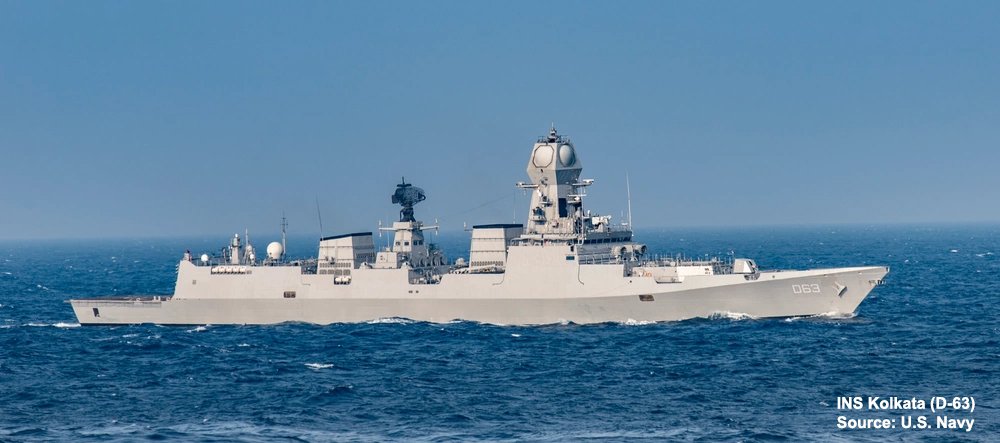
The original Operation Sankalp, launched in 2019, was primarily a reactive measure to protect Indian-flagged tankers from sabotage. However, the late 2024 and throughout 2025 crisis in the Bab-el-Mandeb forced a total tactical re-evaluation. Operation Sankalp 2.0 Red Sea is the result of this evolution—a proactive, combat-ready posture designed to neutralize threats before they reach the high-traffic shipping lanes.
From Convoy Escorts to Area Dominance
In the legacy model, warships would escort individual merchant vessels. Under Operation Sankalp 2.0 Red Sea, the Indian Navy has adopted “Area Dominance” tactics. This involves creating a persistent “Defensive Umbrella” over a 1.5 million square mile area. By utilizing high-altitude long-endurance (HALE) India MQ-9B Drones and P-8I maritime patrol aircraft, the Navy maintains a real-time “Kill Web” that can identify and intercept hostile drones or piracy mother-ships within minutes.
The Lesson of Operation Sindoor
Following the structural reviews of Operation Sindoor in late 2025, the Ministry of Defence (MoD) realized that maritime security cannot be siloed. Operation Sankalp 2.0 Red Sea now integrates data from cyber and space commands, allowing warships to jam incoming missile signals even before they appear on the ship’s internal radar.
2. Hardware & Lethality: The ‘Drone-Killers’ of the High Seas
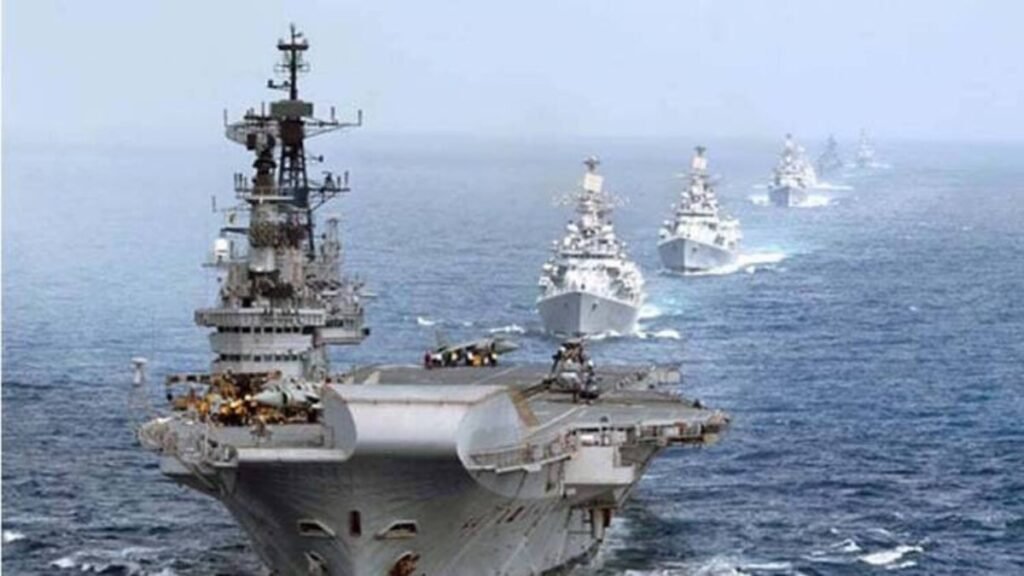
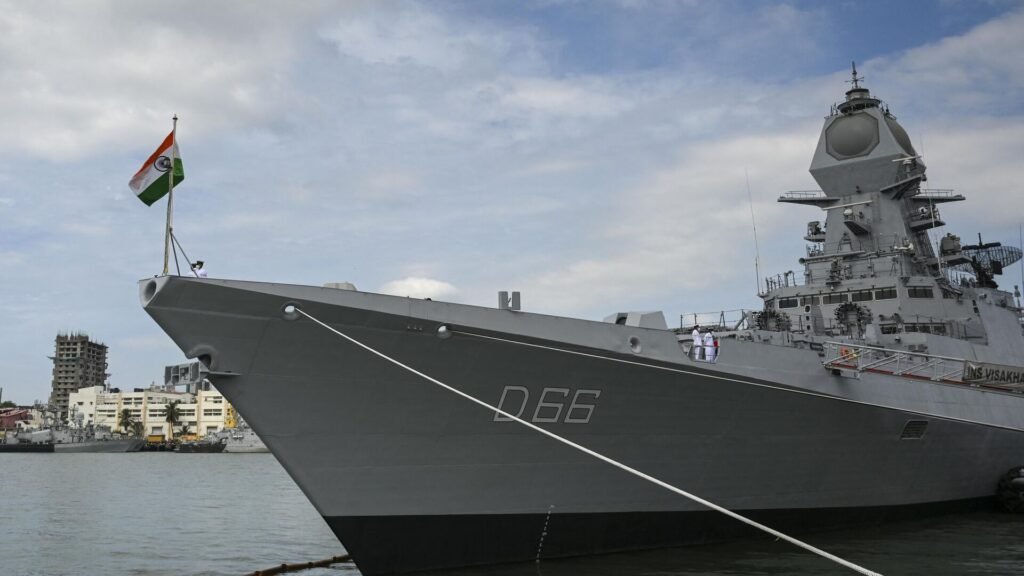
The success of Operation Sankalp 2.0 Red Sea is rooted in the indigenous technical superiority of the Indian Navy’s destroyer fleet. The deployment of the INS Kolkata and INS Visakhapatnam classes has proven that Indian engineering can match and exceed global standards in anti-access/area denial (A2/AD) environments.
Electronic Warfare and the ‘Ellora’ Suite
One of the most critical components in Operation Sankalp 2.0 Red Sea is the ‘Ellora’ Electronic Warfare (EW) suite. Suicide drones used by non-state actors in the Red Sea are often cheap, mass-produced units that rely on civilian GPS signals or basic radio frequencies. The Ellora suite allows Indian warships to:
Identify: Detect the unique electronic signature of a loitering munition at ranges exceeding 50 km.
Jam: Disrupt the command-and-control links, causing the drone to lose its target acquisition or self-destruct over open water.
Kavach Decoy System: If a missile bypasses the electronic shield, the Kavach system launches chaff and flares to create a ghost target, diverting the incoming threat away from the hull.
The Kinetic Sting: BrahMos and Barak-8
For surface threats, Operation Sankalp 2.0 Red Sea utilizes the BrahMos Missile as its primary offensive weapon. With a speed of Mach 3, no piracy mother-ship or hostile fast-attack craft can escape an engagement once locked. Simultaneously, the Barak-8 Long Range Surface-to-Air Missile (LRSAM) provides a 70 km defensive bubble against anti-ship ballistic missiles, making these destroyers the most capable air-defense platforms in the region.
3. MARCOS: The Kinetic Edge of Interdiction
While missiles and radars provide the shield, the Marine Commandos (MARCOS) provide the sword for Operation Sankalp 2.0 Red Sea. Throughout 2025, the world has watched as Indian MARCOS conducted some of the most daring Visit, Board, Search, and Seizure (VBSS) operations in modern history.
The Gold Standard of VBSS
In missions like the rescue of the MV Lila Norfolk, MARCOS demonstrated a high level of surgical precision.
Rappelling from Dhruv ALH: Conducting fast-rope insertions in pitch-black conditions requires extreme skill.
Neuralizing the Threat: Once on board, MARCOS utilize specialized close-quarter combat (CQC) tactics to secure the crew and neutralize hijackers without damaging the cargo or the vessel’s propulsion.
Psychological Deterrence: The constant presence of MARCOS units on warships under Operation Sankalp 2.0 Red Sea has led to a 40% decrease in piracy attempts in the Gulf of Aden compared to the 2023 baseline.
4. The IMEC Connection: Securing the Global Economic Bridge
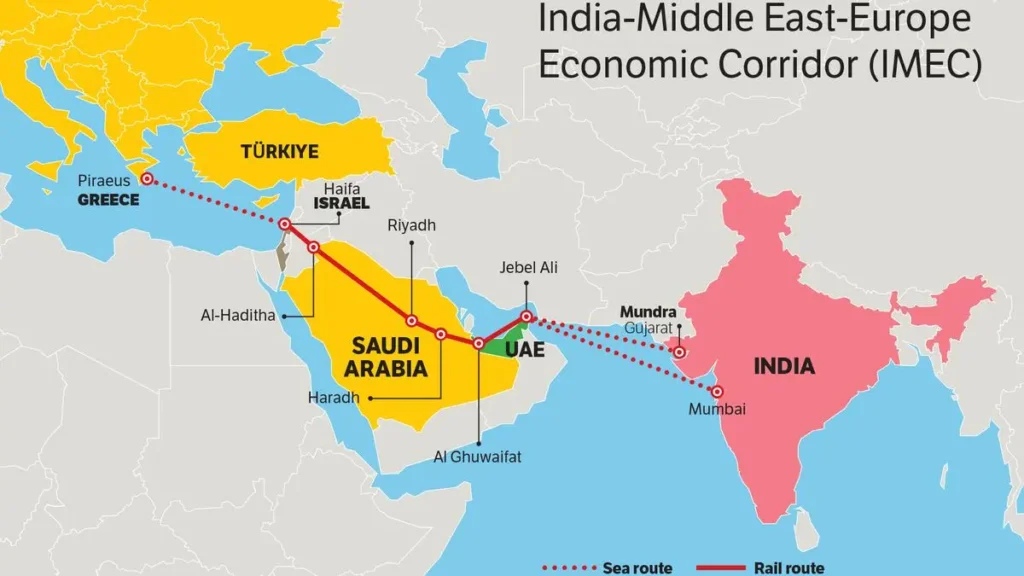
The strategic importance of Operation Sankalp 2.0 Red Sea extends far beyond simple military presence; it is the fundamental guarantor of the India-Middle East-Europe Economic Corridor (IMEC). As New Delhi bets big on this corridor to bypass China’s BRI, the safety of the Haifa-Jebel Ali-Mundra maritime route is paramount.
Stabilizing Trade Insurance
In the world of global shipping, risk equals cost. High insurance premiums for Red Sea transits can kill a trade route. By acting as a Net Security Provider, the Indian Navy is effectively lowering the risk profile of the IMEC route. This ensures that global logistics giants continue to view the Mundra-Haifa axis as a safe and cost-effective alternative to the volatile Suez Canal. Operation Sankalp 2.0 Red Sea is, in many ways, an economic operation as much as it is a military one.
5. Geopolitical Confrontation: India vs. China in the Western IOR
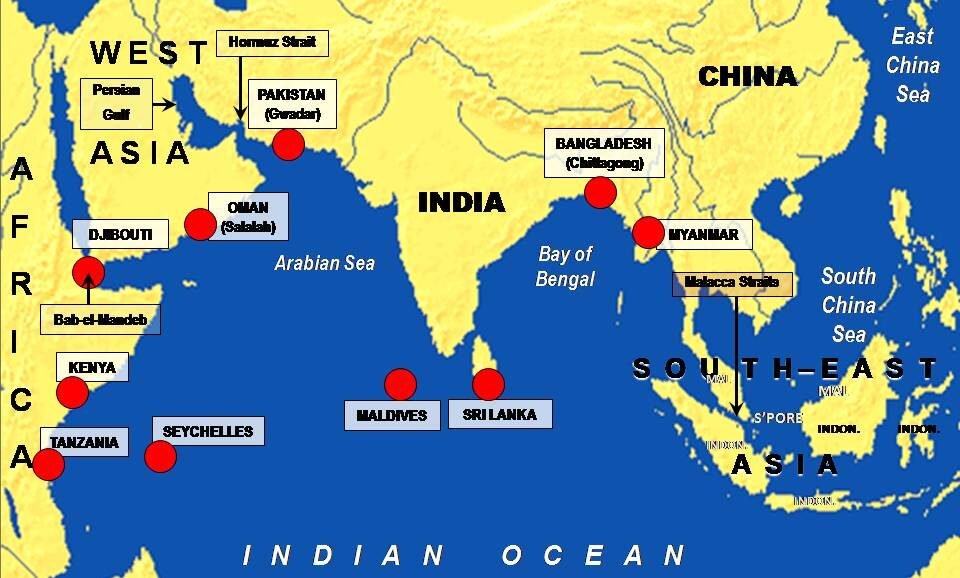
One of the most striking aspects of the 2025 Red Sea crisis has been the passivity of the Chinese People’s Liberation Army Navy (PLAN). Despite having a permanent base in Djibouti, Chinese warships have largely focused on protecting only Chinese-flagged vessels.
The Rise of Maritime Soft Power
In contrast, Operation Sankalp 2.0 Red Sea has seen the Indian Navy rescuing ships and crews from over 15 different nations, including the US, UK, Pakistan, and several European states. This “First Responder” ethos has drastically enhanced India’s Soft Power Ranking. In the maritime domain, trust is built through action, not through debt-trap diplomacy. While China remains bunkered in Djibouti, India has established itself as the “Net Security Provider” for the entire world.
6. Strategic Basing: The Necklace of Diamonds at Work
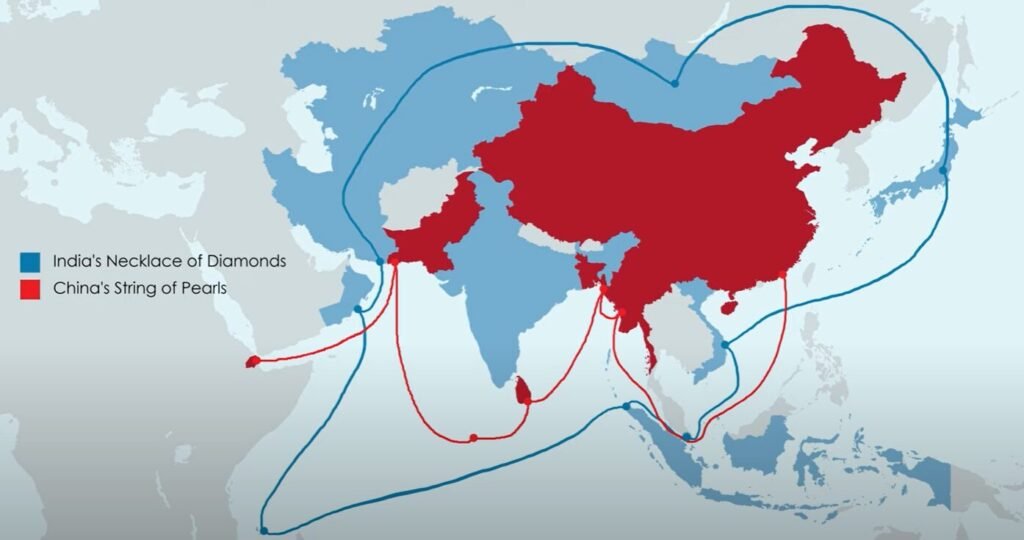
The sustainability of Operation Sankalp 2.0 Red Sea is made possible by India’s expansion of its logistics network, often referred to as the Necklace of Diamonds Strategy.
Oman’s Duqm Port: The Logistics Exchange Memorandum of Agreement (LEMOA) with Oman allows Indian warships to dock, refit, and restock at Duqm. This facility is the western anchor of Operation Sankalp 2.0 Red Sea, ensuring that ships don’t have to return to Karwar or Mumbai for months.
Agalega Island Synergy: Data from the Agalega Island India Base is fused with real-time intelligence from the Red Sea fleet to monitor the movement of Chinese “dual-use” research vessels (spy ships) entering the region.
INS Jatayu Monitoring: While INS Jatayu in Lakshadweep focuses on the Nine Degree Channel, it acts as a secondary gatekeeper, ensuring that any threat escaping the Red Sea is picked up long before it reaches Indian territorial waters.
7. The 2026 Roadmap: Integration into Theatre Commands
By the first quarter of 2026, Operation Sankalp 2.0 Red Sea will be fully integrated into the Integrated Theatre Commands India 2026 framework.
Maritime Theatre Command (MTC) Oversight: The MTC, headquartered in Thiruvananthapuram, will directly command all Red Sea operations. This removes administrative delays, allowing the CDS to shift assets from the Bay of Bengal to the Arabian Sea instantly.
The Project Seabird Link: The massive maintenance facilities at Project Seabird Karwar will serve as the Tier-1 support hub for all warships returning from Red Sea deployment, ensuring a faster turnaround time for the fleet.
8. Comparative Analysis: Global Naval Frameworks 2025
| Feature | Operation Sankalp 2.0 (India) | Operation Prosperity Guardian (US-Led) | PLA Navy Djibouti Strategy |
| Operational Ethos | Net Security Provider | Conflict Containment | Asset-Specific Protection |
| Tactical Approach | Proactive Interdiction | Defensive Escort | Passive Observation |
| Regional Logistics | Duqm, Salalah, Agalega | Djibouti, Bahrain | Djibouti (Single Node) |
| MARCOS Capability | High (Proven VBSS) | Moderate (Tier-1 SOF used) | Low (Limited Kinetic Use) |
| Deterrence Level | High (Regional Trust) | Variable (Political Friction) | Low (Apolitical Stance) |
Conclusion: The Undisputed Guardian of the High Seas
Operation Sankalp 2.0 Red Sea is a definitive turning point in India’s naval history. It represents the maturation of the Indian Navy from a coastal force to a global maritime superpower capable of projecting force thousands of miles from its shores. By successfully countering the asymmetric threats of the 21st century, New Delhi has proved that it is the only reliable Net Security Provider in the Indo-Pacific. Through Operation Sankalp 2.0 Red Sea, India has not only protected its economic future but has also secured its status as the silent, lethal, and undisputed guardian of the high seas.
Recommended Reading: The Pillars of Indian Maritime Power
To understand how the Red Sea operations connect to India’s broader 2026 roadmap, explore our related intelligence reports:
Command Reform: Integrated Theatre Commands India 2026: The Military Revolution
Subsurface Hegemony: India’s Project 77 Nuclear Submarine: Decoding the $14 Billion Deal
Naval Fortress: Project Seabird Phase IIA 2026: Asia’s Largest Naval Base
Air Superiority: India AMCA 5th Gen Stealth Fighter: The 2026 Prototype Trials