Strategic Intelligence Report | By Wish, Analyst
Integrated Theatre Commands India
The Intelligence Brief
As of late December 2025, the Indian Armed Forces are at the cusp of their most radical structural transformation since 1947. The era of “Service-Siloed” warfare, where the Army, Navy, and Air Force operated in isolation, is officially coming to an end. Under the direct supervision of Chief of Defence Staff (CDS) General Anil Chauhan, whose tenure was strategically extended until May 30, 2026, New Delhi has accelerated the rollout of the Integrated Theatre Commands (ITC) India 2026 roadmap.
- The catalyst for this acceleration was the recently concluded Operation Sindoor in late 2025, a multi-domain confrontation that showcased the critical necessity for “Jointness” and cross-domain synergy.
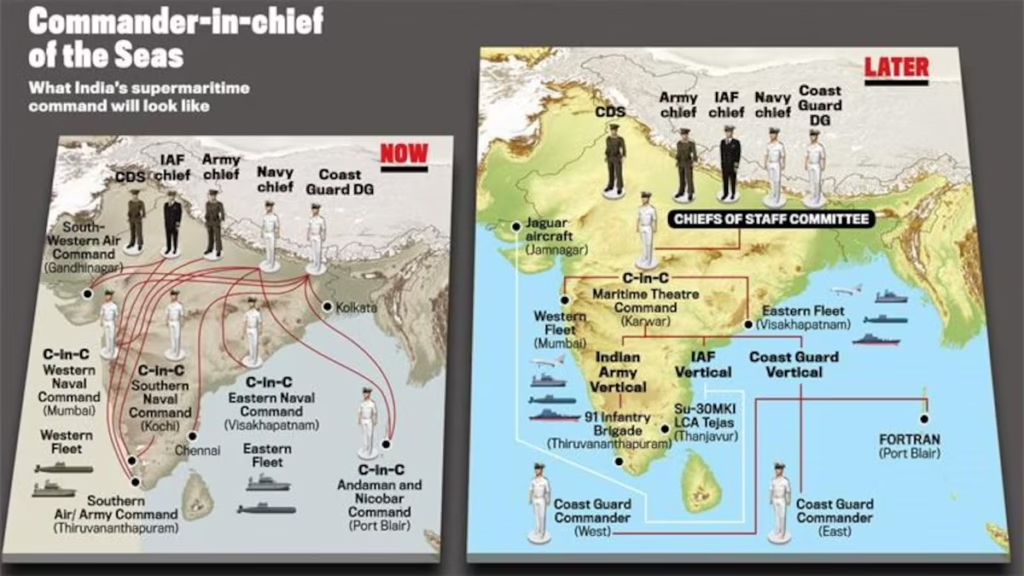
- By 2026, India will transition from 17 single-service commands to 3 primary adversary-based Integrated Theatre Commands.
- This is not merely an administrative shift, it is a $20 billion modernisation of India’s command-and-control (C2) architecture designed to outmatch the Chinese Western Theatre Command (WTC).
1. The Lessons of Operation Sindoor: Why ITC is Now Non-Negotiable
Before we analyze the structure of Integrated Theatre Commands India 2026, we must understand the tactical shift triggered by Operation Sindoor in late 2025. This operation, involving high-stakes skirmishes along the Northern and Western borders, revealed that modern battles are won through “Cross-Domain Capability.”
Air Marshal Ashutosh Dixit, the Chief of Integrated Defence Staff, recently emphasized that Operation Sindoor proved that land, sea, air, cyber, and space must operate on a single, fail-safe communication network. The 2026 roadmap addresses the coordination gaps identified during this crisis, ensuring that “Joint Planning” is not just an advisory role but a command reality.
2. The Tri-Pillar Architecture: Lucknow, Jaipur, and Thiruvananthapuram
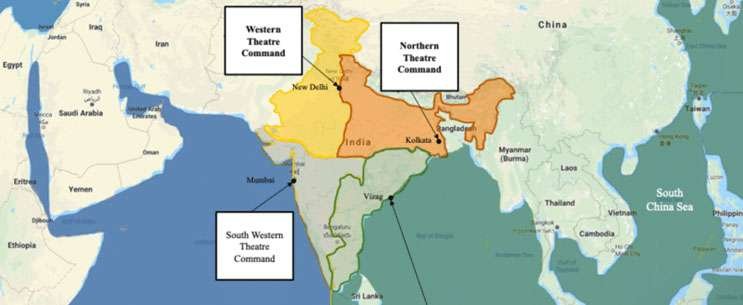
The core of Integrated Theatre Commands India 2026 is built around three geographically and adversary-specific theatres. Each will be led by a three-star commander from the service most dominant in that domain.
A. The Northern Theatre Command (NTC) – Lucknow
Facing the primary threat from China’s PLA, the NTC will be headquartered in Lucknow.
Composition: It will integrate the current Northern, Central, and Eastern Army Commands, along with the IAF’s Western, Central, and Eastern Air Commands.
Strategic Role: To provide a unified response across the 3,488 km Line of Actual Control (LAC). By 2026, the NTC will have direct command over the Mission Divyastra (Agni-V MIRV) assets to deter high-altitude aggression.
B. The Western Theatre Command (WTC) – Jaipur
Focusing on the Pakistan front, the WTC will be based in Jaipur.
Composition: This command will integrate the Army’s South-Western and Western Commands with the IAF’s South-Western Air Command.
Strategic Role: The WTC is designed for high-intensity, short-duration conflicts, focusing on “Integrated Battle Groups” (IBGs) that can strike across the LoC with hypersonic precision using the India Hypersonic Missile assets.
C. The Maritime Theatre Command (MTC) – Thiruvananthapuram
The most critical pillar for the Indo-Pacific, the MTC, will be headquartered in Thiruvananthapuram.
Composition: This command will subsume the Navy’s Eastern and Western Commands, as well as the INS Jatayu (Lakshadweep) and Agalega Island India Base infrastructure.
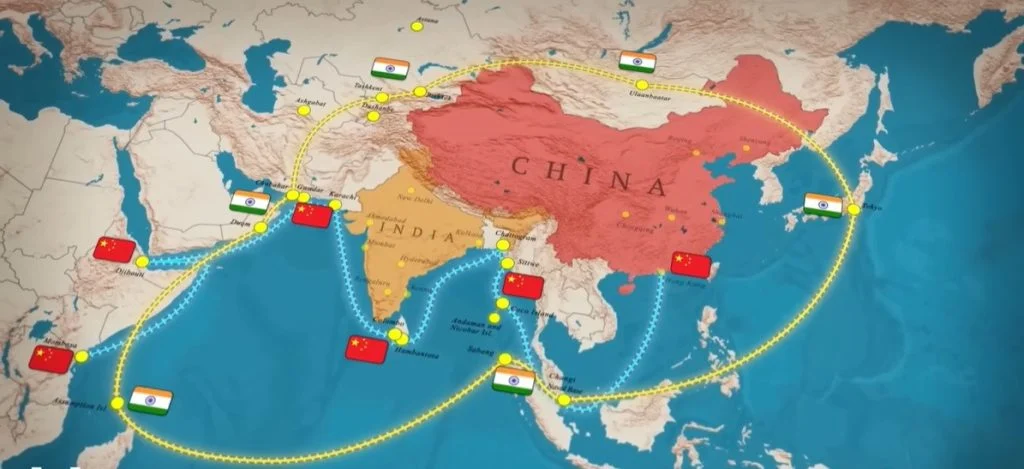
Strategic Role: The MTC will be responsible for securing the maritime trade routes and countering the Chinese ‘String of Pearls.’ It will act as the operational brain behind the Necklace of Diamonds Strategy.
3. The Role of Service Chiefs: ‘Raise-Train-Sustain’
Under the Integrated Theatre Commands India 2026 model, the role of the Army, Navy, and Air Force Chiefs will undergo a historic change.
Operational Control: This will shift to the Theatre Commanders, who will report directly to the CDS and the Prime Minister via the Defence Minister.
RTS Function: The Service Chiefs will focus exclusively on “Raise, Train, and Sustain” (RTS). Their priority will be procurement and long-term modernization, such as the India’s Project 77 Nuclear Submarine for the Navy and the AMCA 5th Gen Fighter for the IAF.
4. Digital Integration: The Tri-Service Communication Network
One of the biggest hurdles for Integrated Theatre Commands India 2026 has been technological interoperability. By early 2026, the Ministry of Defence aims to complete the “Tri-Service Common Data Link.”
C4ISR Synergy: This system will integrate satellite data from ISRO, maritime data from India MQ-9B Drones, and ground intelligence into a single “Common Operating Picture” (COP).
Cyber & Space Commands: These functional commands will no longer be standalone but will be “embedded” within the NTC, WTC, and MTC to provide electronic warfare (EW) support during live operations.
5. Geopolitical Impact: Why Beijing is Worried?
China’s People’s Liberation Army (PLA) has already undergone theaterization under Xi Jinping. However, Integrated Theatre Commands India 2026 creates a symmetrical counter-threat.
Ending the Silos: Previously, China could exploit the coordination gaps between the IAF and the Indian Army. With a unified NTC in Lucknow, India’s response to an intrusion like the 2025 border standoff will be instantaneous and multi-layered.
Project Seabird Integration: The MTC will utilize the massive infrastructure of Project Seabird Karwar to launch carrier strike groups without needing separate approvals from different naval commands. This drastically reduces the “Sensor-to-Shooter” loop.
6. Technical Comparisons: Single-Service vs. Integrated Command
| Feature | Legacy Command System (Pre-2025) | Integrated Theatre Commands (2026) |
| Command Structure | 17 Service-Specific Commands | 3 Adversary-Centric Theatres |
| Logistics | Fragmented and Duplicated | Unified Joint Logistics Nodes |
| Air Assets | Controlled by IAF Commanders | Theatre Commanders (Joint Allocation) |
| Response Time | High (Due to Inter-Service Talks) | Ultra-Low (Unified C2) |
| Modernization | Service-Biased Procurement | Objective Multi-Domain Capability |
Conclusion: The Future of Sovereign Defense
The transition to Integrated Theatre Commands India 2026 is the final step in India’s evolution as a global military superpower. It represents a shift from “Defending Borders” to “Dominating Theatres.” By 2026, the synergy achieved between land, air, and sea assets will ensure that India is not just reacting to threats but actively shaping the security architecture of the Indian Ocean and Eurasia. Through the leadership of the CDS and the lessons of Operation Sindoor, India has finally forged a military structure capable of winning the wars of the future.
Recommended Reading: India’s Strategic Transformation
To understand the broader context of these reforms, read our deep-dive analysis of the assets that will be integrated under these new commands:
Naval Powerhouse: Project Seabird Phase IIA 2026: Establishing Asia’s Largest Naval Fortress
The Silent Hunters: India’s Project 77 Nuclear Submarine: Decoding the $14 Billion Hegemony
Maritime Shield: INS Jatayu: India’s ‘Unsinkable Aircraft Carrier’ Near the Maldives