By Wish | [Geopolitical Intelligence]
Breaking the blockade
Geography is destiny, but strategy can rewrite it. For seventy years, Pakistan has used its geography as a weapon against India, blocking New Delhi’s land access to Afghanistan and the energy-rich markets of Central Asia. The logic in Islamabad was simple: If India cannot go through us, it cannot grow past us.
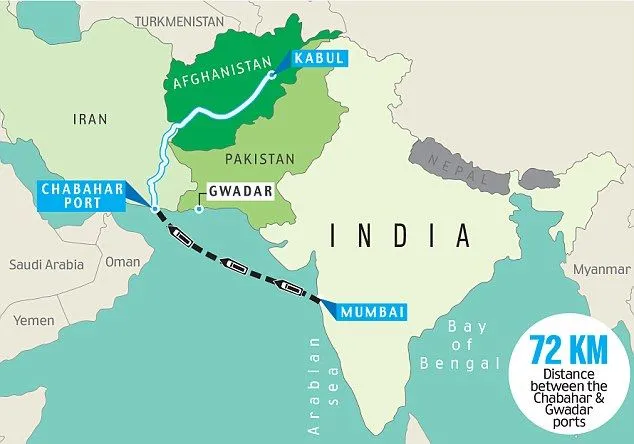
But in late 2025, that blockade is effectively broken. The operationalisation of the Chabahar Port India Strategy marks a turning point in Asian geopolitics. Situated in southeastern Iran, just 72 kilometers away from Pakistan’s Chinese-run Gwadar Port, Chabahar is India’s strategic answer to the Belt and Road Initiative (BRI).
US Sanctions Relief:
The strategic landscape of the Indo-Pacific has shifted in December 2025. With the US extending the sanctions waiver for India’s operations at Shahid Beheshti Port until April 2026, Chabahar 2.0 has entered a critical expansion phase. This move is not just a diplomatic victory for New Delhi but a clear signal that the world recognizes Chabahar as the ultimate bypass to the stagnant CPEC and Pakistan’s Gwadar Port.
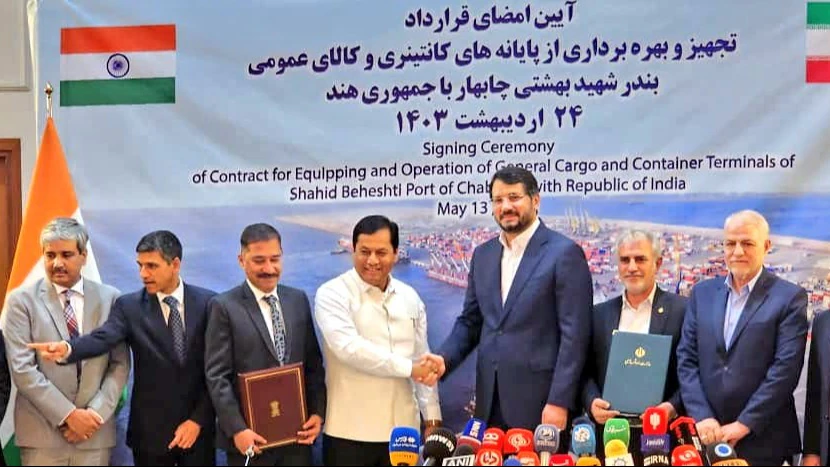
Following the historic 10-year long-term contract signed recently, India has moved from merely “managing” the port to fully integrating it into the International North-South Transport Corridor (INSTC). This is no longer just about trade; it is about creating a parallel order in Eurasia where China is not the only gatekeeper.
This analysis decodes why Chabahar 2.0 is the most critical piece on New Delhi’s western chessboard.
Comparative Data: The Tale of Two Ports
To understand the rivalry,
we must compare India’s Chabahar with China’s Gwadar. They are neighbors, but their destinies are miles apart.
| Feature | Chabahar (India-Iran) | Gwadar (China-Pakistan) |
| Operator | India Ports Global Ltd (IPGL) | China Overseas Ports (COPHC) |
| Strategic Goal | Gateway to Central Asia/Russia | Gateway to warm waters (CPEC) |
| Distance from India | 900 km (from Kandla/Mumbai) | N/A (Hostile Territory) |
| Connectivity | Linked to INSTC (Rail/Road) | Linked to Karakoram Highway |
| Current Status | Commercial Traffic Rising | Underutilized / Security Risks |
| Debt Trap Risk | Low (Investment based) | High (Loan based) |
1. The Strategic Location: Bypassing the Barrier
Why is India pouring millions into a port in sanctioned Iran?
The answer lies in the map. Pakistan sits like a wall between India and the vast resources of Central Asia (Uzbekistan, Kazakhstan, Turkmenistan). These nations have uranium, oil, and gas, which India needs. They need Indian medicines, IT, and auto parts.
Pakistan refuses to let Indian trucks pass through its territory.
The Chabahar Port India Strategy is the bypass surgery for this blocked artery. By shipping goods from Mumbai/Kandla to Chabahar, and then moving them via road and rail up north to the Afghan border and beyond, India makes Pakistan irrelevant in the trade equation.
This route reduces the transit time to Central Asia by 40% and the cost by 30% compared to the traditional Suez route. It forces Islamabad to realize that its “Geographical Blackmail” no longer works. 🙂
2. The INSTC Connection: The Russia Link
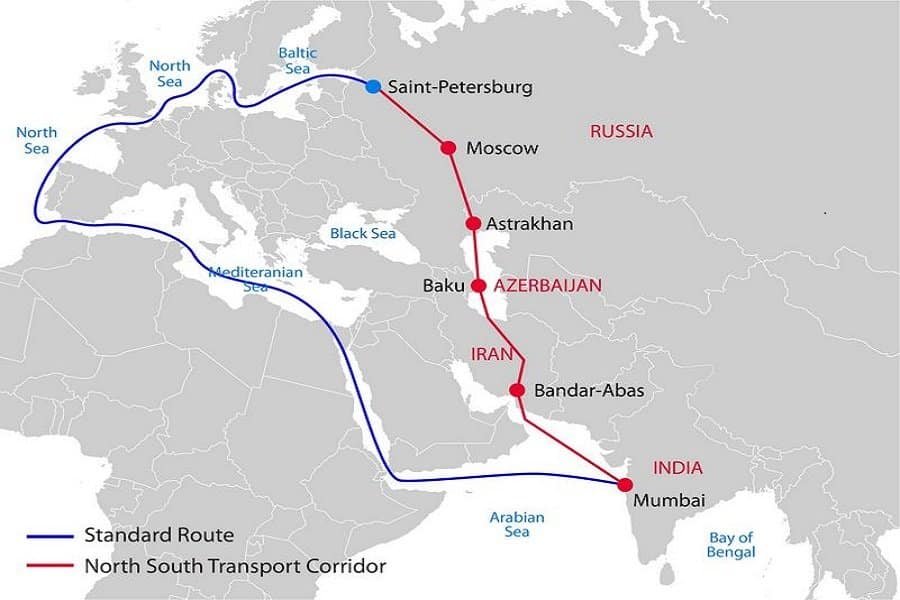
Chabahar is not an isolated project; it is the southern anchor of a much larger beast called the International North-South Transport Corridor (INSTC).
As we analyzed in our report on the [India Russia China Triangle], India needs a route to Russia that does not depend on Europe. The INSTC connects Mumbai to St. Petersburg via Iran and Azerbaijan.
With the Chabahar Port India Strategy now fully active, goods arriving at Chabahar can be loaded onto the Chabahar-Zahedan railway line and transported northwards to the Caspian Sea, and finally to Russia.
Russia has formally integrated Chabahar into its ‘Eastern Route’ of the INSTC. This means cargo from India will now have a direct ‘Digital Customs’ clearance, reducing paperwork and bringing us closer to the $100 billion bilateral trade target by 2030.
This route is sanctions-proof. While the West blocks traditional payment and shipping routes to Russia, the INSTC operates on a parallel grid. It ensures that India’s energy security and defense supplies (like S-400 spares) have a safe passage even during global conflicts.
3. Checkmating Gwadar: The Failure of CPEC
Just 72 km east of Chabahar lies Gwadar, the “crown jewel” of the China-Pakistan Economic Corridor (CPEC). Beijing envisioned Gwadar as the next Dubai, a bustling hub that would give China direct access to the Indian Ocean.
However, in 2025, the contrast is stark. Gwadar is struggling. The Baloch insurgency in Pakistan has turned the region into a security nightmare. Chinese engineers are targeted, and the port remains largely empty.
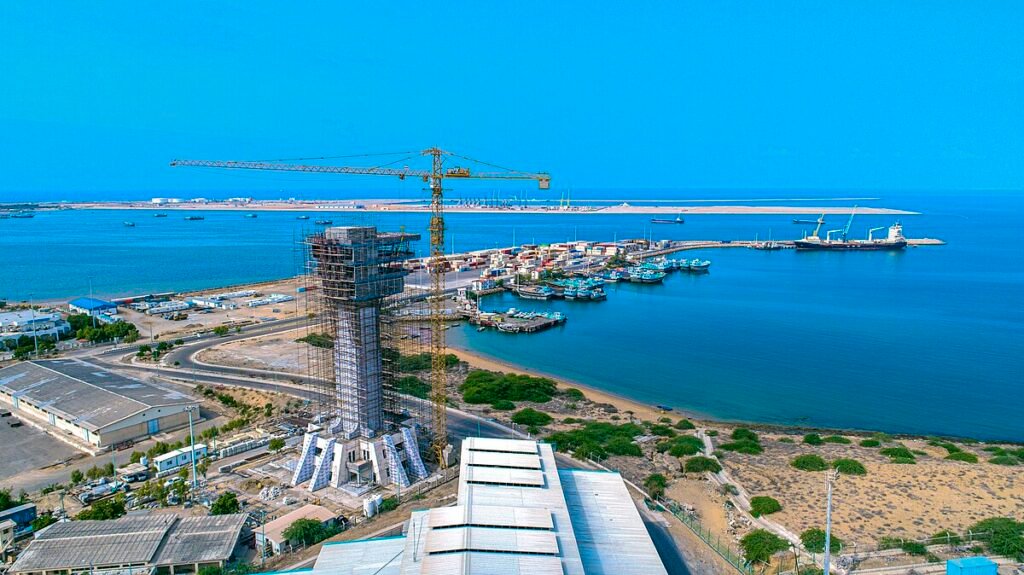
In contrast, the Chabahar Port India Strategy focuses on commercial viability, not military expansionism. India has successfully attracted Uzbekistan and Kazakhstan to use Chabahar for their transit trade. While Gwadar is drowning in debt and security fences, Chabahar is slowly becoming a busy merchant hub.
India has proven that a port built on “mutual economic need” works better than a port built on “predatory loans.”
4. The Central Asian Game: Uranium and Markets
The five “Stans” of Central Asia are landlocked. They have historically been dependent on Russia or China for trade. They are desperate for a “third option.” India is that option.
Kazakhstan is the world’s largest producer of Uranium, vital for India’s nuclear power plants. Turkmenistan holds massive gas reserves. Uzbekistan is a growing market.
Through the Chabahar Port India Strategy, India has engaged these nations through the “India-Central Asia Dialogue.” We are seeing increased shipments of wheat, textiles, and auto components moving north, while critical minerals move south. This economic integration binds Central Asia to the Indian economy, reducing their over-reliance on China’s Belt and Road.
5. The Challenge: Walking the Sanctions Tightrope
The path has not been easy. The elephant in the room is the United States and its sanctions on Iran.
Washington has historically pressured India to reduce ties with Tehran. However, Indian diplomacy has managed to secure a “carve-out” (exemption) for Chabahar, arguing that the port is vital for humanitarian aid to Afghanistan.
But as tensions in the Middle East rise, the Chabahar Port India Strategy faces risks. If Israel and Iran enter a direct prolonged conflict, the port’s operations could be threatened. New Delhi has had to play a delicate balancing act, maintaining strategic ties with Israel (for defense) while deepening infrastructure ties with Iran (for connectivity). So far, Modi’s foreign policy has managed to keep both balls in the air.
6. Vision 2026: The Year of Expansion:
The year 2026 will see the launch of the ‘Chabahar Free Zone 2.0’, where India plans to invite its top pharmaceutical and textile firms to set up processing units. This will transform Chabahar from a transit port to a ‘Value-Addition Hub’, effectively ending the regional dominance of Pakistan’s Gwadar.
1. The Railway Link Completion: (Chabahar-Zahedan Railway Line) The 720-km Chabahar-Zahedan rail line has reached 84% physical progress as of late 2025. Track-laying is progressing at a record 3 km per day, with the final commissioning expected by March 20, 2026 (Iranian New Year).
2. Bringing Russia Closer: Reports suggest that in 2026, India and Russia will sign a formal “Green Corridor” customs agreement for the INSTC. This will remove digital paperwork hurdles, aiming to boost bilateral trade via Chabahar to $50 billion.
3. Expanding the Footprint: New Delhi is not stopping at Iran. In 2026, India plans to invite private Indian logistics companies to set up warehouses in the Chabahar Free Trade Zone. The goal is to turn the port into a manufacturing hub for Indian companies wanting to export to Central Asia, bypassing high transport costs. 2026 will determine if Chabahar can truly dethrone Gwadar as the regional kingpin.
Conclusion: The Westward Shift
For decades, India’s foreign policy was dominated by the “Look East” policy. With Chabahar, India has successfully initiated a “Link West” policy.
The Chabahar Port India Strategy is a testament to strategic autonomy. As we step into 2026, this port will be the litmus test for India’s ability to project power beyond its borders. Gwadar was meant to encircle India; instead, Chabahar has allowed India to leapfrog the encirclement and land firmly in the heart of Eurasia.
What do you think?
Can Chabahar truly compete with China’s BRI infrastructure, or will US sanctions eventually kill the project?
Let us know in the comments.
Read Next: [IMEC Corridor: Can India’s New Trade Route Defeat China’s BRI?]