By Wish | Naval Strategy Analysis
The Clash of Titans
The India vs China Aircraft Carrier rivalry is the defining naval contest of this century. While border skirmishes happen on land, nations project true “Superpower Status” through Aircraft Carriers.
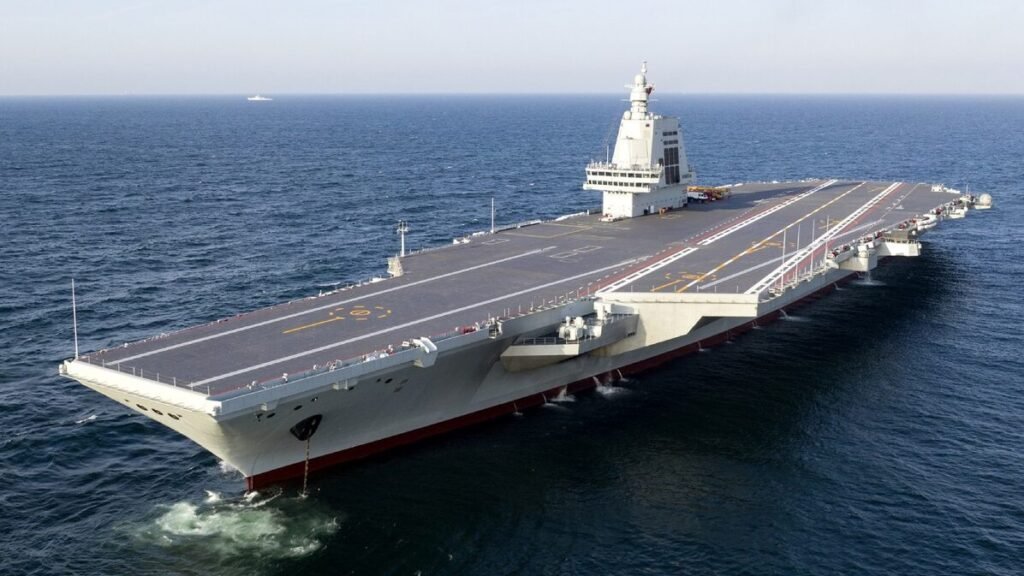
For decades, the Indian Navy held the distinct advantage of being the only Asian power to operate carriers. But that monopoly is over. China has launched its third and most advanced carrier, the CNS Fujian (Type 003), directly challenging India’s indigenous pride, the INS Vikrant.
This analysis goes beyond the spec sheets. We decode what these floating airbases mean for the balance of power in the Indo-Pacific.
The Tale of the Tape: Vikrant vs. Fujian
To understand the threat, we must look at the hardware. This is not just about size; it is about technology and launch capability.
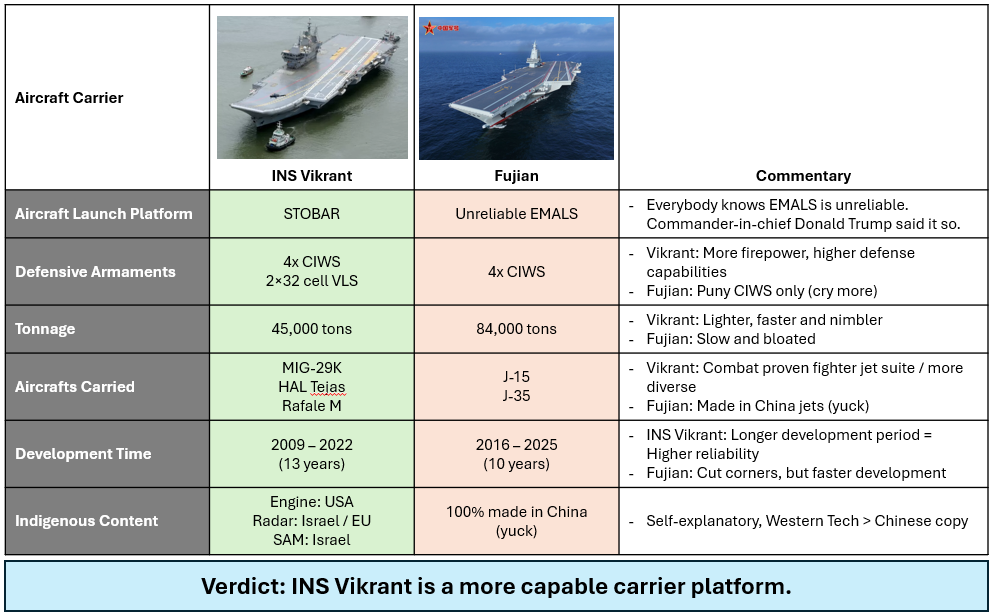
| Feature | INS Vikrant (India) | CNS Fujian (China) |
| Displacement | 45,000 Tonnes | 80,000+ Tonnes |
| Launch System | STOBAR (Ski-Jump) | EMALS (Catapult) |
| Aircraft Capacity | 30 (MiG-29K / Rafale-M) | 60+ (J-15 / J-35) |
| Primary Role | Sea Control & Defense | Power Projection |
| Status | Operational | Sea Trials |
1. The Launch Tech: Ski-Jump vs. Catapult
The biggest difference lies in how they launch jets.
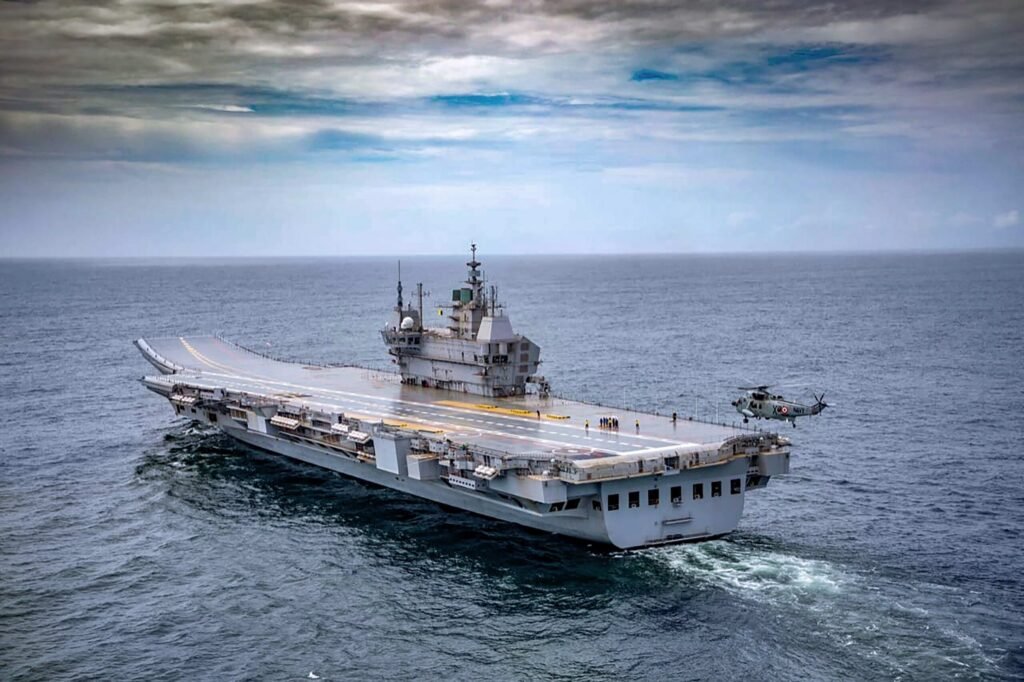
INS Vikrant uses a STOBAR (Ski-Jump) system. The plane accelerates and uses a curved ramp to take off.
Pro: It is reliable and cheaper to maintain.
Con: Jets cannot take off with full fuel and heavy bomb loads. This limits their strike range.
CNS Fujian uses EMALS (Electromagnetic Catapult), a technology previously owned only by the US Navy.
The Threat: EMALS allows China to launch heavier planes, including airborne radar (AWACS) aircraft and drones, with full fuel tanks. This gives the Fujian a massive “Strike Radius” advantage over the Vikrant.
2. The “Blue Water” Strategy
In this India vs China Aircraft Carrier race, Beijing holds the advantage in tonnage, but New Delhi holds the geography. Why is India worried? Because carriers are offensive weapons.
China is moving from a “Green Water Navy” (coastal defense) to a “Blue Water Navy” (global reach). The Fujian is designed not to protect China’s coast, but to sail deep into the Indian Ocean and the Pacific.
India’s Doctrine:
India operates a “Carrier Battle Group” (CBG) strategy.
INS Vikramaditya covers the Western Fleet (Pakistan/Arabian Sea).
- INS Vikrant covers the Eastern Fleet (Bay of Bengal/Malacca Strait).This ensures that India can choke the Malacca Strait (China’s energy lifeline) while defending its own trade routes.
3. The Fighter Jet Dilemma: Rafale-M vs. J-35
A carrier is only as good as the jets it carries.
India: Currently relies on the aging Russian MiG-29K. However, India has selected the French Rafale-M (Marine) to operate from Vikrant. The Rafale is battle-proven and superior in dogfights.
China: Is developing the J-35, a stealth 5th-generation carrier fighter (similar to the US F-35). If the J-35 becomes operational, China will have a “Stealth Advantage” at sea.
4. India’s Future: INS Vishal and the Third Carrier
The debate in New Delhi is heated: Does India need a third aircraft carrier?
The Navy says “Yes.” To ensure 24/7 dominance, India needs three carriers (one on the East, one on the West, and one in refit/repair).
INS Vishal: The proposed third carrier. India plans for it to be a 65,000-tonne supercarrier, possibly equipped with Catapult technology to match China. However, budget constraints have delayed the project.
Conclusion: The Geography Advantage
On paper, China’s Fujian is bigger and more advanced. But war is not fought on paper; it is fought on geography.
In the Indian Ocean, India is the “Home Team.”
Unsinkable Carriers: As we analyzed in our previous reports, India’s island bases (Andaman & Nicobar, Lakshadweep) act as static aircraft carriers.
Logistics: Chinese carriers operating in the Indian Ocean will be thousands of miles from home, vulnerable to Indian submarines.
The India vs China Aircraft Carrier competition is not just about ships, it is about dominance, it is about who controls the choke points. While China builds bigger ships, India is building a smarter ocean.
Read Next: [How INS Jatayu in Lakshadweep acts as an unsinkable carrier against China.]