By Wish
Quick Summary:
The Project: A Super Dam three times bigger than the Three Gorges Dam.
The Threat: How China can use water as a weapon against India.
The Impact: Environmental disaster risks for Assam and Arunachal.
The Response: India’s plan to build its own buffer dams.
The China Brahmaputra Dam project is not just a hydroelectric venture; it is a geopolitical weapon of mass destruction in the making. While the world focuses on border skirmishes in Ladakh, a far more dangerous threat is rising in the East.
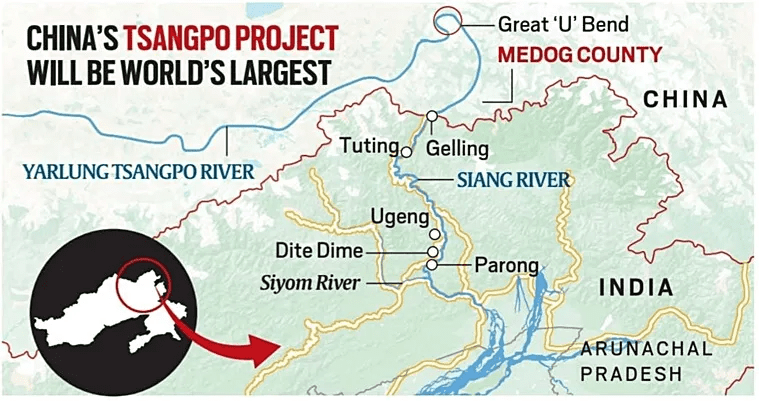
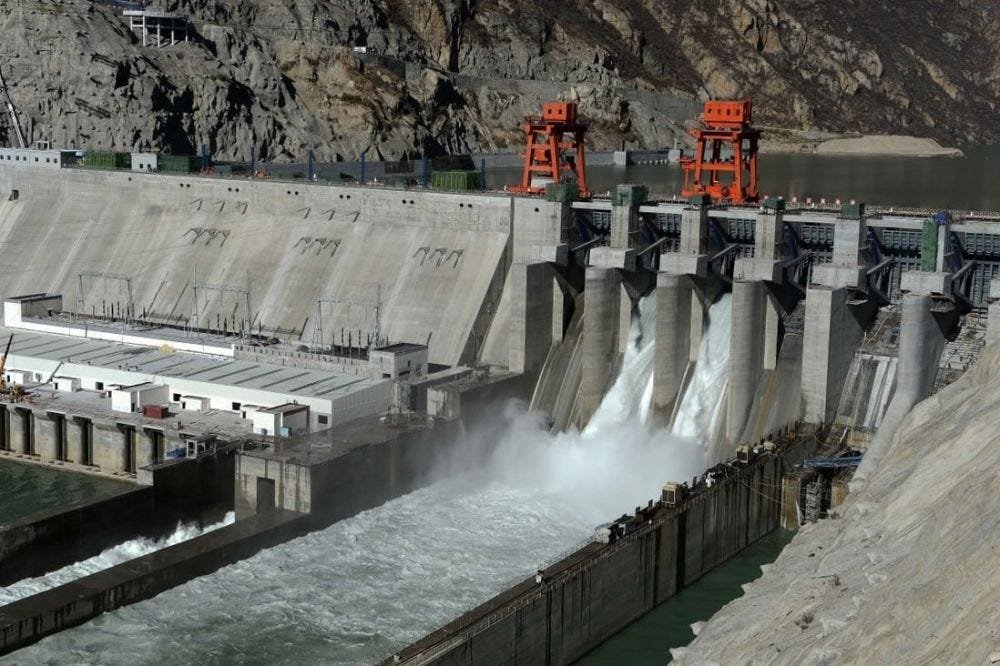
Beijing has finalized plans to construct a “Super Dam” on the Yarlung Tsangpo (the Chinese name for the Brahmaputra) in the Great Bend region, just kilometers away from the Indian border. This project, part of China’s 14th Five-Year Plan, aims to generate 60 Gigawatts of electricity—three times more than the famous Three Gorges Dam.
For India, and specifically for the states of Arunachal Pradesh and Assam, this is a nightmare scenario. It hands the control of India’s water lifeline directly to the Chinese Communist Party.
The “Water Bomb” Theory
Why is the China Brahmaputra Dam considered a security threat? The answer lies in geography and intent. The Brahmaputra is a trans-boundary river. It originates in Tibet, flows through India, and empties into the Bay of Bengal through Bangladesh. By building a massive dam at the “Great Bend” (where the river takes a sharp U-turn before entering India), China gains the ability to regulate the river’s flow.
1. The Drought Weapon In the lean season (winter), China can withhold water to fill its massive reservoirs. This could dry up the Brahmaputra in Assam, devastating agriculture and the tea industry which relies heavily on this water.
2. The Flood Weapon In the monsoon season, or during a conflict, China could release massive amounts of stored water suddenly. This would trigger artificial flash floods in Arunachal Pradesh and Assam, washing away bridges, roads, and military infrastructure vital for India’s defense. This is not theoretical. In 2020, satellite imagery showed China blocking river flows in the Galwan valley during the standoff. Water is now a weapon of war.
Environmental Catastrophe in the Making
The region where the China Brahmaputra Dam is being built is seismically active. It sits right on the fault lines of the Himalayas.
Earthquake Risk: A massive reservoir in a high-seismic zone creates the risk of “Reservoir-Induced Seismicity.” If an earthquake were to breach the dam, the resulting wall of water would wipe out downstream populations in India and Bangladesh before any warning could be issued.
Ecosystem Collapse: The dam will trap nutrient-rich silt that fertilizes the plains of Assam. Without this silt, the fertility of the Brahmaputra valley will decline, affecting food security for millions.
China’s Strategic Ambition: The “South-North Water Diversion”
Defense analysts believe the dam is just the first step. The ultimate goal of the China Brahmaputra Dam project could be diverting the river’s water northwards to feed the dry regions of Xinjiang and Gansu. If China successfully diverts the Yarlung Tsangpo, the Brahmaputra in India would be reduced to a seasonal stream. This would be an existential crisis for Northeast India’s ecology and economy.
India’s Counter-Move: The Upper Siang Project
New Delhi is not sitting idle. To counter the China Brahmaputra Dam, India has fast-tracked its own massive hydroelectric project on the Siang river (the Indian name for the Yarlung Tsangpo) in Arunachal Pradesh.
The Buffer Strategy: The Indian dam will act as a buffer reservoir. If China releases excess water, India can store it. If China withholds water, India can release stored water to keep the river flowing.
Legal Battle: As a lower riparian state, India has rights under international law, but China has refused to sign water-sharing treaties. India is now building physical infrastructure to assert its “First User Rights.”
Conclusion: The War for Water
The 21st century’s wars will be fought over water, and the China Brahmaputra Dam is Ground Zero. By militarizing a natural resource, Beijing is testing India’s resolve.
India’s response must be swift—combining diplomatic pressure, military readiness, and rapid infrastructure development. The Brahmaputra is not just a river; it is the soul of the Northeast, and protecting it is now a matter of national sovereignty.
Related Analysis: [Read how India is strengthening its borders against China with the Tejas Mk2 fighter.]